



Grand Theft Auto 6 just handed console owners their clearest trade-in trigger of the year, and it won’t be the last. Every major launch creates the same opening: a genuine reason to upgrade, and the only question is whether that happens through a brand-run trade-in offer, or a private resale site the brand has no part in.
Table of Contents
- Key Takeaways
- Why a Launch Window Is a Trade-In Moment
- Timing: The Season, Not Just the Launch
- How Console Trade-In Offers Are Structured
- How Consoles Differ From Phones and Laptops
- Designing the Campaign Around Your Objective
- Where It Breaks
- Capping the Top-Up Exposure
- Trade-In in Practice
- FAQs
- Related Posts
Key Takeaways
- A console launch is a trade-in moment every year, the platform cutoff makes older devices suddenly obsolete for the new release, not just outdated
- The reward is two numbers added together: appraised value plus a brand-funded top-up, not one flat figure
- A trade-in campaign should be designed around one clear objective, drive uptake, accelerate upgrades, win switchers, or reward loyalty, not all four at once
- Console trade-in has two specific failure points, incomplete submissions and unresolved platform accounts, that OPIA’s claim validation is built to catch
- The objective is the strategy. Everything else is execution
Why a Launch Window Is a Trade-In Moment
A console launch is a trade-in moment every year: the platform cutoff means a customer on an older console isn’t just curious about a new release, they’re newly aware their current device won’t run it at all. That’s a sharper trigger than a general upgrade cycle, and it repeats with every major launch.
Grand Theft Auto 6 is this cycle’s trigger. It launched 19 November 2026 for PlayStation 5 and Xbox Series X|S only, with reviews landing at 99 on Metacritic, tying the highest score any game has ever received.
Trade-in offers timed to a launch window convert that awareness into a sale before it goes to a private resale site instead.
Timing: The Season, Not Just the Launch
That launch sits just eight days before Black Friday on 27 November. That gap used to feel like breathing room, if it ever existed at all. In practice, it’s typically absorbed into one continuous season rather than treated as two separate events; a flagship-tied trade-in campaign kicks off in September or October, carries through Black Friday, and extends into December without a real pause in between.
This isn’t specific to this one launch. It’s the recurring shape of the calendar now: major phone launches land in September, flagship consoles and big titles cluster from September through November, and Black Friday sits at the tail end of that same run-up, not as a separate event on its own. Any brand planning a launch-window trade-in should default to planning it alongside Black Friday and the rest of Q4, not as an isolated campaign with its own separate rules.
Treating a launch-window trade-in as standalone, separate from Black Friday and holiday planning, usually means duplicated setup work and inconsistent rules across what customers experience as one continuous shopping period.
Worth reading alongside our piece on Black Friday peak readiness, which covers what that wider season does to a claim-based promotion operationally.
How Console Trade-In Offers Are Structured
The reward a customer receives is two numbers added together, not one. The first is appraised value, what the old console is genuinely worth used, which depends on condition, age, and model. The second is a brand-funded top-up, extra value added on top purely to make trading in more attractive than selling privately.
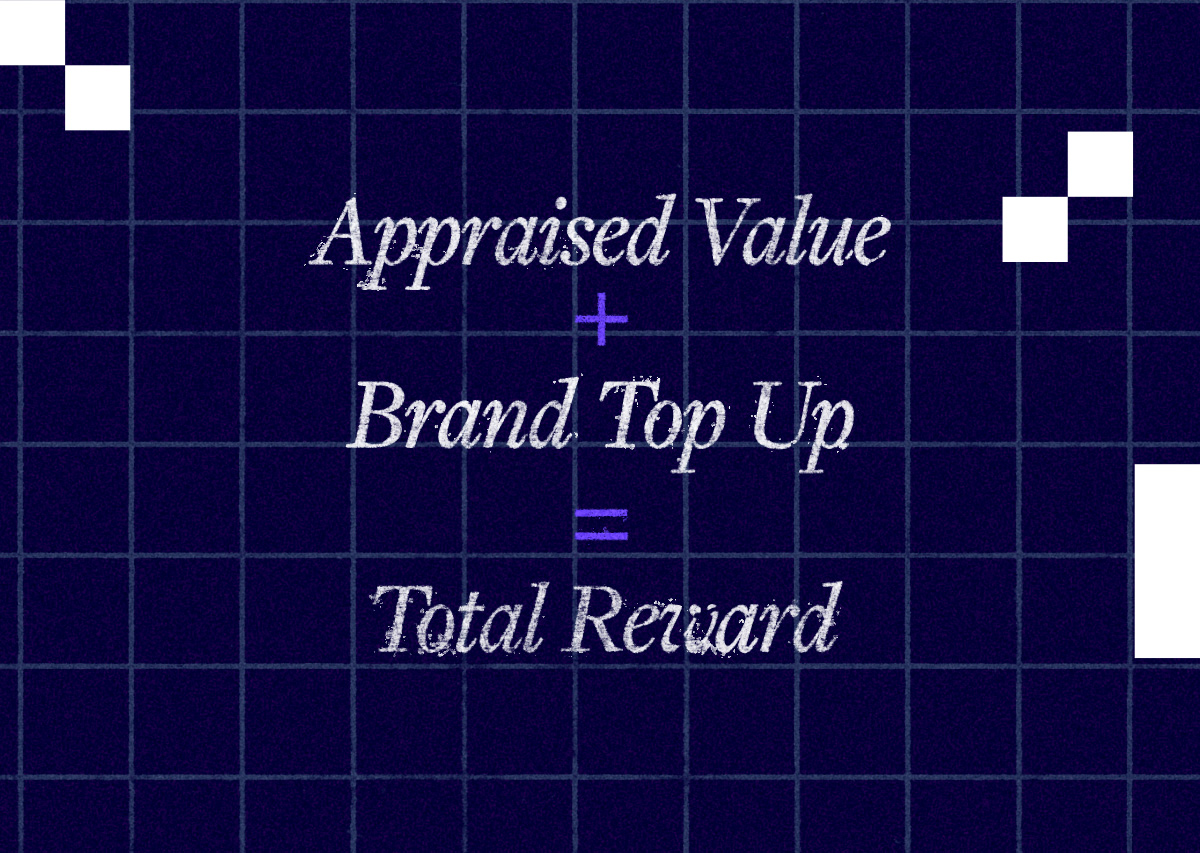
The older and more worn the device, the closer its real resale value sits to zero, which means the top-up is doing almost all the work on exactly the devices a brand most wants back in circulation. This is the exact mechanic our trade-in promotions solution is built around.
A few structural choices keep this controllable:
- Submission route: ship-in or in-store, with a single official entry point so claims can actually be tracked and controlled
- Independent appraisal: the device’s worth is assessed by a third party, not the brand marking its own homework
- A fixed claim window: a clear start and end date, not an open-ended promise
How Consoles Differ From Phones and Laptops
Consoles carry a lower residual value than phones or laptops at the same age, which means the brand-funded top-up is doing proportionally more of the work on an older console trade-in than it would on, say, a two-year-old phone.
Accessories matter more too, controllers, headsets, and charging docks can meaningfully change perceived value even when the console itself is standard. And every console trade-in needs an account sign-out and factory reset step before it’s resold or recycled, the same secure, compliant data-wiping discipline covered in our trade-in programme service, and in more general depth in our trade-in promotions guide.
Designing the Campaign Around Your Objective
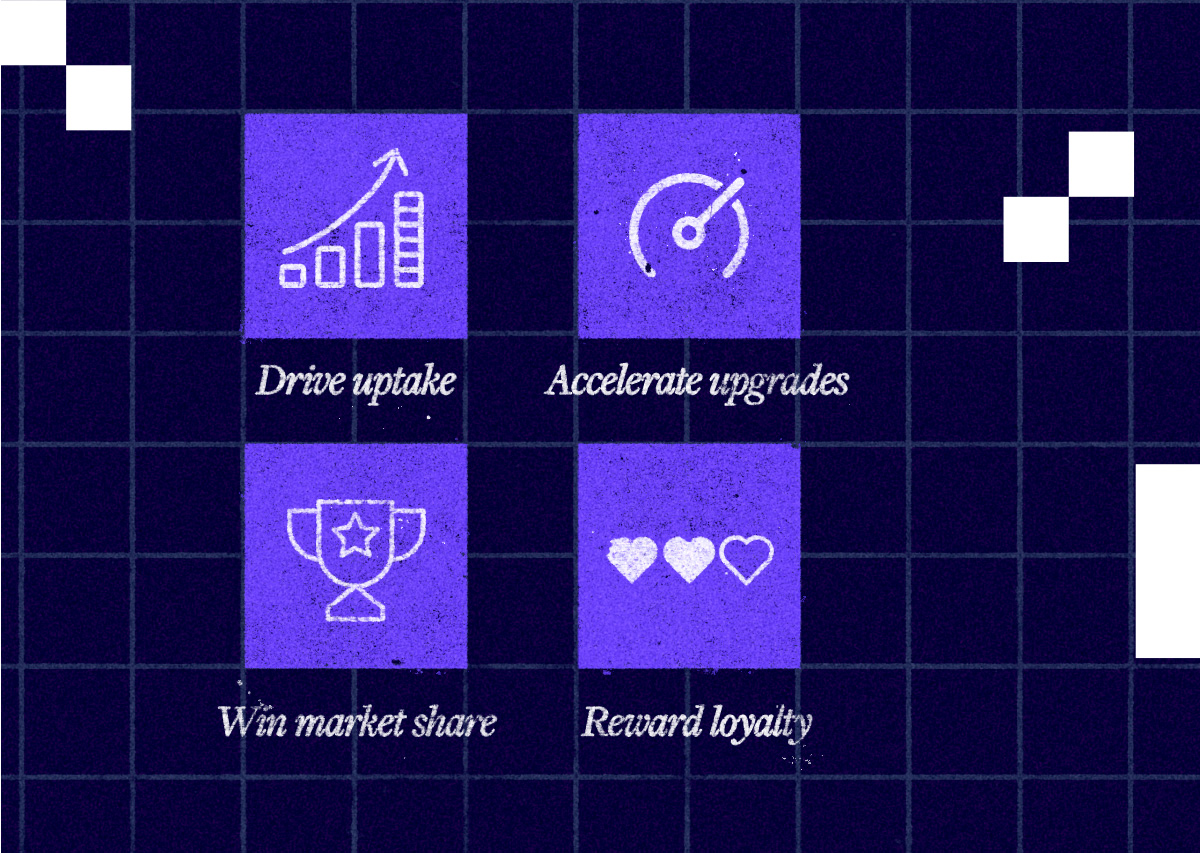
A console trade-in isn’t one mechanic, it’s a lever that can be tuned towards very different outcomes depending on who’s eligible and what device qualifies. The same launch window supports at least four distinct campaign designs:
- Drive broad uptake: accept almost anything, including devices that no longer work, to maximise the number of people who trade in and buy new
- Accelerate the upgrade cycle: target only more recent older devices, encouraging customers who’d otherwise wait another year or two to move now
- Win market share: target competitor-brand devices specifically, turning the launch into a direct switching incentive
- Reward loyalty: target only the brand’s own prior-generation devices, helping existing customers upgrade rather than chasing new ones
These aren’t mutually exclusive across a brand’s wider programme, but a single campaign should pick one. Trying to do all four at once with one set of rules is usually how a trade-in offer ends up confusing to customers and expensive to run.
Where It Breaks
A launch-tied trade-in concentrates demand into a short window, and consoles make that concentration sharper than most categories, pre-orders convert the moment a console goes live, and the bulk of day-one demand lands in the same narrow release window that produces midnight launch queues and first-week sell-outs.
The same pattern shows up around any flagship CE launch, a new phone, a major laptop refresh, not just consoles, but console trade-in has two failure points OPIA’s claim validation is specifically built to catch:
- Incomplete submissions: a console trade-in usually includes more than the device itself, power cable, controller, sometimes a bundled game, and customers often don’t realise what’s required for the trade-in to be accepted, leading to rejected or delayed claims on arrival
- Unresolved platform accounts: this hits hardest on ship-in trade-ins, there’s no retail checkpoint at all, so a console still signed into PSN or Xbox Live arrives at the fulfilment centre unprocessable. Even in-store, staff don’t always have a reliable way to check account status before accepting the device, so it isn’t solved just by having a shop involved
Neither is complicated to solve, clear instructions on what to include and how to sign out before shipping, caught before the claim is processed rather than after. Both are easy to underestimate if a campaign is sized the way a phone or laptop trade-in would be.
Capping the Top-Up Exposure
Because the top-up is funded per device, not per sale, total cost scales directly with how many people trade in, and a launch window can pull in far more volume than a quieter period would. Modelling a plausible range of claims before launch, and capping total exposure where the top-up is generous enough to matter, keeps a popular offer from becoming an unplanned cost overrun.
The brands that get the most out of a launch-window trade-in aren’t the ones offering the biggest top-up. They’re the ones who decided what the campaign was actually for, drive volume, accelerate upgrades, win switchers, or reward loyalty, before they designed the mechanic around it. Everything else, the structure, the caps, the capacity planning, is execution. The objective is the strategy.
Trade-In in Practice
OPIA has run trade-in and device-upgrade programmes for consumer electronics brands across multiple markets, and the pattern holds beyond consoles.
Intel: When Intel launched Ultrabooks into a market that didn’t understand why to pay more for one, OPIA ran the research, then built the offer: a fixed £150 rebate for any working notebook traded in. Within six weeks, Ultrabook sales ran at more than ten times the pre-promotion rate, with participation at 15% against a 12.5% forecast. See the case study.
Lenovo: Think Trade-In gives UK small and medium businesses 20% cashback on selected Think laptops and PCs when they trade in a used device, no revaluation required. The results lean sustainability over sales: more than 2,200 trees planted, 88% of devices refurbished or reused, and over 1,225 tonnes of CO2 offset to date. See the case study.

FAQs
A private sale may return slightly more on the device’s raw resale value, but a brand-run trade-in adds a funded top-up on top of that value, plus the convenience of a single, controlled transaction, which is usually worth more than the marginal difference in private resale price.
A legitimate trade-in programme requires an account sign-out and factory reset before the device is resold or recycled, the same consumer-protection step covered in our general trade-in promotions guide.
Modelling the plausible range of claims before launch and capping the total top-up exposure where the reward is generous enough for volume to matter.
Yes. The same mechanic can be tuned to drive broad uptake, accelerate upgrades among recent device owners, win customers from competitor brands, or reward existing customers specifically, depending on eligibility rules.