



The Hidden Costs of a Sales Promotion: What Brands Miss
This content is provided for informational purposes only and does not constitute legal advice.
The hidden cost of sales promotions is a well-covered topic, but almost always from one specific angle: the economics of discounting. Subsidisation, cannibalisation, stockpiling, customer conditioning, the well-documented ways a price cut quietly destroys more margin than the headline sales lift suggests.
That analysis is accurate, and worth understanding. But it only tells half the story. Moving away from discounting, toward mechanics like cashback, gift with purchase, or trade-in, genuinely reduces many of those demand-side costs. It does not eliminate cost altogether. It replaces one set of hidden costs with a different one: the operational cost of running a promotion properly. This is the side of the picture almost nobody writes about, because it only becomes visible once you’ve managed a campaign end to end.
This guide covers both halves honestly: the well-known cost of discounting, why non-discount mechanics change that picture, and the operational costs that brands consistently underestimate when they make the switch.
Table of Contents
- Key Takeaways
- The Cost Everyone Already Knows About: What Discounting Really Costs
- Why Non-Discount Mechanics Change the Picture, Without Eliminating Cost
- How to Budget for the Full Cost of a Sales Promotion
- The Cost You Can't Put a Number On: Brand Equity
- A Practical Sales Promotion Cost Checklist
- Building These Costs Into Planning From the Start
- How Opia Can Help
- FAQs
Key Takeaways
- The well-documented hidden costs of discounting, subsidisation, cannibalisation, and stockpiling, occur because every customer receives the discount automatically, whether they needed the incentive or not
- Redemption-based mechanics like cashback reduce these specific costs, since only customers who actively claim receive the reward, and claim rates are rarely 100 percent
- Non-discount mechanics introduce a different cost category: the operational cost of claim validation, fraud prevention, customer service, and compliance
- Gift card liability, trade-in disposal cost, and multi-market compliance review are commonly left out of the initial campaign budget entirely
- A complete campaign budget accounts for both the mechanic’s demand-side efficiency and its operational cost, not just the reward value
The Cost Everyone Already Knows About: What Discounting Really Costs
The economics of discounting are well studied, and worth summarising briefly since they set up the contrast that matters for the rest of this guide.
- Subsidisation: paying out the discount to customers who would have purchased at full price regardless
- Cannibalisation: shifting demand from higher-margin products to the discounted item, rather than generating genuinely new sales
- Stockpiling: customers buying more than they need while the discount is live, followed by a dry spell where they don’t need to buy again
- Customer conditioning: training shoppers to wait for the next discount rather than buying at full price, a cost that compounds over time
These costs share a common root: a discount applies automatically to every qualifying transaction. There is no mechanism to target the incentive only at customers who genuinely need it to convert. For a full breakdown of why this matters commercially, see our guide on how to run a sales promotion without discounting.
Why Non-Discount Mechanics Change the Picture, Without Eliminating Cost
Redemption-based mechanics, Cashback, Gift with Purchase, Trade-In, work differently. The customer pays full price and only receives the reward after taking an additional action: submitting a claim, uploading proof of purchase, or trading in an old device.
This single design difference changes the demand-side economics significantly..
What this does not do is make the promotion free to run. It shifts the cost from the demand side to the operational side, and that operational side is where most campaign budgets fall short. For more on how this affects overall campaign return, see our guide to measuring sales promotion ROI.
How to Budget for the Full Cost of a Sales Promotion
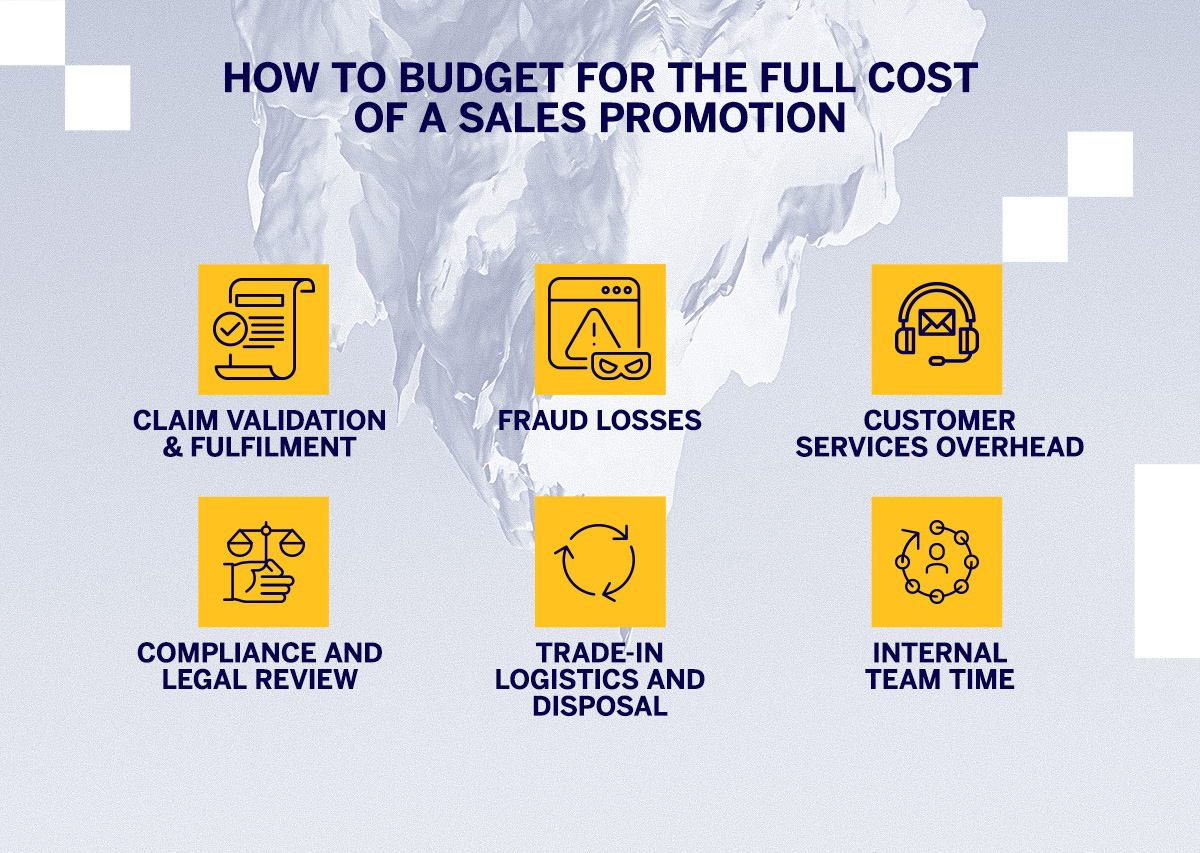
These are the costs that rarely appear on an initial campaign budget, and consistently surprise brands once a campaign is live.
Claim validation and fulfilment
Every claim needs to be received, checked against the promotion’s terms, verified for authenticity, and paid out. Whether this is handled internally or through a managed partner, it is a real, ongoing operational cost that scales with claim volume, not a one-time setup expense.
Fraud losses
Redemption-based mechanics are a fraud target precisely because there is money or value attached to a successful claim. Invalid or fraudulent claims paid before detection are a direct cost, and the risk scales with reward value and campaign visibility. Sophisticated validation reduces this significantly, but budgeting for zero fraud risk is unrealistic.
Customer service overhead
A clunky claim process generates support queries: missing rewards, rejected claims, confusion over eligibility. The cost of handling this volume grows in direct proportion to how much friction exists in the claim journey, which is one of the strongest arguments for investing in a well-designed process upfront.
Compliance and legal review
Particularly relevant for multi-market campaigns. Legal review timelines and requirements vary significantly by country, and the cost of getting this wrong, delayed launches, non-compliant terms, is far higher than the cost of budgeting for proper review from the start. Our guide on launching a sales promotion across multiple markets covers the specific regulatory detail that catches brands off guard.
Trade-in logistics and disposal
A trade-in mechanic carries a cost category most other mechanics do not: handling, refurbishing, data sanitisation, recycling, or responsibly disposing of the traded-in device.
In the UK, this falls under the WEEE (Waste Electrical and Electronic Equipment) Regulations, and brands need to work with a WEEE-compliant partner for certified recycling, data sanitisation, and environmental traceability throughout the reverse logistics process.
Internal team time
Hours spent by marketing, legal, finance, and customer service teams managing a campaign internally represent a genuine cost, even when no invoice is generated for it. Valuing this time realistically, rather than treating internal resources as free, gives a far more accurate picture of what a campaign actually costs to run.
The Cost You Can’t Put a Number On: Brand Equity
Beyond the costs that show up on a spreadsheet, poorly designed promotions carry a cost that is real but genuinely difficult to quantify: the impact on how customers perceive price and value going forward.
Visible price cuts reset the reference price customers use to judge a product, an effect that compounds with repetition and is expensive to reverse. This is covered in detail in our guide to protecting shelf price with promotions.
The reason this belongs in a cost conversation, even without a precise number attached, is that it changes the comparison between mechanics. A discount that looks cheaper on a spreadsheet may carry a brand equity cost that a slightly more expensive, non-discount mechanic avoids entirely.
A Practical Sales Promotion Cost Checklist
A summary of the full cost picture worth building into any campaign budget before launch.
| Cost Category | What to Check Before Launch | Where It Shows Up |
|---|---|---|
|
Reward value |
The headline cost, but only the starting point |
Campaign budget line |
|
Claim validation and fulfilment |
Cost per claim processed, verified, and paid, whether managed internally or through a partner |
Operational spend, often uncosted if handled in-house |
|
Fraud losses |
Expected fraud rate for the mechanic and reward value, and what prevention measures are budgeted |
Direct loss on invalid claims paid before detection |
|
Customer service overhead |
Expected query volume and cost per contact if the claim process has friction |
Support team time and tooling |
|
Compliance and legal review |
Review timeline and cost per market, especially for multi-market campaigns |
Legal or agency fees, campaign delay risk |
|
Trade-in logistics and disposal |
Handling, refurbishment, data sanitisation, certified recycling, and responsible disposal costs per unit traded in |
Reverse logistics spend, often absent from the initial budget |
|
Internal team time |
Hours spent managing the campaign internally, valued at a realistic cost, not treated as free | Opportunity cost, rarely tracked but genuinely incurred |

Building These Costs Into Planning From the Start
The brands that avoid unpleasant surprises are the ones that account for this full picture at the planning stage, not the ones that discover it mid-campaign. Our sales promotion planning guide walks through a structured approach to building a campaign budget that reflects the real cost, not just the headline reward value.
A fixed-fee pricing model is one of the most effective ways to convert most of this list into a single, predictable number agreed before launch. Rather than separately budgeting and monitoring claim validation, fraud prevention, and fulfilment as individual line items, a fixed per-unit fee bundles these into one cost that is known with certainty from day one.
How Opia Can Help
Opia manages the full operational cost of a promotional campaign as part of a single, predictable fee: claim validation, fraud prevention, customer service, fulfilment, and reporting, all included rather than billed as they arise. This means the cost picture a client sees before launch is the cost picture they actually experience once the campaign is live.
If you’re planning a campaign and want a realistic view of the full cost before you commit to a mechanic, get in touch with our team.
FAQs
What is the hidden cost of a sales promotion?
For discounts, it includes subsidisation, cannibalisation, and stockpiling, costs that occur because every customer receives the discount automatically. For non-discount mechanics like cashback, the hidden cost shifts to the operational side: claim validation, fraud, and customer service.
Does cashback avoid the hidden costs of discounting?
Largely, yes, since only customers who actively claim receive the reward, unlike a discount which applies to every transaction. It doesn’t eliminate cost entirely, it introduces a different, operational cost category instead.
What operational costs do brands most often forget to budget for?
Claim validation and fulfilment, fraud losses, customer service overhead, and for trade-in campaigns specifically, logistics and disposal cost. These rarely appear on an initial campaign budget but are real, recurring expenses.
How can I get a more accurate view of total campaign cost before launch?
Budget every category, not just reward value. A fixed-fee model bundles claim validation, fraud prevention, and fulfilment into one predictable number agreed before launch.

How to Launch a Sales Promotion Across Multiple Markets
This content is provided for informational purposes only and does not constitute legal advice.
Running the same promotion across multiple markets involves more than just translating the campaign materials. Each market can bring unique regulatory requirements, consumer expectations, specific retail environment and commercial calendar, all of which can affect how the promotion is structured, communicated and timed. These factors need to be considered at market level while maintaining a consistent overarching campaign strategy.
This guide covers what changes when a sales promotion moves beyond a single market: the legal aspects that can be easily overlooked, what should stay consistent versus what must adapt, and how to build one operational backbone that supports local requirements without becoming ten separate campaigns.
Brands typically adopt one of two rollout approaches for multi-market promotions: A promotion may launch across all markets simultaneously, or the promotional mechanic may be tested in one market before being rolled out to further markets on a staggered timeline. The considerations below will apply in both scenarios, although timing and sequencing decisions differ depending on which path is taken.
Table of Contents
- Key Takeaways
- Why Multi-Market Promotions Involve More Than a 'Copy & Paste Job'
- Regulatory Landmines That Can Easily Be Missed
- What Should Stay Consistent vs What Must Adapt
- Challenges of a Single Global Launch Date
- Building a Unified Operational Backbone, Not Several Separate Campaigns
- Common Mistakes In Running Promotions Across Markets
- A Practical Multi-Market Launch Checklist
- How Opia Supports Multi-Market Campaigns
- FAQs
Key Takeaways
- A promotional mechanic that works in one market does not automatically work in another. Legal rules, reward value perception, and retail calendars all vary by country
- The UK HFSS multibuy rules, the EU Omnibus Directive, France’s Soldes windows, and category-specific promotion restrictions are weighty regulatory considerations that can create significant challenges when compliance is addressed too late
- The mechanic itself (cashback, gift with purchase, trade-in) can usually stay consistent across markets. Reward value, legal terms, and launch timing typically cannot
- A single global launch date is rarely the right call. Regional retail calendars and regulatory windows often dictate timing regardless of your commercial preference
- A shared operational backbone, unified redemption platform, consistently applied fraud standards, and centralised reporting, are some of the features offered by Opia which make multi-market execution manageable at scale
Why Multi-Market Promotions Involve More Than a ‘Copy & Paste Job’
The instinct with a successful promotion is to replicate it. Same mechanic, same reward value, same messaging, just translated. This works until it doesn’t, and the points where it breaks are rarely obvious until a campaign is already live. As the multi-market expert, Opia will ensure your promotion is delivered seamlessly across all territories and optimised for maximum impact.
Three things vary by market in ways that are easy to underestimate.
- Legal and regulatory compliance: rules around price claims, permitted promotional mechanics and marketing opt-ins / consent communications can vary dramatically across different territories
- Reward value and purchasing power: a £50 reward does not carry the same perceived value in every market. Flat currency conversions without adjusting for local purchasing power and margin can make a promotion feel generous in one market and thin in another
- Retail and channel structure: who needs to approve a promotion, and the lead time required, can vary considerably between markets. A retailer relationship that moves quickly in the UK may take much longer elsewhere
Regulatory Landmines That Can Easily Be Missed
This section covers an area that many international marketing guides overlook, because it requires practical, applied operational experience rather than generic knowledge. The rules outlined below focus on promotional campaigns in specific territorial markets, not marketing activities more broadly. This list is not exhaustive, and additional requirements may apply depending on the promotion mechanics, jurisdiction, industry, and other relevant factors.
| Regulation | Market | What It Restricts | What We Recommend |
| EU Omnibus Directive, Article 6a Price Reduction Rules | EU‑wide, Retail channels | “Was/now” price claims referencing a prior price must use the lowest price applied in the 30 days before the reduction where this rule applies to price reduction announcements to consumers | Build verifiable price‑history logging from day one and avoid discount‑style “was/now” messaging unless the 30‑day lowest price is tracked and can be evidenced |
| French Soldes | France | Below‑cost sales periods are restricted to two government‑set windows per year; items must have been purchased at least one month before the sale starts | Align any France‑inclusive sale timing with the current Soldes calendar and confirm product eligibility and acquisition dates before finalising the campaign plan |
| UK HFSS Multibuy Ban | United Kingdom | Volume promotions (e.g., BOGO, 3‑for‑2) are prohibited for products high in fat, sugar, or salt | Check if products are HFSS; where in scope, replace volume deals with compliant mechanics such as gift‑with‑purchase or cashback |
| GDPR | EU‑wide | Promotional emails/SMS require explicit, active opt‑in; behavioural targeting for personalised promotions must have a lawful basis | Embed opt‑in capture in the claim journey and segment audiences by consent status prior to each communication |
| “No Purchase Necessary” / Free Route of Entry (FROE) Requirement for chance based mechanics | USA | A sweepstakes or promotional game of chance may not require a purchase to enter (this is the equivalent to a prize draw or instant win the UK) | Include a free entry route for any sweepstakes from the outset that is offered in the USA, which must be reflected in T&Cs and creative |
| WEEE Regulations | UK and EU | Electronic waste from trade‑in devices must be handled, disposed of, or refurbished in compliance with e‑waste rules | Use a WEEE‑compliant partner for any trade‑in, and track refurbishment/disposal outcomes for campaign reporting |
| U.S. FTC Endorsement Guidelines | USA | Referral and incentivised promotions must clearly disclose material connections between the referrer and the reward | Add clear disclosure obligations to referral terms and ensure referred customers are told the referrer received a reward |

What Should Stay Consistent vs What Must Adapt
Deciding what counts as core to the promotion versus what requires local adaptation is the single most useful exercise before a multi-market campaign goes into planning.
Usually consistent across markets
- The promotional mechanic itself: Cashback, Gift with Purchase, or Trade-In can typically remain the same in every market (subject to certain exceptions where local rules may prohibit or impose additional regulatory hurdles)
- Core brand messaging and creative direction, to maintain a consistent brand identity across markets and strengthen customer attachment
- The overall claim journey structure, even if language and local details change
Usually must adapt by market
- Reward value, adjusted for local purchasing power and margin, not simply currency conversion
- Legal terms and conditions, aligned with local promotional laws
- Launch timing, based on retail calendars and any regulatory windows
- Consent and communication approach, adapted to meet specific opt-in requirements of the territory
Challenges of a Single Global Launch Date
Beyond the obvious point of avoiding major local holidays, other factors specifically affect promotional timing across markets. Regional retail peaks land on different dates: back-to-school, major sales periods, and cultural shopping moments do not align globally. And in some markets, regulation dictates timing regardless of commercial preference – France’s Soldes windows being the clearest example, where below-cost sales can only run during specific government-mandated periods.
The practical implication is that a genuinely simultaneous global launch is often not achievable, or not advisable, once these factors are taken into account. Building timing flexibility into the plan from the start avoids a late scramble to adjust one market’s launch date after everything else has already been finalised.
Building a Unified Operational Backbone, Not Several Separate Campaigns
The most common operational mistake in multi-market promotions is treating each market as its own campaign, built and managed independently. This creates duplicated effort, inconsistent fraud standards, and reporting that cannot be compared cleanly across markets.
A stronger approach is to deploy a single platform, with a unified fraud prevention and validation standard, and a consolidated reporting structure, while allowing for local variation where market-specific requirements mandate it:
- A single redemption platform capable of handling multiple currencies, languages, and local payment or fulfilment methods
- Centralised fraud detection and claim validation, applied consistently even as specific rules vary by market
- Unified reporting that allows performance to be compared across markets on the same basis

Common Mistakes In Running Promotions Across Markets
- Assuming translation is the same as localization: converting the copy into another language is not the same as adapting the offer to local expectations, cultural norms and regulatory requirements
- Underestimating local legal review timelines: compliance review for some markets takes considerably longer than for others, and this needs to be factored into the project timeline from the start, not discovered midway through
- Setting identical reward values without adjusting for local purchasing power or margin: what feels generous in one market can feel thin, or unaffordable, in another
- Treating each market’s launch as independent rather than coordinated: this is what creates duplicated platforms, inconsistent fraud standards, and reporting that is inconsistent and not comparable across markets
A Practical Multi-Market Launch Checklist
A summary of what to confirm before a multi-market promotion goes live.
| Checklist Item | What to Confirm |
| Legal review per market | Promotional rules, discount-claim advertising laws, and category restrictions confirmed for every market in scope |
| Currency and reward parity | Reward value adjusted for local purchasing power and margin, not a flat currency conversion |
| Platform readiness | Redemption platform supports the required currencies, languages, and local payment or fulfilment methods |
| Local retailer or partner sign-off | Retail and channel partners in each market have approved the mechanic and timeline |
| Launch date validation | Chosen dates checked against regional holidays, retail calendars, and any market-specific regulatory requirements for launch windows |
| Fraud and validation consistency | Claim validation and fraud prevention standards applied consistently across markets, adapted only where local rules require it |

How Opia Supports Multi-Market Campaigns
Opia designs and manages promotional campaigns across multiple markets from a single operational platform, handling everything from local legal review coordination through to claim validation, fraud prevention, and unified reporting. This means brands get one point of accountability for a campaign running in ten markets, rather than ten separate vendor relationships to manage.
Our fixed-fee pricing model also applies consistently across markets, which means the financial exposure of a multi-market campaign is capped for each market before launch, rather than accumulating into an unpredictable total as the campaign rolls out globally.
If you are planning a promotion across multiple markets and want to talk through what needs to adapt and what can stay consistent, get in touch with our team.
FAQs
What changes most when running a promotion across multiple markets?
Legal terms, reward value, and launch timing are the three things that most commonly need to adapt by market. The core mechanic, such as cashback or gift with purchase, can usually stay the same.
Can I launch the same promotion in every market on the same date?
Not always. Regional retail calendars and regulatory windows can often make a single global launch date impractical.
Do I need different reward values for different markets?
Usually, yes. A flat currency conversion of a reward value does not account for local purchasing power or margin. Adjusting reward value by market keeps the offer equally compelling everywhere it runs.
How do I keep fraud prevention consistent across markets with different rules?
Apply one centralized validation and fraud detection standard across all markets, adapting only where local legal requirements genuinely demand it.

How to Protect Shelf Price With Promotions
If you sit in a trade marketing or category management seat at a consumer electronics or appliance brand, you know this tension well. A retail buyer sets a sell-through target. Your brand team defends a price position built over years. The easiest way to hit the number is a price cut, and it is also the most expensive thing you can do to the number next quarter.
Most advice on protecting shelf price gets the balance wrong, treating it as a matter of discounting more carefully rather than questioning whether the price needs to move at all. This guide takes a different position.
The most reliable way to protect your shelf price is to run promotions that never touch it, delivering value to the customer after purchase instead of at the register. It covers why shelf price matters more than most brands realise, where the standard advice falls short, which mechanics protect price while still driving sell-through, and the guardrails worth having either way.
Key Takeaways
- Shelf price is a brand asset. Every visible price cut resets the reference price customers use to judge what your product is worth
- Temporary price reductions and discount guardrails limit the damage of discounting. They do not eliminate it
- Post-purchase mechanics such as cashback, gift with purchase, and trade-in deliver promotional value while the shelf price stays intact
- Because the reward is delivered brand-direct after purchase, these mechanics avoid the channel conflict that visible price cuts create across retail partners
- Price pressure tends to cluster around predictable moments: new model launches, end-of-line clearance, and competitor launch windows. Each calls for a different mechanic
- Fixed-fee promotional models cap the cost of value-added campaigns before launch, giving category teams the budget certainty finance expects from a discount
Why Shelf Price Is Worth Protecting
Shelf price does more than determine your margin on each sale. It anchors how the market values your product, and in consumer electronics that value story is most of what the brand is selling.
Reference price and the anchoring effect
Customers do not evaluate prices in isolation. They compare against a reference price built from what they have seen before. Every time your product appears at a reduced price, that reference point moves down.
Once a customer has seen a laptop at £899, the £999 shelf price stops looking like the price and starts looking like a markup. This effect compounds with every promotion and is extremely difficult to reverse, particularly on a product line that will still be selling in eighteen months.
The premium positioning problem
For brands competing on quality, innovation, or experience rather than price, frequent visible discounting sends a contradictory signal. A flagship device cannot claim premium positioning while regularly appearing at 25% off. Customers resolve that contradiction by concluding the discount price is the real price, and the premium claim quietly dies.
This is the argument the brand team is usually making internally, and it is the one that gets overridden the moment a quarter looks soft.
Price pressure follows the product lifecycle
For most consumer electronics and appliance ranges, pressure on shelf price does not arrive randomly. It clusters around three predictable moments. A new model launch puts pressure on the outgoing range as retailers push to clear stock ahead of the replacement. An end-of-line transition creates a genuine need to move remaining inventory before it becomes obsolete. And a competitor launch, particularly a strong one, invites an immediate discounting response to defend market share.
Each of these moments has a mechanic that fits it better than a price cut.
Trade-in is built for exactly the launch-cycle upgrade moment, converting owners of the outgoing model into buyers of the new one without discounting either.
Cashback and Gift with Purchase absorb competitor pressure without resetting the reference price on a product that still has a long shelf life ahead of it.
Recognising which moment you are in changes which tool you reach for.
Retailer and channel relationships
Shelf price is also a commercial agreement with your retail partners. When one channel discounts, every other channel notices. Partners either demand matching terms or lose sales to the discounting channel, and your next pricing conversation gets harder across the board. For brands selling through multiple retailers and marketplaces, a visible price cut agreed with one partner becomes a problem with all of them.
The pull-forward trap
Predictable discounting trains customers to wait. Brands that promote on a regular cycle consistently see purchase activity fall between promotional periods and spike during them. Total annual volume often barely moves.
What changes is when customers buy, and at what margin, which makes forecasting and stock planning harder for exactly the teams who have to hit a number every quarter regardless.
For a deeper look at how this affects campaign economics, see our guide to measuring sales promotion ROI.

The Problem With the Standard Advice
Search for advice on protecting shelf price and you will find three recurring recommendations: use temporary price reductions instead of permanent cuts, set discount guardrails, and negotiate trade funding carefully.
All three are sensible. None of them solves the underlying problem.
A temporary price reduction is still a visible price reduction. The shopper standing at the shelf, or scrolling the retailer’s site, does not distinguish between a permanent cut and a four-week TPR. They see a lower price, and their reference price adjusts accordingly. The temporary framing protects your internal price list. It does not protect the customer’s perception, and it is the customer’s perception that determines what they expect to pay next time.
Discount guardrails, such as capping depth at 25% or limiting frequency to twice a quarter, are damage limitation. They are worth having, and we cover them below. But a rule that says you will only erode your reference price twice a quarter is still a plan to erode it, just more slowly.
The honest conclusion is that any promotion built on visible price reduction involves a trade between short-term sell-through and long-term price integrity. The way out of that trade is not better discounting discipline. It is a different kind of promotion entirely.
Our guide on How to Run a Sales Promotion Without Discounting covers the full strategic case.
The Mechanics That Protect Shelf Price
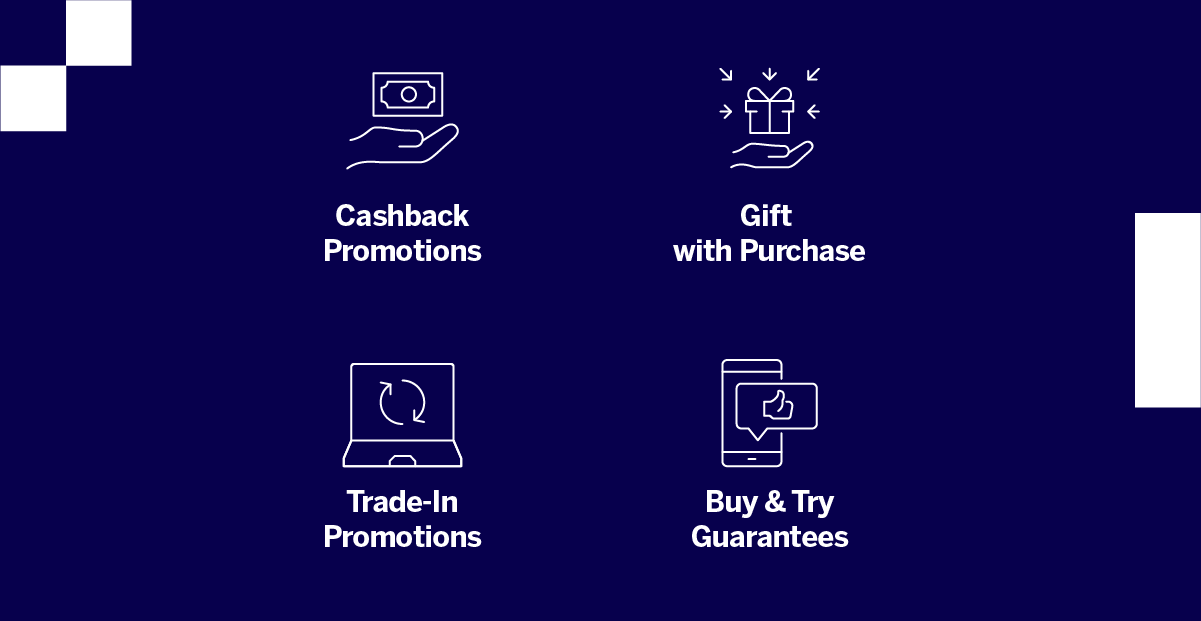
The mechanics below share one defining feature: the customer pays the full shelf price at the register, and the promotional value is delivered separately. The price on the shelf, in the ad, and in the customer’s memory never changes.
Cashback promotions
The customer buys at full price and claims a cash reward after purchase. The advertised price is untouched, the value message is clear, and because the reward is claimed rather than automatic, your effective cost per unit is lower than the equivalent discount. Cashback promotions are the most direct substitute for a price cut and work well against a competitor launch, where the goal is to hold sell-through without resetting the price on a product with a long life ahead of it.
Gift with purchase
Instead of lowering the price, you add value on top of it. A streaming credit with a TV, professional installation with an appliance, a complementary accessory with a device. The customer’s perception of the deal improves while the price point is reinforced rather than undermined.
This works particularly well at launch, when the goal is to build a compelling first impression around a new range rather than discount it before it has established itself.
See our full gift with purchase guide for how to choose the right gift.
Trade-in promotions
The customer pays full price for the new product and receives value for their old one through a separate process. This is the mechanic built specifically for the launch-cycle moment: it converts owners of the outgoing model into buyers of the new one, moves them off the product you need to clear, and does it without discounting either the old range or the new. Trade-in promotions also create a switching barrier competitors find hard to match once a customer has committed.
Buy and try guarantees
Purchase hesitation on premium products is often about risk, not price. A satisfaction guarantee removes the risk without touching the price, unlocking customers who would otherwise wait for reviews, try a competitor’s product, or defer the purchase. The shelf price holds, and the guarantee itself reinforces premium positioning: a brand confident enough to offer one is signalling quality, not desperation.

Promotional Guardrails Worth Setting
Whatever mix of mechanics you use, promotional discipline needs structure that survives beyond one campaign owner. These guardrails keep activity consistent across teams, product lines, and markets.
| Guardrail | What It Controls | Example Rule |
| Mechanic-first policy | Whether price reductions are ever the default response to a soft sell-through number | All promotional briefs must consider a value-added mechanic before a price reduction is approved |
| Depth limit | How far any approved price activity can go | Core range never promoted below a defined threshold of MSRP |
| Frequency limit | How often the same SKU can be promoted | No SKU promoted more than twice per quarter, never in consecutive months |
| Channel consistency | Whether promotional value differs across retail partners | Post-purchase rewards delivered brand-direct so every retailer sells at the same shelf price |
| Reward ceiling | The maximum value delivered per unit through any mechanic | Reward value capped at a set percentage of product margin, agreed with finance before launch |
The most important guardrail is the first one. Making value-added mechanics the default consideration, rather than the exception a category manager has to fight for, changes the promotional culture of the organisation over time and gives the next person in the seat something to point to when a discount request lands on their desk.
For a structured approach to planning campaigns within these rules, see our sales promotion planning guide.
Protecting Price Across Multiple Retail Channels
Shelf price protection gets harder as distribution gets wider, and for brands selling through big-box retail, pure-play e-commerce, and direct-to-consumer simultaneously, a single promotional mechanic rarely fits every channel cleanly.
Post-purchase mechanics resolve most of this structurally. Because the reward is delivered directly from the brand to the customer after purchase, every retail partner sells at the same shelf price. No partner is undercut, no price matching is triggered, and the promotional value flows through a channel the brand fully controls. This also means the brand, not the retailer, captures the first-party customer data the claim process generates, which matters when the retailer relationship itself is one you are trying to protect.
How Opia Can Help
Opia designs and manages shelf-price-safe promotions for some of the world’s leading consumer electronics and appliance brands, including Samsung, LG, Dell, and Lenovo. From cashback and trade-in programmes to gift with purchase and satisfaction guarantees, we handle the full campaign end-to-end: strategy, redemption website, claim validation, fraud prevention, fulfilment, and reporting.
Our fixed-fee pricing model caps your promotional liability before the campaign launches, which means a value-added promotion can be budgeted with the same certainty finance expects from a discount, without any of the price erosion. Whether you are managing a launch, an end-of-line transition, or a competitor response, we can help you match the mechanic to the moment.
If you are planning promotional activity and want to protect your shelf price while still hitting your sell-through targets, get in touch with our team.
FAQs
What does it mean to protect shelf price?
Keeping your product’s advertised price stable while still running promotions, delivering value through other means instead of a price cut.
Why is protecting shelf price important?
It anchors how customers value your product. Every visible price cut lowers that reference point and trains customers to wait for the next one.
Do temporary price reductions protect shelf price?
Only partially. Shoppers still see the lower price and adjust their expectations, whether the cut is temporary or permanent.
What is the best promotion that does not affect shelf price?
Cashback is the most direct option. Gift with purchase, trade-in, and buy and try guarantees also protect shelf price fully.
Which mechanic should I use for a launch versus a clearance?
Use gift with purchase or trade-in for a launch. A controlled price cut is sometimes right for true end-of-line clearance.
How do post-purchase promotions avoid channel conflict?
The reward goes directly from brand to customer, so every retailer sells at the same shelf price.
How do I budget without knowing the redemption rate?
A fixed-fee model caps your cost per unit before launch, regardless of how many customers claim.


How to Run a Sales Promotion Without Discounting
Most brands reach for a discount when they need to drive sales. It is the fastest lever to pull and the easiest to measure. The problem is that discounting is also one of the most expensive habits a brand can develop, not just in terms of margin, but in terms of how customers come to see your product and what they are willing to pay for it over time.
The good news is that discounting is not the only way to run an effective sales promotion. There is a whole category of promotional mechanics that drive conversion, build loyalty, and generate first-party customer data without reducing the price your customers pay at the shelf.
This guide covers how those mechanics work, when to use each one, and how to build a commercial case for them internally.
Key Takeaways
- Discounting protects short-term volume but erodes long-term brand value and trains customers to wait for the next sale
- Non-discount promotions deliver value to the customer without reducing the shelf price, protecting both margin and brand positioning
- The main mechanics are cashback, gift with purchase, trade-in, buy and try, instant win, and referral programmes
- Each mechanic suits a different commercial objective. The right choice depends on your goal, your product price point, and your risk appetite
- Fixed-fee promotional models remove open-ended financial exposure, making non-discount promotions easier to budget and easier to approve
- Post-purchase mechanics generate first-party customer data through the claim process, something a point-of-sale discount never produces
Why Discounting Is a Short-Term Fix With Long-Term Costs
Discounting works. That is the problem. Because it produces an immediate, measurable sales lift, it becomes the default response every time volume is soft or a campaign needs momentum. Over time this creates a set of commercial problems that are hard to reverse.
Price erosion
Every time you discount, you set a new reference price in the customer’s mind. Research consistently shows that customers anchor to the lowest price they have seen for a product. Once they have bought at £200, paying £250 feels like overpaying, even if £250 is the fair market price. Frequent discounting gradually undermines the perceived value of your product.
Training buyers to wait
Brands that discount on a predictable cycle, quarterly peaks, Black Friday, end of range, create a customer base that learns to wait. Sales data from brands with established discount patterns shows a consistent drop in purchase activity between promotional periods and a spike when discounts arrive. This makes revenue unpredictable and cash flow difficult to manage, particularly when you need to fund stock or invest in growth ahead of a campaign.
Margin compression
A 20% discount on a product with a 25% gross margin, roughly the higher end of what’s typical in consumer electronics today, takes an 80% bite out of your profit, not the 20% the headline discount suggests.
At the lower end of that range, around 15% margin, the same discount pushes you into a loss on every unit sold. At scale, the cumulative margin impact of promotional discounting is one of the least visible but most significant drains on a P&L. For a detailed look at how to calculate the true cost of a promotional campaign, see our guide to sales promotion ROI.
Channel conflict
For brands selling through multiple retail partners, discounting in one channel creates pressure on every other channel. If a product is available at 20% off through one retailer, other partners either demand the same terms or lose sales. This is one of the reasons MAP (Minimum Advertised Price) policies exist, and it is also why non-discount mechanics are particularly valuable for brands with complex distribution.
What a Non-Discount Promotion Actually Looks Like
A non-discount promotion delivers value to the customer without reducing the price they pay at point of sale. The core principle is simple: instead of making the product cheaper, you make the purchase more valuable.
This distinction matters commercially. When a customer buys at full price and receives a reward, you retain the shelf price, you protect your positioning with retail partners, and you generate a claim record that tells you exactly who bought, when, and on what product. A point-of-sale discount produces none of this.
Non-discount promotions also give you more control over who receives the benefit. A price reduction at the shelf goes to every buyer equally, including customers who would have paid full price without any incentive. A post-purchase mechanic can be targeted, time-limited, and structured so that the cost per redemption is predictable before the campaign launches.
For a broader comparison of how these approaches differ commercially, see our guide on discounts vs sales promotions vs offers.
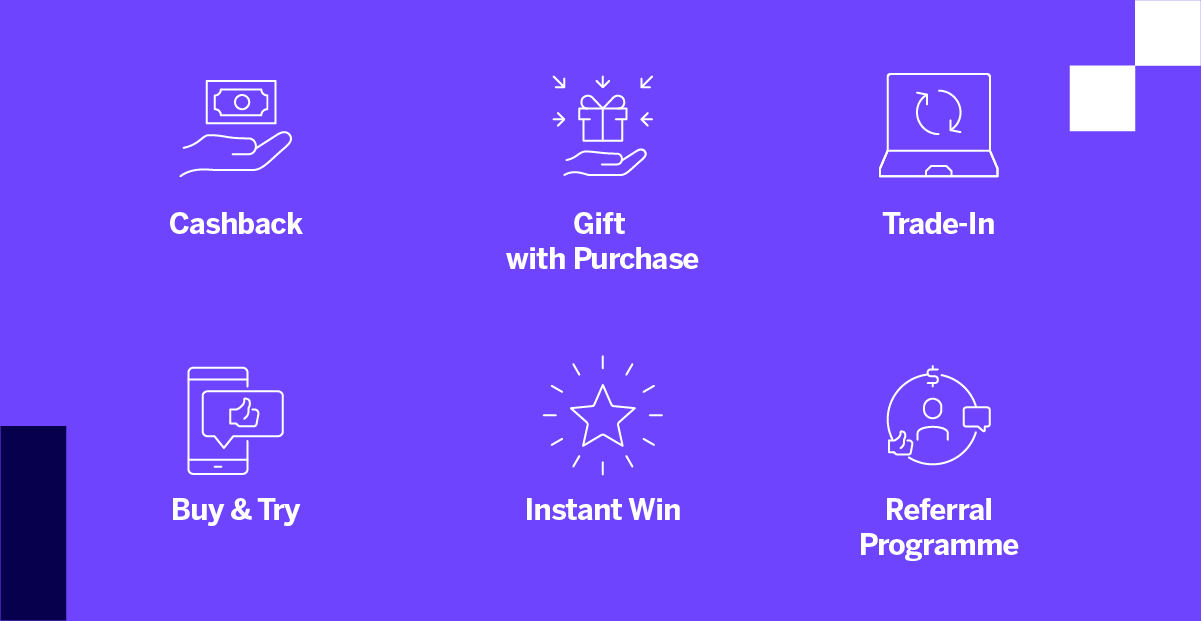
Six Proven Mechanics for Promoting Without Discounting
1. Cashback Promotions
The customer pays the full shelf price and receives a cash reward after submitting a valid claim. The reward is delivered via digital prepaid card, bank transfer, or check, typically within a few days of claim validation.
Cashback is the most commercially versatile non-discount mechanic. It works across most product categories, is easy for customers to understand, and delivers a clear, tangible value that influences purchase decisions. Because the reward is paid post-purchase through a managed claim process, you only pay for customers who actually bought and claimed, and you capture their data in the process.
Opia built a tiered cashback campaign for Dell, offering up to €200 on its XPS and Alienware ranges during back-to-school and Black Friday. Sales grew 25% without a single price cut. Read the case study.
Learn more: Cashback Promotions: What They Are and How They Work
2. Gift with Purchase
The customer buys a qualifying product and receives an additional item or service at no extra cost. The gift can be a physical product, a digital reward such as streaming credit or a gift card, a service such as extended warranty or installation, or a lifestyle reward such as a fuel card. Gift with purchase is particularly effective when the gift is desirable relative to the purchase.
The choice of gift matters. It should be relevant to the customer’s context, complementary to the product they are buying, and perceived as high value relative to its actual cost to you. A gift that feels cheap or unrelated reduces the effectiveness of the promotion even if the headline value is significant.
Opia created a joint promotion for LG and Sky, bundling a discounted Sky Q subscription with LG TV purchases. The campaign exceeded every target and led to a three-year partnership. Read the case study.
Learn more: Gift with Purchase Promotions Guide
3. Trade-In Promotions
The customer exchanges an old or used product in return for a reward, typically credit toward a new purchase or a cash reward. The customer pays full price for the new product and receives the trade-in value through a separate post-purchase process.
Trade-in promotions are particularly powerful for consumer electronics, automotive accessories, and any category where upgrade cycles matter. They create a clear commercial reason to upgrade now rather than later, they support sustainability goals by managing end-of-life product responsibly, and they give you detailed data on the existing product landscape in your customer base.
Opia designed a £150 trade-in rebate for Intel and Dixons Retail to launch Ultrabooks. Sales grew more than tenfold within six weeks. Read the case study.
Learn more: Trade-In Promotions Guide
4. Buy and Try (Satisfaction Guarantee)
The customer buys the product at full price and has a defined window to return it for a full refund if they are not satisfied. Unlike a standard returns policy, a buy and try promotion is actively marketed as the central value proposition of the campaign.
Buy and try is most effective for premium or new-to-market products where purchase hesitation is driven by uncertainty rather than price sensitivity. Removing the financial risk of a bad purchase decision unlocks buyers who would otherwise wait for reviews, try a competitor’s product first, or simply defer the purchase indefinitely. The promotional risk here is redemption rate: if a high proportion of customers return the product, the effective cost is significant.
Opia ran a 60-day Buy and Try trial for Samsung to remove hesitation around its first foldable phones. 95% of participants said it encouraged them to switch brands, try something new, or buy sooner. Read the case study.
A fixed-fee promotional risk model can cap this exposure before launch.
5. Instant Win
Customers who make a qualifying purchase receive a chance to win a prize. The prize can be revealed immediately at point of sale or through a post-purchase digital entry. Only a subset of participants win, which means the total cost of the promotion is a fraction of what a universal discount would cost while still creating engagement and excitement around the campaign.
Instant win is effective when your primary goal is campaign awareness and engagement rather than pure conversion volume. It is particularly well suited to product launches, seasonal campaigns, and situations where you want to generate buzz and dwell time around a product without committing to a universal reward.
The key design consideration is the prize: it needs to be desirable relative to the purchase to drive engagement, but the probability of winning should be communicated clearly to maintain trust.
6. Referral and Reward Programs
Existing customers are rewarded for introducing new customers to your brand. The referrer receives a reward when their referee makes a qualifying purchase. Both parties can be rewarded, which increases the likelihood of the referral being shared.
Referral programmes are one of the most cost-efficient customer acquisition mechanics available. The cost per acquired customer is typically a fraction of paid media acquisition costs, and referred customers tend to have higher lifetime value and lower churn than customers acquired through advertising.
For brands with an established customer base, a well-structured referral programme is often the highest-ROI promotional investment available. The challenge is making the reward compelling enough to motivate the referral without it feeling transactional.
Learn more: Guide to Customer Referral Programmes
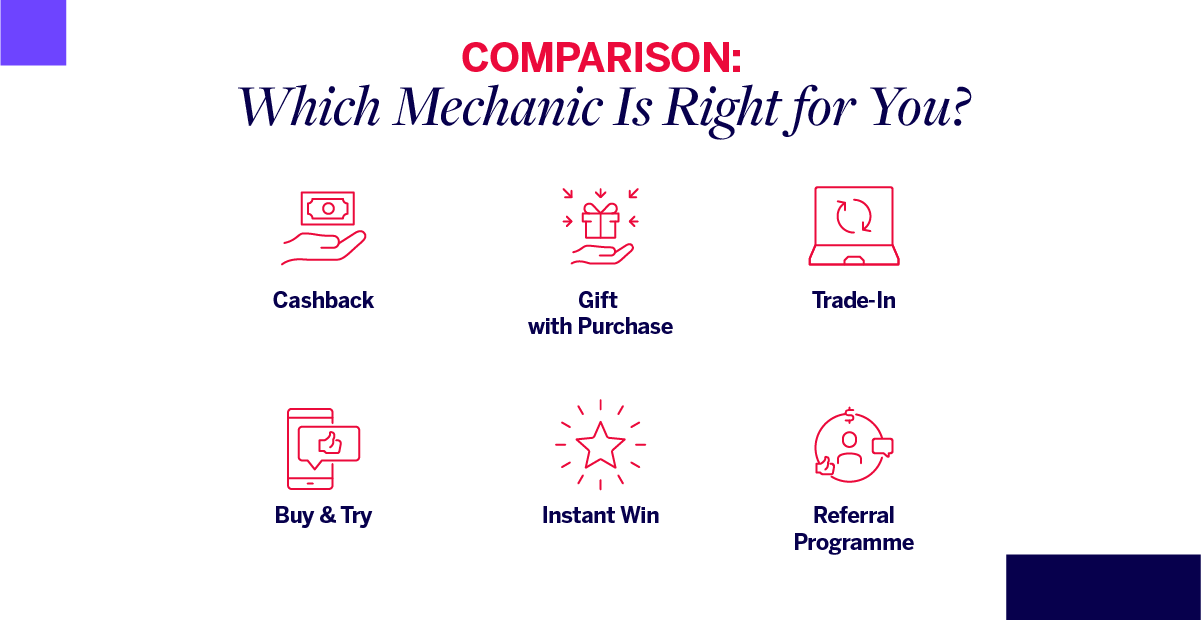
Comparison: Which Mechanic Is Right for You?
The right non-discount mechanic depends on what you are trying to achieve, not just what sounds appealing. Here is how the main options compare across the dimensions that matter most commercially.
| Mechanic | Best For | Price Impact | Data Capture | Complexity |
| Cashback | Driving conversion on higher-priced items | None. Full shelf price maintained | High. First-party data via claim | Low |
| Gift with Purchase | Increasing perceived value, launching new products | None. Shelf price intact | High. Claim process captures data | Medium |
| Trade-In | Driving upgrades, sustainability goals | None. Full price paid upfront | High. Trade-in data very valuable | High |
| Buy and Try | Removing hesitation on premium or new products | None. Risk is on the brand not price | Medium | Medium / High |
| Instant Win | Driving engagement and campaign buzz | None. Only winners receive reward | Medium | Low |
| Referral Programme | Lower-cost customer acquisition | None. Reward is for referring, not buying | High. Referral data very actionable | Medium |
A few practical decision rules:
- If your goal is immediate conversion on a high-value product, start with cashback. It is the most direct non-discount equivalent to a price reduction
- If your goal is to increase average order value or launch a new product, gift with purchase is typically the strongest mechanic
- If your goal is to drive upgrades in a category with established ownership, trade-in gives you the strongest commercial argument
- If your goal is acquisition at lower cost than paid media, referral is usually the most efficient option
- If your goal is engagement and campaign buzz alongside sales, instant win adds a layer of excitement that the other mechanics do not
For a structured approach to choosing and planning a promotional campaign, see our sales promotion planning guide.
How to Make the Case Internally
One of the practical challenges of moving away from discounting is the internal conversation. Finance teams understand discounts because the cost is visible and immediate. Non-discount promotions have a less obvious cost structure, which can make them harder to approve even when the commercial case is stronger.
Here is how to frame the argument.
Lead with margin protection
A cashback promotion on a product with a 20% gross margin costs a fraction of what a price reduction of the same apparent value costs. A £50 cashback on a £400 product costs £50 only if the customer claims. A £50 discount costs £50 on every unit sold, including to customers who would have paid full price without any incentive. The incremental cost of a non-discount promotion is almost always lower than the equivalent discount, even before accounting for the value of the data captured.
Show the redemption rate math
Not every customer who qualifies for a post-purchase reward will claim it. In well-run cashback and gift with purchase campaigns, redemption rates typically sit between 30% and 70% depending on the reward value, the claim process, and the product category. This means your effective cost per unit is significantly lower than the face value of the reward. A discount, by contrast, has a 100% redemption rate by definition.
Highlight the data advantage
Every validated claim in a post-purchase promotion produces a verified customer record: name, address, purchase date, retailer, product, and reward claimed. This data has commercial value well beyond the campaign itself. It feeds CRM, informs future campaigns, and builds a first-party data asset that a point-of-sale discount never produces.
Remove the financial risk with a fixed-fee model
One of the main objections to non-discount promotions is uncertainty around redemption cost. If you do not know how many customers will claim, you cannot predict the total campaign cost. A fixed-fee promotional model resolves this by capping the maximum liability before the campaign launches, regardless of redemption rate. This makes non-discount promotions as predictable as discounts in terms of budget, while retaining all their commercial advantages.
How Opia Can Help
Opia designs and manages non-discount promotional campaigns for some of the world’s leading consumer brands. From cashback and trade-in programmes to gift with purchase and referral mechanics, we handle the full campaign end-to-end: strategy, redemption website, claim validation, fraud prevention, fulfilment, and reporting.
Our fixed-fee pricing model means your maximum promotional liability is known before the campaign launches. Our AI-assisted claim validation means fraud is managed at scale. And our post-campaign reporting gives you the data you need to measure ROI accurately and plan the next campaign better.
If you are looking to move away from discounting and want to explore which mechanics fit your product, market, and commercial goals, get in touch with our team.
FAQs
What is a sales promotion without discounting?
A promotion that delivers value without lowering the shelf price. Instead of charging less, the brand adds something extra, cashback, a free gift, trade-in credit, or a prize, after purchase.
Is cashback the same as a discount?
No. A discount reduces the price at checkout. Cashback is paid after purchase, so the shelf price stays intact and only claiming customers receive the reward.
Why do brands avoid discounting?
It erodes the reference price customers expect to pay, trains them to wait for the next sale, and often costs more margin than it appears to.
What is the most effective alternative to discounting?
Cashback is the closest substitute for a price cut. Gift with purchase suits launches, trade-in drives upgrades, and referral programmes deliver the lowest cost per acquisition.
How do I know which non-discount mechanic to use?
Start with your objective, acquisition, retention, inventory clearance, or launch, then factor in price point and how much operational complexity you can manage.
How do I manage the financial risk of a non-discount promotion?
A fixed-fee model caps your cost per unit before launch, regardless of how many customers claim, making the total cost predictable.
Can I run a non-discount promotion across multiple retailers?
Yes. Since the shelf price stays the same everywhere, there’s no channel conflict, every retailer sells at one consistent price.
How We Deploy AI at Opia: Inside the Operational Model
In our previous blogs we covered how AI works in promotional claims processing and why Opia takes a purpose-led approach to deploying it. This blog goes one level deeper.
It covers how AI is actually embedded across our operations today: where it runs, who works with it, and what guardrails govern it. For brands evaluating a promotional partner, this is the part that matters most.
Key Takeaways
- The Rapid Rewards platform uses AI-assisted pre-configuration to deploy campaigns across multiple markets and languages significantly faster than manual builds
- Every function at Opia works with AI day to day, from operations and product to QA and commercial teams
- Governance guardrails, including structured decision frameworks, model-agnostic architecture, and human oversight, are built into deployment from the start, not added afterwards
- Some widely discussed AI applications, including AI-powered fraud detection, are still being evaluated against cost and performance benchmarks before Opia commits to full deployment
The Three Layers of AI Deployment at Opia
AI at Opia is not a single system. It is deployed across three complementary layers, each with a clear role in how promotions are delivered.
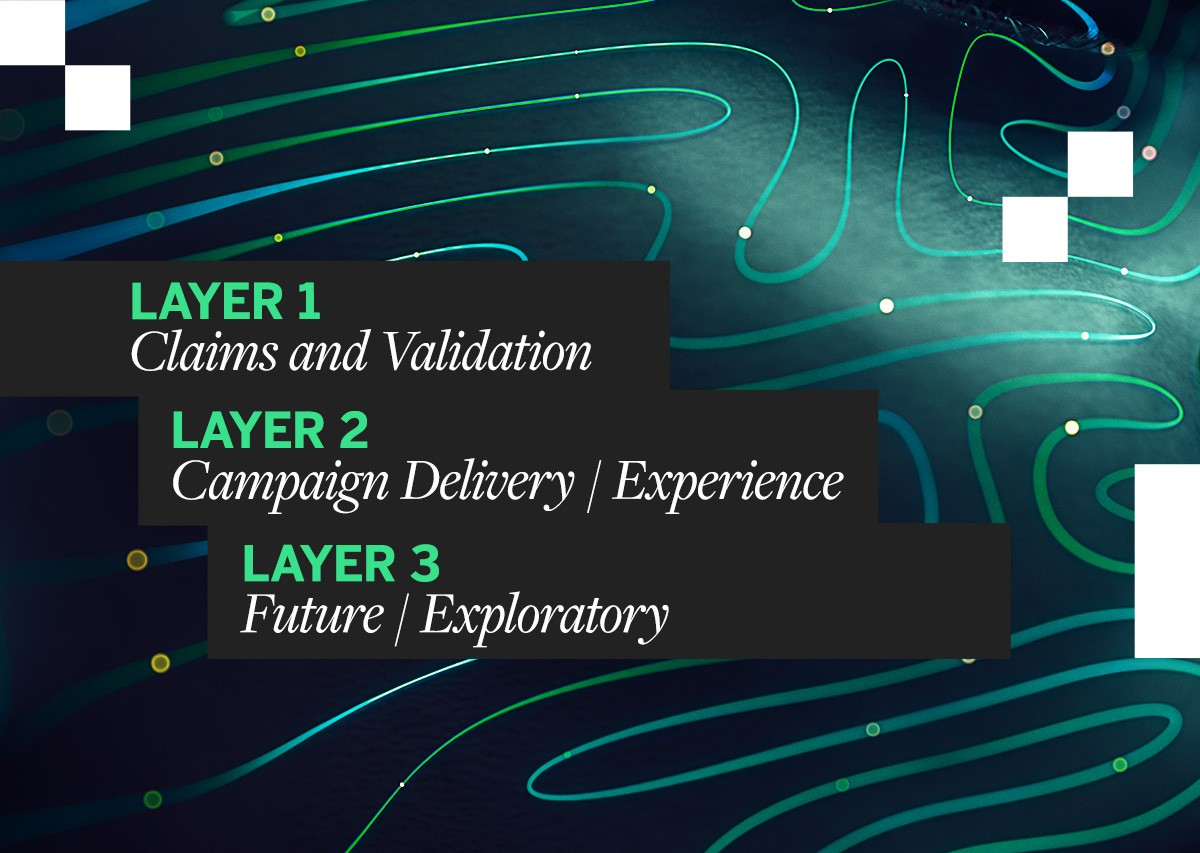
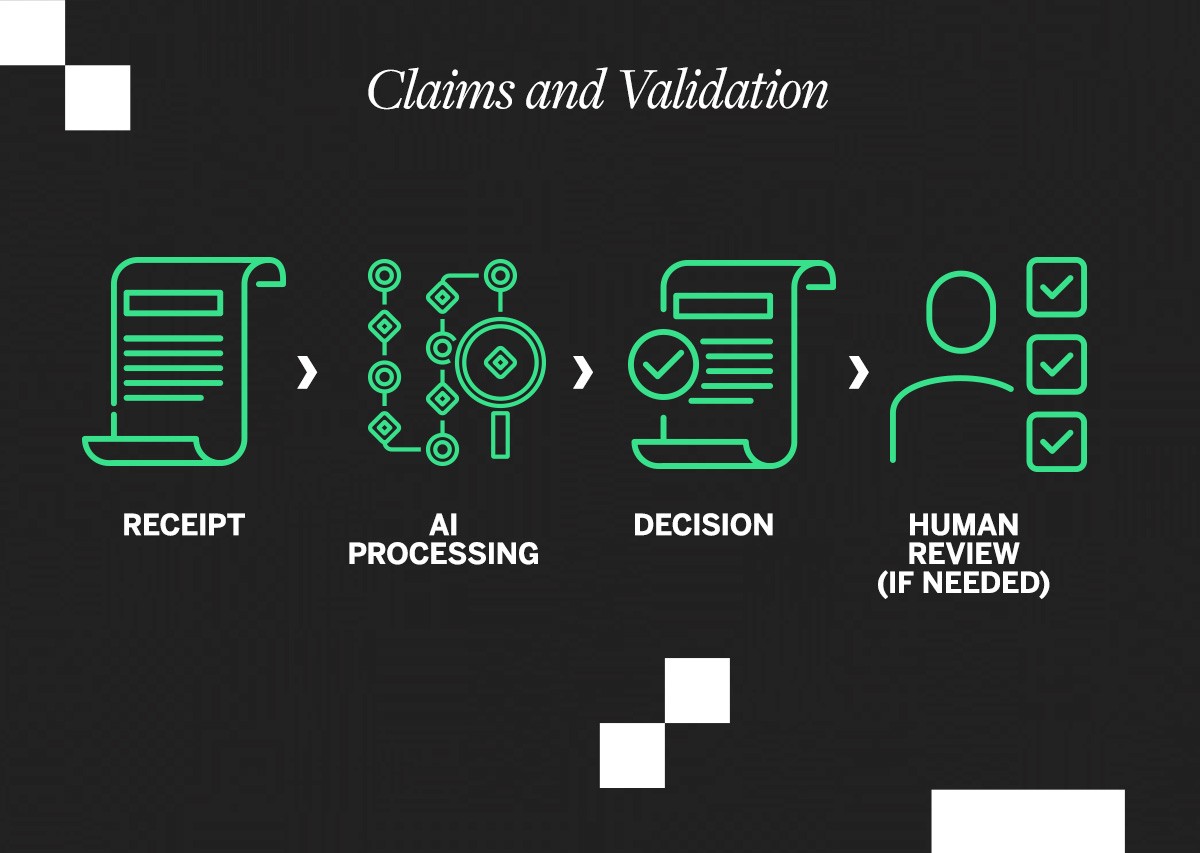
Layer 1: AI for Claims and Validation
This is where our AI deployment is most established. The technical detail of how our engine processes receipts, validates eligibility, and handles image-based proofs is covered in depth in our guide to promotional claims process automation.
For the purposes of this blog: our in-house AI engine processes claims at scale using large language models and image recognition, achieving automation rates above 80% on average across campaigns, with some exceeding 90% depending on claim complexity and volume.
Claims that fall outside clear thresholds, whether due to ambiguity, missing data, or fraud signals, are automatically escalated to human review. The ratio of automated to human-reviewed claims shifts based on campaign type, risk profile, and client requirements.
Layer 2: AI for Multi-Market Campaign Delivery
AI is playing an increasingly central role in how we localise and prepare promotional campaigns for launch across global markets.
Our Rapid Rewards platform now comes pre-configured with the core mechanics behind some of the most popular promotion types, including but not limited to cashback, gift with purchase, trade-in, buy and try, prize draw, and reliability guaranteed programmes. This means campaigns are now largely built and translated before launch, with localised content then refined by our team for tone, messaging, and market-specific requirements.
By leveraging AI-powered translation alongside professional linguistic review, we have been able to reduce translation timelines from a seven-week lead time to just one, helping brands launch faster across multiple markets while maintaining a consistent client tone and customer experience worldwide.

Layer 3: Emerging Capabilities
AI is evolving rapidly. So is our understanding of where it adds genuine value versus where it sounds better in theory than it performs in practice.
Customer Service and Communications
Our customer service team has moved this from pilot into live deployment, currently running across a handful of campaigns, with a wider rollout planned before the end of the year.
The application goes far beyond simple claim summaries. It uses AI to:
- Capture customer sentiment
- Measure satisfaction
- Identify pain points in the customer journey
- Support translated customer communications
It can even rewrite messaging to align with a client’s tone of voice or Opia’s best-practice customer language for specific situations, delivering not only time saving but also a more positive customer experience every time.
Alongside this, we’ve worked with our contact centre software provider to deploy AI-powered email handling in two ways: an AI translator that automatically translates incoming emails into English for our agents and translates responses back into the customer’s original language, and an AI rewriter that drafts responses from a prompt, with tone adjustable to detailed, succinct, professional, or friendly depending on the situation.

Fraud Detection
This is an example where honest assessment matters more than a confident claim. A couple of years ago, we evaluated AI-powered fraud detection tools, benchmarking them against our existing expert human team. The AI tool identified a marginally higher volume of forged documents, but the gains were too marginal to justify the cost of bringing in a third-party service on top of the high-performing fraud capability we already have in-house, backed by a small, experienced team.
We continue to monitor this space as models and pricing evolve, and will revisit the decision if the value case changes.
Reporting
We’re also in the early stages of using AI to automate elements of campaign reporting, surfacing insights automatically rather than purely through manual analysis. This is an area we expect to say more about as it matures.

How Teams Actually Use AI Internally
One of the clearest signals of genuine AI integration is not what the technology does but who works with it. At Opia, AI is part of daily operations across functions, not confined to a single team.
- Operations teams have evolved into prompt engineers, refining validation instructions and handling the edge cases that fall outside automated thresholds
- Technology teams manage model selection, integrations, and performance monitoring
- Product teams define the decision logic and eligibility rules the AI applies
- QA and compliance teams run accuracy audits and spot checks to ensure consistency and fairness across claim types
- Commercial teams use AI-supported campaign data to identify performance patterns and inform future campaign design, including AI plug-ins within Excel used both to build economic models and to analyse complex data sets, augmented with third-party data through prompting
This cross-functional use is what distinguishes embedded AI from a bolt-on tool. The system improves continuously because every team that works with it contributes to its refinement.
Our Deployment Guardrails
Operating AI at scale in a commercial and regulated environment requires explicit controls. Ours are built into the deployment model from the start, not added in response to problems.
Structured Decision Frameworks
AI outputs in claim validation are designed to return clear, consistent, binary decisions: approve, reject, or escalate. This structure reduces ambiguity, makes every decision auditable, and prevents the kind of open-ended AI outputs that create compliance risk.
Model-Agnostic Architecture
As covered in our blog on AI innovation at Opia, we are not tied to any single AI provider. This protects clients from disruption when models are deprecated or significantly updated, and allows us to adopt better-performing models as they become available without rebuilding the platform.
Data Protection, Privacy, and Regulatory Compliance
All AI processes align with UK GDPR, the California Privacy Act, ISO standards, and enterprise-grade governance frameworks, with lawful use, transparency, and safeguards built into how AI-informed decisions are made. We monitor evolving guidance from regulators including the ICO and CNIL, and track the broader regulatory landscape as it develops, including the EU AI Act, UK governance approach, and FTC consumer protection rules in the US.
In public-sector work, deployment is governed collaboratively with clients and aligned to sector-specific frameworks, including public tender requirements and NHS standards where relevant. As regulation in this space continues to evolve, our approach is adaptive rather than fixed to a single compliance snapshot.
Security, IP, and Third-Party Risk
Operating AI at scale introduces risks beyond data protection alone. We manage cyber risk, including data leakage and model-targeted attacks, and take IP and copyright considerations seriously when working with generative AI outputs. Vendor and supply chain compliance, covering data handling, hosting, and cyber security, is assessed against ISO frameworks and recognised security standards before any third-party AI tool is adopted.
Governance and Accountability
AI governance policies and guardrails are documented and maintained on an ongoing basis, with human oversight and periodic audits built into how the system is monitored. Every deployment also respects client-specific contractual obligations, confidentiality requirements, and competitive sensitivities, since what is appropriate to disclose or automate can vary significantly from one client relationship to another.
Human Oversight as a Design Principle
Human review is not a fallback for when automation fails. It is built into the process design for ambiguous, sensitive, or high-stakes cases. The threshold between automated and human review is configurable based on campaign type, risk profile, and client requirements.
What This Means for Clients
The practical benefit of this model is that clients do not need to manage AI risk themselves. Governance, validation, and oversight are built into the service.
In practice this means faster campaign launches across markets, consistent claim handling regardless of volume or promotion type, and richer campaign data captured through every validated claim. It also means the promotional mechanics available to clients can be more ambitious, because the operational infrastructure to support them reliably already exists.
Conclusion
AI at Opia is operational, not aspirational. It runs across claims validation, multi-market campaign deployment, and internal team workflows today, with further capabilities in active development and honest evaluation.
What makes the model work is not the technology itself but the discipline around it: deploying where there is measurable value, maintaining human oversight where it matters, and being willing to say clearly where AI does not yet justify its cost.
For brands running promotional campaigns at scale, that combination of capability and transparency is what responsible AI deployment looks like in practice.

How does Opia use AI in claim validation?
Our AI engine processes receipts, validates eligibility, and handles image-based evidence, achieving automation rates above 80% on average while routing unclear or high-risk cases to human review. Full detail is in our claims automation guide.
How does AI support multi-market campaign delivery?
Our Rapid Rewards platform is pre-configured with core promotional mechanics. AI-assisted translation then pre-configures campaign content across languages, reducing the manual build work per market to campaign-specific customisation only.
Does AI replace human teams at Opia?
No. Human oversight is built into every deployment. Automation handles volume and consistency. People handle complexity, exceptions, edge cases, and the continuous refinement that makes the system more accurate over time.
Does Opia use AI for fraud detection?
We evaluated AI-powered fraud detection tools and found that our expert human team performed comparably at significantly lower cost. We are actively reassessing this as models and pricing evolve, and will deploy AI in this area when it demonstrably justifies the investment.
How does Opia manage AI risk?
Through structured decision frameworks that produce auditable binary outputs, a model-agnostic architecture that prevents dependency on any single provider, GDPR and CCPA-aligned data practices, security and vendor risk assessment against ISO standards, and human review built into the process for all ambiguous or sensitive cases.
How to Measure Sales Promotion ROI: A Practical Guide
A wildly successful sales promotion can be a brand’s dream or its finance team’s worst nightmare. If millions of customers redeem an offer you didn’t properly risk manage, and plan for correctly, high sales volume can quickly translate into scaled losses
Sales promotions are one of the few marketing investments where the cost is known upfront but the return is genuinely difficult to isolate. Unlike a paid media campaign where you can draw a direct line from click to conversion, a promotion interacts with existing purchase behaviour, seasonal trends, and competitive activity in ways that are easy to misread.
This guide covers how to measure sales promotion ROI accurately: the metrics that matter, the mistakes that inflate or understate results, and a practical framework you can apply to your next campaign regardless of the mechanic you are running.
Key Takeaways
- ROI is not the same as revenue. A promotion that drove high sales volume can still generate a negative return if the cost of the campaign, including redemptions, fraud, and operations, exceeds the incremental profit it generated
- You must establish a sales baseline before the campaign launches. Without it, you cannot isolate the incremental impact of the promotion from underlying demand
- The full campaign cost includes more than the reward value. Media spend, operational overhead, platform fees, and fulfilment costs must all be included
- Redemption rate, cost per claim, and new versus existing customer ratio are as important as top-line sales uplift for understanding what a campaign actually delivered
- Breakage, the portion of rewards issued but never redeemed, affects your true campaign cost and must be factored into post-campaign analysis
- Fixed-fee promotional models simplify ROI measurement by capping financial exposure before launch, making the investment side of the equation predictable
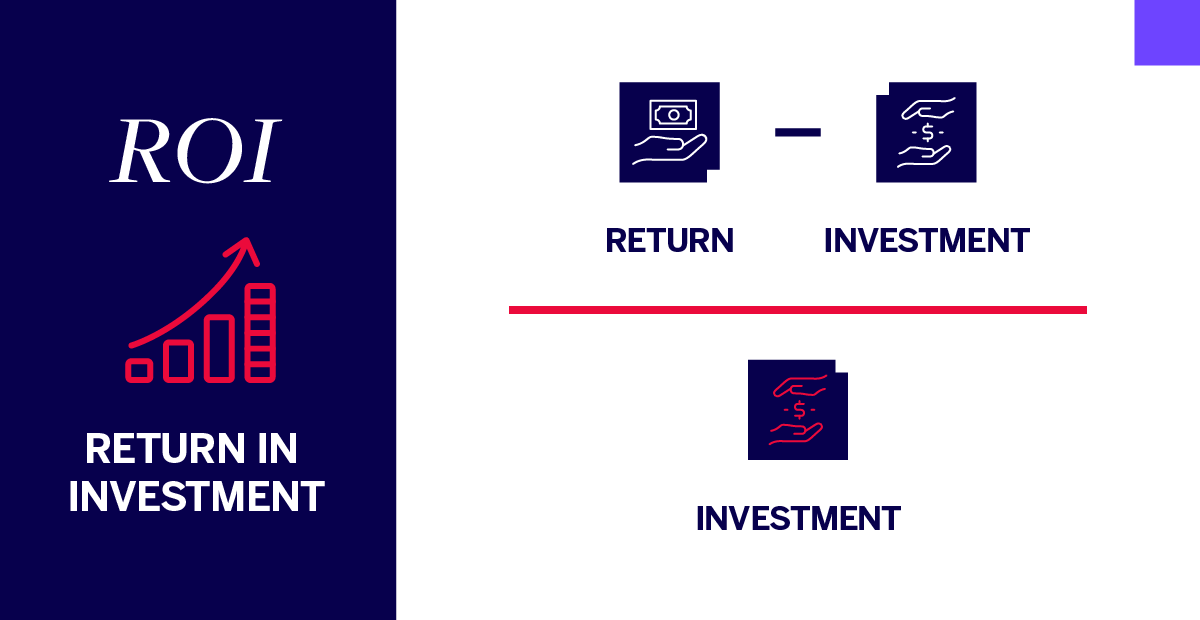
Table of Contents
- Key Takeaways
- Why Sales Promotion ROI Is Hard to Measure
- Step 1: Set Your Baseline Before the Campaign Launches
- Step 2: Define the Full Cost of the Campaign
- Step 3: Calculate Incremental Sales Uplift
- Step 4: Calculate ROI
- The Key KPIs to Track: A Complete Framework
- Common Mistakes That Distort Your Results
- How Promotion Type Affects What You Measure
- How Opia Supports Campaign Measurement
- Conclusion
- FAQs
Why Sales Promotion ROI Is Hard to Measure
The challenge with measuring promotional ROI is not a lack of data. Most brands have plenty of sales data. The challenge is attribution: understanding how much of the sales you see during a promotion period would have happened anyway.
Several factors make this genuinely difficult:
- Pull-forward effect: promotions often accelerate purchases that would have happened later, rather than generating truly new demand. A customer who was planning to buy next month is buying now because of the offer. Your sales figures look strong but the underlying demand has not changed.
- Cannibalization: promotions targeted at loyal customers can reward people who would have bought at full price regardless. If 70% of your redemptions come from existing buyers, the true incremental return is much lower than headline sales suggest.
- Seasonality and external factors: if your promotion runs during a period of naturally high demand, it is easy to attribute that demand to the campaign when it would have arrived anyway.
- Incomplete cost accounting: many brands measure promotional ROI using only the discount or reward value as the cost. The real cost includes media to promote the campaign, the operational overhead of running it, fulfilment, and fraud losses. Understating cost inflates apparent ROI.
Getting these factors right is what separates a measurement that tells you something useful from one that simply confirms what you wanted to believe.
Step 1: Set Your Baseline Before the Campaign Launches
The most important input to any promotional ROI calculation is the baseline: what sales would look like without the promotion. Without a baseline, you are measuring total sales during the promotional period, not incremental sales generated by the promotion.
There are three practical approaches to establishing a baseline.
- Historical average: calculate average weekly or monthly sales for the same product or category over the preceding 8 to 12 weeks, adjusting for any known seasonal patterns. This is the most common approach and works well for mature products with stable demand.
- Year-over-year comparison: compare the promotional period against the same period in the prior year, adjusted for any changes in distribution, pricing, or market conditions. More accurate for highly seasonal categories.
- Control group: run the promotion in a subset of markets or retail locations and use the non-promotional markets as your baseline. The most statistically rigorous method but requires the ability to segment your distribution.
Whichever method you use, document your baseline assumption before the campaign launches, not after. Post-hoc baseline setting is where measurement frameworks most often become self-serving.
Step 2: Define the Full Cost of the Campaign
Promotional ROI is only as accurate as your cost inputs. A common mistake is counting only the direct reward value and ignoring the operational costs that sit around it.
The full cost of a promotional campaign includes:
- Reward cost: the face value of the cashback, gift card, trade-in credit, or other reward delivered to customers
- Redemption and fulfilment cost: the cost of processing claims, validating submissions, and delivering rewards, whether through a managed partner or internal resource
- Media and communication spend: the cost of promoting the campaign through paid media, email, in-store materials, or retailer co-op funding
- Platform and technology fees: if you are using a promotional software platform or managed service, the per-unit or fixed fee
- Fraud losses: the value of fraudulent or invalid claims that were paid before detection
- Internal operational overhead: the internal time spent managing the campaign, handling customer service queries, and producing reporting
One of the practical advantages of working with a managed promotional partner on a fixed-fee pricing model is that many of these variable costs are consolidated into a single predictable number. This makes the investment side of the ROI calculation straightforward rather than something that has to be reconstructed after the fact.
Step 3: Calculate Incremental Sales Uplift
Incremental sales uplift is the difference between actual sales during the promotional period and the baseline sales you established in Step 1.
Incremental sales = Total sales during promotional period minus baseline sales for the same period
From there, calculate incremental gross profit by multiplying incremental sales by your gross margin percentage. This gives you the return side of the ROI equation: the additional profit generated by the campaign, not just the additional revenue.
Incremental gross profit = Incremental sales multiplied by gross margin percentage
It is important to use gross profit rather than revenue here. A promotion that drives high revenue but compresses your margin significantly may still produce a negative ROI once the full campaign cost is accounted for.
Step 4: Calculate ROI
With the return and investment figures established, the ROI calculation is straightforward.
Campaign ROI = (Incremental gross profit minus total campaign cost) divided by total campaign cost
Expressed as a percentage, a result above zero means the campaign generated more profit than it cost to run. A result below zero means it did not.
A few important notes on interpreting the result.
- A positive ROI does not automatically mean the campaign was optimal. A 20% ROI on a campaign that could have been restructured to deliver 60% ROI represents a real opportunity cost.
- Break-even analysis is useful before launch. Calculate the minimum sales uplift required for the campaign to break even given your cost assumptions. If that uplift feels unrealistic given your category and mechanic, the campaign design needs revisiting before it runs.
- ROI should be evaluated over the right time horizon. Some promotional mechanics, particularly referral programmes and loyalty-linked offers, generate customer relationships that deliver value beyond the campaign window. A campaign that appears marginally positive on immediate ROI may be significantly positive when customer lifetime value is factored in.
The Key KPIs to Track: A Complete Framework
Sales uplift and campaign ROI are the headline metrics. But a complete measurement framework tracks several supporting KPIs that explain why the campaign performed as it did and where to improve next time.
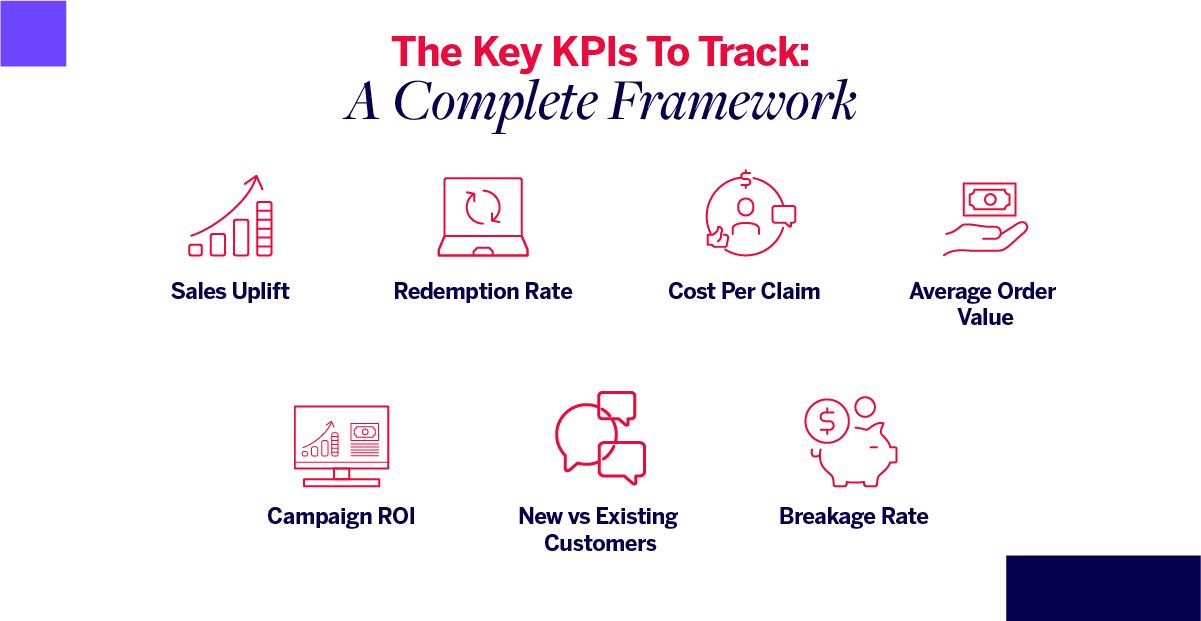
| KPI | What It Measures | How to Calculate | Why It Matters |
| Sales Uplift | Incremental revenue generated by the promotion above baseline | Total sales during promo minus baseline sales for the same period | The primary measure of whether the campaign drove real additional volume |
| Redemption Rate | Percentage of eligible customers who claimed the reward | Claims received divided by total eligible purchases | Signals offer attractiveness and friction in the claim process |
| Cost Per Claim | Total campaign cost divided by the number of validated claims | Total promotion cost divided by number of claims paid | Allows direct comparison of efficiency across campaign types |
| Average Order Value | Whether the promotion encouraged customers to spend more | Total revenue during promo divided by number of transactions | Reveals whether the mechanic drove basket uplift or just volume |
| Campaign ROI | Net return on the total promotional investment | (Incremental gross profit minus total campaign cost) divided by total campaign cost | The summary metric for justifying spend and planning future campaigns |
| New vs Existing Customers | Split between customers acquired and existing customers rewarded | Count of first-time purchasers vs returning buyers in the claim data | Shows whether the campaign is driving acquisition or retention |
| Breakage Rate | Percentage of rewards issued that were never redeemed | Unredeemed rewards divided by total rewards issued | Affects true campaign cost and informs future redemption modelling |
A note on breakage
Breakage deserves particular attention. When customers qualify for a reward but never claim it, the unredeemed value represents a real financial difference between the gross liability you modelled and the actual cost you incurred. Tracking breakage accurately is important for two reasons: it affects your true campaign ROI, and it informs your redemption rate assumptions for future campaign budgeting.
For more on how breakage affects promotional cost modelling, see our guide to types of rebates.
Common Mistakes That Distort Your Results
Measuring revenue instead of profit
The most common measurement error. A promotion that drove £500,000 in incremental revenue but cost £450,000 to run has a 10% ROI, which may or may not clear your hurdle rate depending on the margin profile of the product. Always measure against incremental gross profit, not incremental revenue.
Not accounting for cannibalisation
If your promotion targets existing loyal customers who would have purchased at full price, you are paying to reward existing demand rather than creating new demand. Segment your redemption data by new versus existing customers to understand how much of your uplift represents genuine acquisition.
Attributing all sales uplift to the promotion
If a competitor pulled back during your promotional period, or if category demand was unusually high for other reasons, your baseline may not capture this context. Build a habit of noting external factors that may have influenced results alongside your campaign data.
Measuring too early
For mechanics like cashback promotions and trade-in promotions where claims arrive over weeks after purchase, measuring ROI before the claims window closes will understate the true cost and overstate the apparent return. Wait until at least 90% of expected claims have been submitted before running your final ROI calculation.
Ignoring repeat purchase behaviour
A promotion that drives acquisition at a short-term loss may be profitable over a longer window if the customers acquired continue to buy. Tracking whether promotional customers come back at full price in the following months is one of the most valuable pieces of post-campaign analysis you can run.
How Promotion Type Affects What You Measure
Different promotional mechanics produce different measurement challenges. Here is how the framework applies across the most common types.
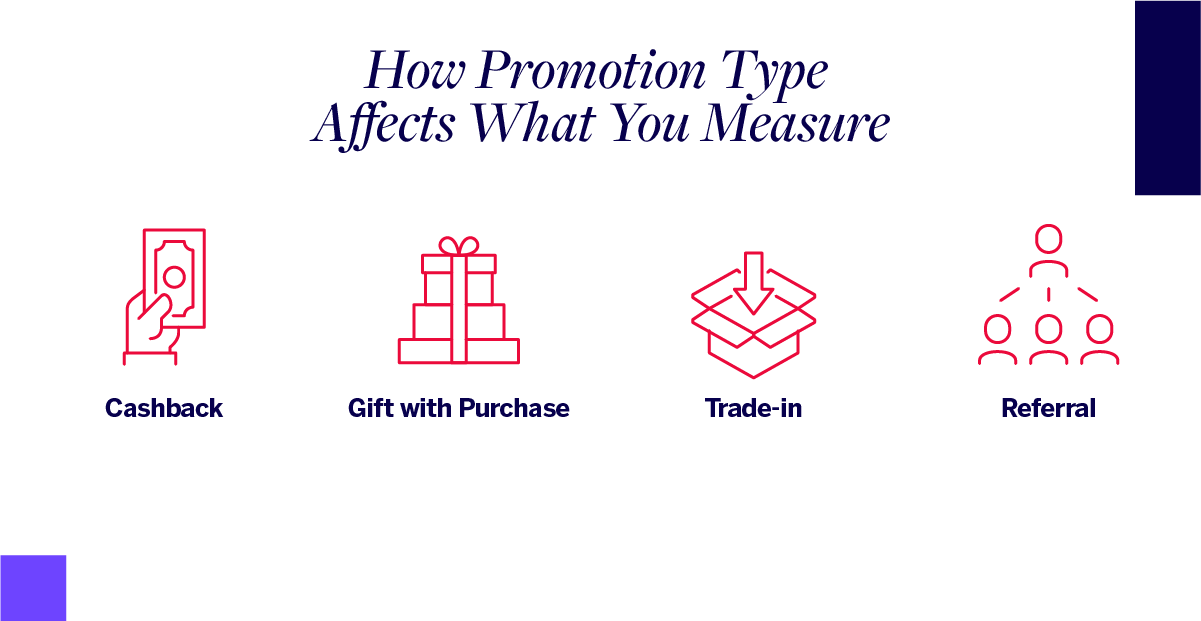
Cashback and rebate promotions
The key measurement challenge is establishing true incremental uplift versus pull-forward. Track weekly sales cadence during and after the promotional window. A sharp sales drop immediately after the campaign ends is a signal that you pulled forward demand rather than creating it.
See our guide to discounts vs sales promotions vs offers for context on how cashback compares to discounting on margin impact.
Gift with purchase
The primary KPIs are average order value uplift and minimum spend threshold performance. Track what percentage of customers purchased above the qualifying spend threshold versus below it, and whether the AOV during the promotional period was materially higher than the baseline.
Also track the redemption rate on the gift itself, as this directly affects your fulfilment cost.
Trade-in promotions
Trade-in campaigns have an additional cost component that is easy to miss: the handling, logistics, and disposal or refurbishment cost of the traded-in product. Include these in your total campaign cost calculation.
The primary success metric is upgrade rate: what percentage of customers who traded in moved to a higher-value product than they would otherwise have purchased.
Referral and reward programmes
ROI measurement for referral programmes should be evaluated against the alternative cost of acquiring the same customers through paid media. Calculate your cost per referred acquisition and compare it to your average customer acquisition cost across other channels.
Also track whether referred customers have higher or lower retention rates than other acquisition sources, as this affects lifetime value.
How Opia Supports Campaign Measurement
Measuring promotional ROI accurately depends on having clean, complete data from the claim and redemption process. When every claim is validated through a structured process, the data produced is reliable enough to build a genuine ROI calculation rather than an estimate.
Opia manages the full claim journey, from the branded redemption website through to validation and fulfilment. This means the redemption data sits within a single managed process rather than being pieced together from multiple sources after the fact, which is one of the most common reasons promotional ROI calculations end up incomplete or inconsistent.
The fixed-fee pricing model also simplifies the investment side of the equation. Because the promotional liability is capped before launch, the total campaign cost is known with certainty rather than being a function of how many customers redeem. This makes the ROI calculation straightforward and gives finance teams the predictability they need to approve ambitious promotional concepts.
If you are planning a promotional campaign and want to model the ROI before committing to a mechanic, get in touch with our team.
Conclusion
Measuring sales promotion ROI accurately is not technically complex. The formula is straightforward. What makes it genuinely difficult is the discipline required: setting a rigorous baseline before the campaign launches, accounting for all costs including the ones that are easy to overlook, and resisting the temptation to attribute all sales activity during the promotional window to the campaign.
The brands that get the most from their promotional investment are not necessarily the ones running the most creative campaigns. They are the ones that measure honestly, learn systematically, and use those learnings to design each campaign better than the last.
For a structured approach to planning and measuring promotional campaigns from objective-setting through to post-campaign review, see our sales promotion planning guide.
FAQs
What is sales promotion ROI?
The net return generated by a promotional campaign relative to its total cost. A positive result means the campaign generated more profit than it cost to run.
What is the formula for calculating promotion ROI?
(Incremental gross profit minus total campaign cost) divided by total campaign cost. Incremental gross profit is the additional profit above baseline sales during the promotional period.
What is a good ROI for a sales promotion?
It depends on the mechanic and objective. A campaign breaking even on direct costs while driving acquisition or loyalty can still be worthwhile. A positive ROI of 20% or more is generally considered strong for a consumer promotion.
What is the difference between sales uplift and ROI?
Sales uplift measures additional volume above baseline. ROI takes the gross profit from that uplift and compares it to what the campaign cost. Strong uplift can still produce a negative ROI if the campaign was expensive or most redemptions came from existing customers.
What KPIs should I track for a sales promotion?
Sales uplift, redemption rate, cost per claim, average order value, campaign ROI, new versus existing customer ratio, and breakage rate. These seven give you a complete picture of commercial performance.
How does a fixed-fee model affect ROI measurement?
It caps your total campaign cost before launch, making the investment side of the equation certain rather than variable. This simplifies measurement and allows accurate break-even modelling at the planning stage.
When should I measure promotional ROI?
For campaigns with a post-purchase claim window, wait until at least 90% of expected claims have been submitted. Measuring too early understates true cost and overstates the return. Typically 6 to 8 weeks after the campaign end date.
Gift Card Management Software: 9 Must-Have Features and Best Solutions
The UK gift card market is worth over £7 billion annually, and choosing the right software to manage or run gift card programmes has never been more commercially important. Retail platforms handle ongoing card programmes. Promotional platforms like Opia run end-to-end gift card reward campaigns tied to a purchase or incentive mechanic.
This guide covers the must-have features, how to choose the right platform, and when a managed approach delivers more.
Key Takeaways
- Not all gift card software is built for the same purpose. Retail platforms manage ongoing card programs. Promotional platforms like Opia run end-to-end gift card reward campaigns.
- The 9 features that matter most include real-time tracking, fraud prevention, mobile wallet compatibility, and multichannel distribution.
- Breakage (unredeemed gift card value) is a significant commercial consideration that is often overlooked at the sales promotion planning
- Choosing the right solution starts with one question: are you running an ongoing gift card program, or a time-limited promotional campaign?
Table of Contents
- Key Takeaways
- What Is Gift Card Program Software?
- Benefits of Gift Card Management Software
- How Gift Card Program Software Works
- How to Choose Gift Card Management Software
- 9 Features Your Gift Card Program Software Must Have
- Digital vs Physical Gift Cards; What the Data Says
- What is Gift Card Breakage and Why it Matters
- Gift Card Program Software Comparison: Which Is Right for Your Use Case?
- Use Cases and Examples of Gift Card Management Software
- Running a Gift Card Promotion Campaign? Here Is How Opia Works
- FAQs
What Is Gift Card Program Software?
Gift card management programmes are designed to simplify the creation, distribution, and redemption of both physical and digital gift cards. By integrating with your existing business systems, it automates processes such as balance tracking, card issuance, and redemptions, while providing customer insights and safeguarding against fraud.
There is, however, an important distinction worth understanding before you evaluate any platform.
Type 1: Retail and hospitality gift card management platforms handle the mechanics of an ongoing gift card sales program, whether in-store or online. A customer buys a gift card, loads it with value, and redeems it later. The software manages balances, prevents fraud, and integrates with your POS or e-commerce system.
Type 2: Promotional gift card campaign platforms manage the end-to-end delivery of gift cards as a reward mechanic. A customer purchases an eligible product, submits a claim, and receives a digital gift card as their reward. This works similarly to a rebate, where the incentive is fulfilled after purchase rather than at the point of sale. The platform handles the branded redemption website, claim validation, fulfilment, and reporting. This is the model Opia operates.
Knowing which type you need shapes every decision that follows.
Benefits of Gift Card Management Software
Gift card management software offers several critical benefits:
- Increased Sales: Gift cards often prompt immediate purchases, with recipients typically spending more than the card’s value when they visit the retailer to redeem the value of the gift card
- Customer Retention: Gift cards drive repeat purchases and build long-term customer relationships
- Operational Efficiency: Automating gift card tracking, issuance, and redemption reduces manual work and minimises errors
- Enhanced Security: Built-in fraud detection protects your business and customers from misuse
- Scalability: Software platforms can grow with your business and marketing/commercial objectives, managing increasing demand effortlessly.

How Gift Card Program Software Works
The mechanics differ depending on which type of platform you are using, but the core stages apply to both.
- Issuance: Create and distribute digital or physical gift cards through online channels, in-store, or via a branded campaign redemption portal.
- Tracking: Monitor real-time activity including balances, card usage, and claim status, while collecting customer data that feeds back into your CRM or reporting dashboard.
- Redemption: Customers redeem gift cards in-store, online, or via mobile wallet. Balances update automatically. For promotional platforms, redemption follows claim validation.
- Fraud prevention: Real-time monitoring, secure code generation, and redemption limits protect both the business and the customer from misuse.
- End-to-end promotion management: For brands running gift-with-purchase or incentive campaigns, a promotional platform like Opia manages the full journey from the branded claim website through to digital fulfilment, often across multiple countries and currencies.
- Digital wallet delivery: Leading platforms can deliver digital gift card rewards directly to Google Pay and Apple Wallet, or issue digital Visa and Mastercard prepaid cards into a customer’s wallet.
How to Choose Gift Card Management Software
Choosing the right gift card program software depends heavily on what you are actually trying to do. The decision usually starts with one question.
Are you running an ongoing gift card sales program, or a time-limited promotional campaign?
For ongoing programs such as in-store sales, e-commerce, or corporate gifting, you need a platform with strong POS integration, reloadable card functionality, and real-time balance management. The features that matter most are seamless integration with your existing systems, scalability to handle peak-period volume, robust fraud detection, and a customer-facing interface that does not create friction at redemption.
For promotional gift card campaigns where a gift card is the reward for a purchase, referral, or sales target, you need more than software. You need end-to-end campaign management: a branded redemption website, claim validation, fulfilment across markets, and fixed-fee pricing that caps your financial exposure.
This is where a managed solution like Opia offers a fundamentally different value proposition to a self-serve platform.
Questions worth asking before you commit to any platform:
- Does it handle multi-country redemptions and currency differences?
- Can it issue digital gift cards directly to mobile wallets?
- Who manages fraud when something goes wrong: you or the provider?
- Is pricing flat-fee, or do transaction costs accumulate at scale?
- Do you need a partner to manage the campaign end-to-end, or just the technology to run it yourself?

9 Features Your Gift Card Program Software Must Have
1. Customisation & Personalisation
The ability to customise gift cards to your brand’s visual identity is essential. Personalised cards linked to customer profiles increase engagement and reinforce brand loyalty at every touchpoint.
2. Bulk Generation of Gift Cards
Choose software that allows bulk generation of gift cards, making it easier to launch promotions and corporate gifting campaigns.
3. Multichannel Distribution
Gift cards should be distributed seamlessly across both online and offline channels, ensuring a frictionless customer experience.
4. API Integration
Look for API integration capabilities to connect the software with your existing systems, ensuring smooth data transfers and enhanced tracking.
5. Real-Time Tracking & Reporting
Access to real-time tracking and reporting features helps you gather insights into customer preferences, enabling better-targeted marketing strategies.
6. Fraud Prevention & Security
Security features like encryption, custom code generation, and redemption limits are vital to prevent fraud and misuse.
7. Expiration & Balance Management
Automating expiry tracking and balance management ensures regulatory compliance and gives customers transparency. In the UK, stored value products fall under FCA considerations, so a platform that handles compliance tracking on your behalf is worth prioritising. A good platform manages this for you rather than leaving it as your problem to solve.
8. Mobile Wallet Compatibility
Ensure your software integrates with mobile wallets so that customers can store and use gift cards from their smartphones, increasing convenience and engagement.
9. Dynamic Customer Segmentation
Segmenting customers based on demographics or purchase history enables businesses to create more tailored and effective gift card promotions.

Digital vs Physical Gift Cards; What the Data Says
The shift toward digital gift cards has accelerated significantly over the past five years, and the operational case for going digital is now compelling.
Digital gift cards deliver instantly, eliminate production and postage costs, and achieve higher redemption rates than their physical equivalents. They can be loaded into mobile wallets, tracked in real time, and personalised at scale. For promotional campaigns in particular, where the reward is fulfilled after a claim is validated, digital delivery removes fulfilment lag entirely.
Physical cards still have a role in high-end retail gifting and in markets where digital adoption is lower. But for most business use cases, especially incentive campaigns and gift-with-purchase promotions, digital is now the default.
When evaluating platforms, check specifically whether digital delivery includes mobile wallet integration, whether multi-currency digital cards are supported, and whether the provider can issue open-loop rewards such as Visa or Mastercard prepaid cards as well as retailer-specific gift cards.
What is Gift Card Breakage and Why it Matters
Breakage refers to the value on gift cards that is never redeemed. Across the industry, breakage rates typically sit between 10% and 19% of total card value issued, depending on the category and card type.
For businesses running their own gift card sales program, breakage represents revenue recognised over time. For brands running promotional gift card campaigns, it affects how you model the true cost of the campaign.
Understanding your expected breakage rate matters when budgeting a promotion. A fixed-fee managed model, where the provider takes on the financial exposure, removes the uncertainty entirely. This is one of the structural advantages of working with a promotional partner like Opia rather than self-managing a gift card reward campaign.
Gift Card Program Software Comparison: Which Is Right for Your Use Case?
Not all gift card software solves the same problem. Most platforms below manage gift card programs as an ongoing retail or hospitality tool, built for in-store sales, reloadable cards, and POS integration.
Opia operates differently, as a managed promotional partner for brands running time-limited gift card reward campaigns. If your goal is to reward customers with a gift card after a qualifying purchase or action, the features that matter and the platform you need are different from a standard POS-integrated solution.
| Software | Best For | Key Features |
| VoucherCart | E-commerce and multichannel businesses | Omnichannel sales automation, instant eVoucher delivery, reloadable cards, customisable branding |
| GoGift | Large enterprises and global reach | Enterprise-grade, white-label, scalable, full-service management for digital and physical cards |
| Roller | Leisure and attractions industry | Fully integrated with POS, omnichannel redemption, video message customisation, real-time analytics |
| Voucher Store | Small hospitality and wellness businesses | Easy setup, instant payments via Stripe, customisable branding, multi-channel delivery |
| Enjovia | Hospitality groups with multiple locations | Customisable branding, advanced promotion tools, multi-language support, real-time analytics |
| Access Group (Soda) | Hospitality businesses | Low-maintenance plug-in widget, rapid payouts, seamless EPOS integration |
| SmartGifty | Shopping centers and multi-location businesses | Fully digitalised gift card system, 24/7 financial insights, advanced analytics, global reach |
| Talon.One | Large enterprises and high-volume retailers | Scalable, multi-business benefits, digital wallet integration, custom gift card designs |
| Opia | Brands running promotional gift card campaigns | End-to-end managed gift-with-purchase and reward campaigns; multi-country digital gift card fulfilment; branded redemption journeys; fixed-fee pricing; built-in fraud protection |
Use Cases and Examples of Gift Card Management Software
Holiday Promotions
Example: A retail store runs a Christmas promotion offering themed gift cards for last-minute shoppers. These cards are available online and can be delivered instantly to the recipient’s email.
How the Software Helps:
- Easily designs and distributes holiday-themed gift cards.
- Manages sales across multiple platforms.
- Tracks sales in real-time and analyses customer preferences.
- Automates delivery options, such as digital cards, for instant purchases.
Corporate Gifting
Example: A financial services company purchases bulk gift cards for client appreciation and employee rewards during the year-end holidays.
How the Software Helps:
- Simplifies bulk creation and distribution of corporate gift cards.
- Personalised cards with company logos and custom messages.
- Tracks redemption rates and measures ROI.
- Automates order fulfilment and digital card delivery.
Customer Retention
Example: A coffee shop chain offers loyalty members a £10 gift card after their 10th purchase to encourage repeat visits.
How the Software Helps:
- Automates loyalty-based gift card issuance when milestones are met.
- Tracks customer spending habits to ensure proper rewards.
- Monitors redemption rates and retention metrics.
- Provides insights to improve loyalty programs.
Referral Programs
Example: A fitness studio offers £20 gift cards to customers who refer a friend who signs up for a membership.
How the Software Helps:
- Automates tracking and gift card distribution for referral campaigns.
- Integrates with CRM for seamless campaign monitoring.
- Ensures rewards are automatically delivered to both referrers and new customers.
Employee Incentives
Example: A retail chain rewards top-performing employees with personalised gift cards for hitting their monthly sales targets.
How the Software Helps:
- Quickly creates personalised, custom-branded gift cards.
- Tracks distribution and redemption for transparency.
- Automates delivery to reduce admin workload.
- Real-time reporting to measure program impact on motivation.
Customer Acquisition
Example: An online clothing store offers new customers a £15 gift card for their first purchase over £50.
How the Software Helps:
- Automates gift card creation and distribution for acquisition campaigns.
- Tracks new sign-ups and manages gift card eligibility.
- Monitors spending to optimise future campaigns.
- Ensures compliance with terms like minimum spend requirements.
Flash Sale with Bonus Gift Card
Example: An electronics retailer offers a flash sale on select laptops with a bonus £50 digital gift card for the first 100 customers who make a claim.
How the Software Helps:
- Creates the redemption website for the claim and redemption process
- Sets up automated distribution upon purchase completion.
- Tracks redemption rates and analyses campaign effectiveness.
- Limits gift card issuance to the first 100 claims.
Brands like Dell have used this model to drive purchase conversion during key trading periods, with customers receiving a branded digital prepaid card on qualifying purchases.
B2B Volume Incentive
Example: A software company offers a tiered digital gift card incentive for Sales Staff that sell multiple software licenses. The higher the volume purchased, the greater the gift card value.
How the Software Helps:
- Creates the redemption website for the claim and redemption process
- Creates tiered gift cards with varying values.
- Allows a number of different gift cards to be offered to the sales staff, so they can choose what is the most suitable.
- Automates gift card distribution once claims have been validated
- Tracks redemption and usage data for ROI analysis.
- Facilitates B2B gift card distribution and management.
This tiered approach is particularly effective for technology and software brands looking to incentivise channel partners and sales teams without adding headcount or manual admin.
Birthday Reward
Example: A consumer electronics brand sends personalised digital gift cards to customers on their birthdays, offering a discount on their next purchase.
How the Software Helps:
- Creates the redemption website for the claim and redemption process
- Integrates with CRM to access customer birthday data.
- Automates personalised gift card delivery via email.
- Tracks redemption rates and customer engagement.
- Personalised gift cards with customer names and birthday messages.
Sales Staff Incentive Program
Example: A mobile phone carrier rewards its sales staff with digital gift cards for exceeding their monthly sales targets.
How the Software Helps:
- Creates the redemption website for the claim and redemption process
- Creates and distributes digital gift cards to individual employees.
- Tracks sales performance and automatically issues rewards.
- Provides performance reports and insights.
- Motivates sales staff and boosts overall sales.
Gamified Promotion
Example: An online electronics retailer creates a “Spin-to-Win” promotion where customers can spin a digital wheel for a chance to win a digital gift card of varying values.
How the Software Helps:
- Creates the redemption website for the claim and redemption process
- Creates and distributes digital gift cards of different denominations.
- Integrates with gamification tools to power the “Spin-to-Win” promotion.
- Tracks participation rates and gift card redemption.
- Increases customer engagement and drives website traffic.

Running a Gift Card Promotion Campaign? Here Is How Opia Works
Opia is not a self-serve gift card platform. It is a managed promotional partner for brands running gift card reward campaigns at scale, across multiple markets, with real commercial stakes.
A brand runs a promotion where customers who purchase a qualifying product can claim a digital gift card reward. Opia builds the branded redemption website, validates every claim, manages fulfilment across 30 or more countries, and handles fraud prevention end-to-end, all under a fixed-fee model.
Brands like Dell and LG have used this model to drive purchase conversion and retail traffic during key trading periods, with customers rewarded via digital Visa prepaid cards and streaming credits respectively.
What Opia manages for you:
- Campaign design: gift with purchase, trade-in rewards, referral incentives, and sales staff programs
- Branded redemption website: white-label claim portal tailored to your brand
- Claim validation: AI-assisted fraud detection on every submission
- Digital fulfilment: gift cards delivered to digital wallets across multiple currencies
- Fixed-fee pricing: promotional liability capped upfront
- Reporting: live dashboards and post-campaign analysis
Speak to Opia’s promotions team about structuring your next gift card promotion for maximum commercial impact.
FAQs
What is gift card program software?
Gift card management software allows businesses to issue, track, and redeem both physical and digital gift cards, automating processes and offering insights into program performance.
How do gift cards drive customer loyalty?
Gift cards encourage repeat purchases and can be integrated into loyalty programs, helping to build long-term customer relationships.
Can gift card management software integrate with my existing systems?
Yes, most platforms integrate with POS, e-commerce, and CRM systems for seamless card issuance, redemption, and tracking.
How can Opia help manage my gift card programs?
Opia provides tailored gift card management solutions, and digital gift card sales promotion campaigns with fraud prevention, real-time monitoring, and seamless system integration to enhance program security and scalability.
Can gift card management software prevent fraud?
Yes, most gift card management platforms include features like encryption, fraud detection algorithms, and secure data handling to help prevent misuse.
Can gift card management software handle bulk orders?
Yes, many platforms support bulk orders, making it easy for corporate gifting, employee rewards, or large promotions.
Does Opia work with businesses of all sizes?
Opia offers scalable solutions for businesses of all sizes, ensuring that companies of any size can benefit from our fraud-resistant gift card programs.
What is gift card breakage?
Breakage is the portion of gift card value customers never redeem. On promotional campaigns, a fixed-fee managed model removes this uncertainty from your budget entirely.
What is the difference between a gift card program and a gift card promotion campaign?
A gift card program is an ongoing sales tool where customers buy and redeem cards over time. A gift card promotion campaign is a time-limited mechanic where a gift card is the reward for a specific customer action. The platform you need for each is different.

The Psychology Behind Sales Promotions And Consumer Behaviour
Sales promotions work best when they align with how people actually make decisions, not how brands assume they do.
The most effective campaigns tap into real psychological drivers such as urgency, perceived value, risk reduction, and social proof. Understanding these triggers helps brands design promotions that convert more effectively, build trust, and support longer-term loyalty.
Consumer psychology focuses on the thoughts, emotions, and mental shortcuts behind purchasing decisions, while consumer behaviour looks at the actions those decisions produce. Effective promotions need to account for both.
At Opia, we use these behavioural insights to design promotional strategies that don’t just look attractive on paper, but resonate in real purchase environments.
Table of Contents
- Key takeaways
- The Psychology Behind Sales Promotions And Consumer Behaviour
- What is the Psychology of Sales Promotions?
- How is Psychology Related to Promotions and How Can It Affect Consumers?
- How Different Promotion Types Influence Consumer Behaviour
- What Are the Principles Behind the Psychology of Sales Promotions?
- Tips for Building Successful Sales Promotions Using Psychology
- Common Promotional Tactics Rooted in Consumer Psychology
- Key Considerations for Crafting the Perfect Promotion
- Conclusion
- A Bespoke Approach to Your Brand’s Requirements
- FAQs
Key takeaways
- Sales promotions work best when they align with real customer decision-making, not assumptions
- Psychological triggers like urgency, social proof, and perceived value directly influence conversion
- The most effective campaigns increase perceived value without relying on heavy discounting
- Different promotion mechanics (e.g. cashback, Buy & Try, referrals) influence behaviour in different ways
- Reducing friction and increasing clarity at the point of decision is critical to performance
- Strong promotions don’t just drive short-term action. They build trust and repeat purchase
The Psychology Behind Sales Promotions And Consumer Behaviour
Understanding consumer behaviour is key to crafting effective sales promotions that drive purchases and build lasting brand loyalty. Creative promotions must resonate with your audience to succeed.
By tapping into the psychology behind consumer actions, you can enhance the effectiveness of your promotional strategies. This guide explores key psychological principles that influence consumer behaviour and offers insights on how to leverage these principles to create successful sales promotions that benefit both your business and your customers.

What is the Psychology of Sales Promotions?
The psychology of sales promotions is about understanding why people respond to certain offers, mechanics, and messages at the moment of decision.
Promotions influence how customers perceive value, urgency, reward, and risk. When designed well, they do more than attract attention; they shape behaviour.
This is why successful promotions are rarely just creative. They work because they reflect how customers actually think, feel, and buy.
What Are the Principles Behind the Psychology of Sales Promotions?
At Opia, we know that creativity matters — but it works best when backed by behavioural insight. The strongest promotions often rely on a few key psychological principles.
Scarcity
When an offer feels limited, customers are more likely to act quickly. Limited-time windows, capped rewards, or seasonal deadlines create urgency and increase conversion.
Reciprocity
When customers receive something valuable, cashback, a gift, a trade-in reward, or a gift card, they are more likely to respond positively and complete the purchase.
Commitment and Consistency
Once a customer takes a small first step, they are more likely to continue. Buy & Try promotions are a good example: they reduce friction at the start of the journey and increase follow-through.
Social Proof
People look to others when deciding what to buy. Reviews, recommendations, testimonials, and referral mechanics all help reduce uncertainty and build trust.
Anchoring
Customers judge value against a reference point. Showing the original price, the reward value, or the difference between options can make an offer feel significantly stronger.
Loss Aversion
People are often more motivated by avoiding a loss than by gaining a benefit. “Don’t miss your cashback” can be more persuasive than “save with cashback.”
Decision Fatigue
Even a good promotion can underperform if the journey feels too complex. Too many choices, too much copy, or a confusing claims process can reduce action.
Liking and Trust
Customers are more likely to engage with brands they feel connected to. Promotions that reflect the brand’s tone, values, and audience needs tend to perform better.

Tips for Building Successful Sales Promotions Using Psychology
Designing a promotion that truly resonates starts with understanding what drives customer behaviour. When these psychological drivers are applied effectively, promotions become more compelling and more likely to convert.
Make the value obvious
Customers should immediately understand what they get and why it matters.
Reduce friction
Simple mechanics, clear rules, and easy claims processes increase completion rates.
Use context, not just discount size
How an offer is framed can matter as much as the reward itself.
Give customers a reason to act now
Urgency, scarcity, or a seasonal moment can move people from interest to action.
Design for confidence, not just clicks
The strongest promotions don’t just attract attention; they make the purchase feel safer, smarter, or more rewarding.
Common Promotional Tactics Rooted in Consumer Psychology
Many successful promotions rely on familiar psychological effects:
- Free shipping reduces the pain of paying
- Gift with purchase increases perceived value
- Cashback reinforces reward and justification
- Buy & Try lowers perceived risk
- Product comparisons help anchor value
- Referral programs use trust and social proof
- Limited-time offers create urgency
The psychology is often the same. What changes is the mechanic used to deliver it.
Key Considerations for Crafting the Perfect Promotion
Now that we’ve explored how psychological aspects influence buyer behaviour, let’s delve into how these can be integrated into a promotion to deliver successful results for your brand:
Know your audience
Promotions perform better when they reflect real customer motivations, pain points, and triggers.
Match the mechanic to the behaviour
Not every promotion works for every objective. Choose the one that fits the emotional and commercial context.
Keep communication clear
If customers don’t understand the offer quickly, they are less likely to act.
Reduce risk and friction
The claims journey, reward process, and promotional structure should feel simple and credible.
Test and refine
The best promotions improve over time through performance data, behavioural insight, and iteration.
Conclusion
Sales promotions are most effective when they reflect how customers actually make decisions.
By understanding the psychology behind urgency, value perception, trust, reward, and risk, brands can build campaigns that do more than drive short-term response. They can increase conversion, strengthen loyalty, and create more meaningful customer engagement.
At Opia, we design promotional strategies around these behavioural realities, helping brands build campaigns that resonate with customers and scale.
That said, promotions should be used strategically. Overuse can erode perceived value or train customers to wait for discounts.
A Bespoke Approach to Your Brand’s Requirements
Ready to create a sales promotion that works with consumer psychology rather than against it?
At Opia, we help brands design promotions that reduce hesitation, increase perceived value, and drive action in the moments that matter most.
Get in touch to explore how our tailored promotional solutions can help you turn behavioural insight into measurable commercial impact.
FAQs
Why do sales promotions influence consumer behaviour?
Because they shape how customers perceive value, urgency, reward, and risk at the point of decision.
What psychological principles make promotions effective?
Common principles include scarcity, reciprocity, social proof, anchoring, and loss aversion.
Which promotions reduce purchase hesitation the most?
Buy & Try, cashback, and trade-in promotions are especially effective at reducing perceived risk.
How can brands use psychology without relying on heavy discounts?
By increasing perceived value through mechanics like cashback, gifts, referrals, and trade-ins rather than cutting price directly.
What makes a promotion feel more valuable to consumers?
Clear rewards, strong framing, relevant context, and low friction all improve perceived value.
How does Opia apply behavioural insight to promotions?
Opia designs promotional mechanics around how customers actually respond to value, risk, and reward in real buying environments.
The content featured on this website, including copy and illustrations, may include advertisements, logos, trademarks, and other intellectual property owned by third-party brands.
These materials do not represent any official partnership, sponsorship, or endorsement between Opia Limited and the respective brand owners. These examples are shown under the principle of fair use, to aid in the reader’s understanding of the ideas presented.
For any concerns or inquiries regarding the use of specific brand materials, please contact us directly at all-legal@opia.com.

AI in Sales Promotions: Innovation With Purpose, Not Hype
Artificial Intelligence is everywhere. But at Opia, true value doesn’t come from following the hype; it comes from embedding AI where it delivers measurable operational impact.
Our approach is simple: use AI to improve the speed, accuracy, and scalability of promotional claim validation while maintaining the human oversight that defines our customer experience.
With more than one million claims validated each year, we asked a simple question at the start of our journey: where can AI create the most meaningful impact for our clients and their customers?
Before GenAI: The Starting Point
Claim validation quickly emerged as the most impactful area where AI could improve both operational efficiency and customer experience, particularly as promotional claims automation became central to how modern campaigns operate.
Legacy technologies like Optical Character Recognition (OCR) enhanced with Opia-built machine learning had been in place for years. While OCR worked well with clean, standard receipts, it fell short when faced with more complex documents such as order confirmations, images or detailed B2B invoices.
We saw an opportunity to go further, to build an intelligent, scalable, and more capable process that could manage real-world complexity with speed and accuracy.
At Opia, fraud prevention always comes first. In our workflows, fraud checks are performed
Experimentation Phase: From Hack Days to Breakthroughs
Our exploration began in mid-2023 during one of Opia’s regular hack days, where teams are encouraged to test bold new ideas.
We first trialled advanced OCR tools to improve data extraction, but quickly realised that even the best legacy tech had limitations. The turning point came when we decided to move entirely to Generative AI for both data extraction and decision-making in claim validation.
It was a bold move: using AI for decision-making in a critical, customer-facing process that determines claim eligibility and, ultimately, payments.
Our teams experimented with different types of proofs, such as:
- Photos of serial numbers on packaging or devices
- Selfies of customers standing next to newly installed products (e.g., televisions)
- Images showing old appliances disposed of at recycling centres during trade-in campaigns.
- Complex receipts with multiple products and add-ons (such as free delivery or different sales tax rates)
These scenarios demanded more flexibility and intelligence than traditional tech could offer, and GenAI made it possible.
Building the AI Engine
To accelerate development, Opia created a cross-functional “Zero Touch” squad, a dedicated team focused on automating processes end-to-end while maintaining human oversight for the complex cases that machines can’t solve.
Their mission: make claim validation as fast and automated as possible, leaving human intervention only for complex cases that can’t be solved by machines.
Alex Gadyukov, Head of Product and Solutions: “A huge part of the work was refining prompts and deciding where automation should stop. We taught the model how to recognise different receipt types, extract only the data we care about, and respond in a very structured way – but we were just as deliberate about knowing when to hand it off to a human. That balance between speed and judgement was critical to building trust in the system.”
The solution was designed to be model-agnostic, giving Opia the flexibility to integrate and test different large language models (LLMs) as performance evolves. Today, the platform operates with a multi-model architecture connected to the latest LLMs, allowing our teams to continuously benchmark models and select the most effective one for each task.
This adaptability ensures scalability without dependency on any single technology provider.
We set an ambitious goal: achieve 90% automation, while maintaining accuracy, transparency, and compliance across every campaign.
Key Milestones and Learnings
After a year of iteration, we achieved over 90% automation in some campaigns, with an average close to 80% automation across all claim types in early 2025.
To date, more than 1,000,000 claims have been processed through Opia’s in-house AI engine, delivering automation at scale across multiple campaign types.
Key Learnings from the Journey
- Binary precision matters: Getting a talkative GenAI model to return a simple “yes” or “no” requires extensive prompt refinement. Our teams also added a crucial “don’t know” last resort option to reduce false positives or negatives.
- People remain essential: Operational teams evolved into prompt engineers, blending their knowledge of promotional design with new technical expertise.
- Balance is key: We optimised for accuracy, speed, and cost without compromising on quality, maintaining rigorous spot checks to uphold our high standards.
- Operational resilience matters: AI models evolve quickly and can even be retired (“deprecated”) without much notice. To protect operations, we built dry-run and dual-run capabilities that allow us to test and switch models safely without disrupting live campaigns.
- Model flexibility matters: As the LLM landscape evolves rapidly, building a model-agnostic system allowed us to test and integrate newer models without disrupting operations.
Alex Gadyukov, Head of Product and Solutions: “What surprised us most was how much human expertise still mattered. Our operational teams became prompt engineers, testing thousands of receipt variations, tweaking instructions, and designing sensible fallbacks. If the AI couldn’t confidently find a valid purchase date or key data, it didn’t guess — it asked for more information or escalated to a person. That combination is what allowed us to scale automation without sacrificing accuracy or compliance.”
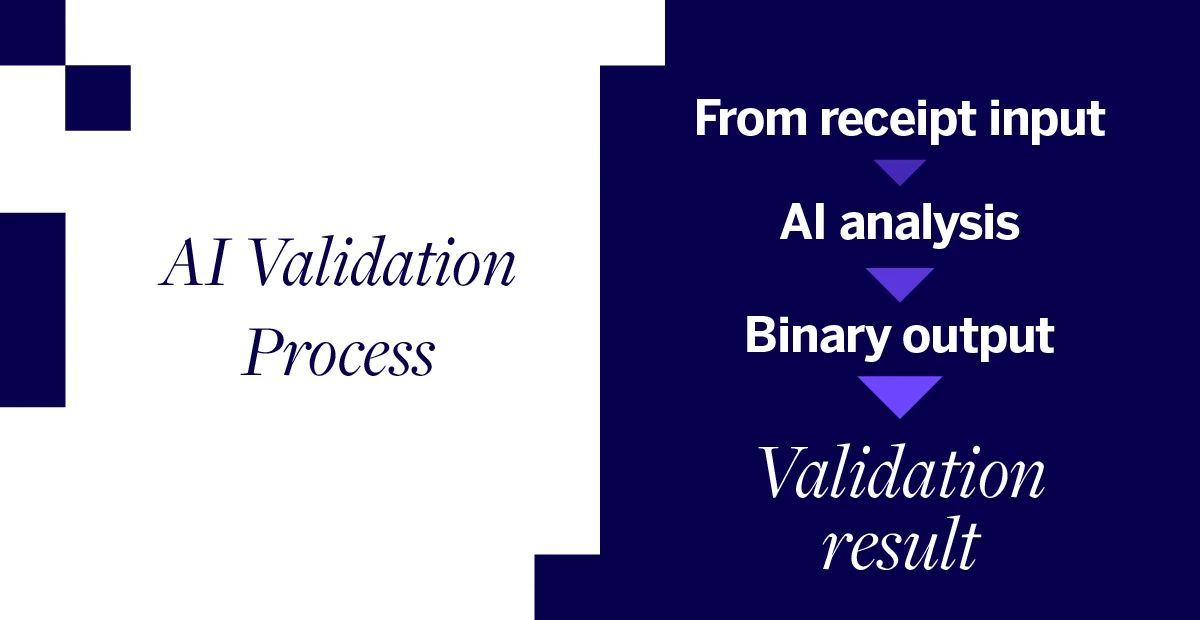
What It Means for Clients
For clients, this shift goes beyond operational efficiency.
Customers now enjoy near real-time validation and reassurance, much like receiving an instant order confirmation in e-commerce.
Brands benefit from faster, more consistent processing with lower manual overheads and fewer errors.
And because we’ve reduced the human workload on routine tasks, our teams can focus on designing more creative and complex promotions, from global trade-ins to multi-proof campaigns.
This is especially relevant for mechanics like cashback or gift-with-purchase promotions, where validation needs to scale across large volumes without adding friction to the customer journey.
One of the most striking examples was a vacuum cleaner trade-in campaign, where customers had to show proof of recycling. Using GenAI, we successfully built prompts capable of validating customer-submitted photos from recycling centres, instantly and accurately.
At Opia, we remain tech-led and digital-first, but always with a human touch, ensuring fast, seamless experiences for customers while freeing our agents to handle the most complex cases.
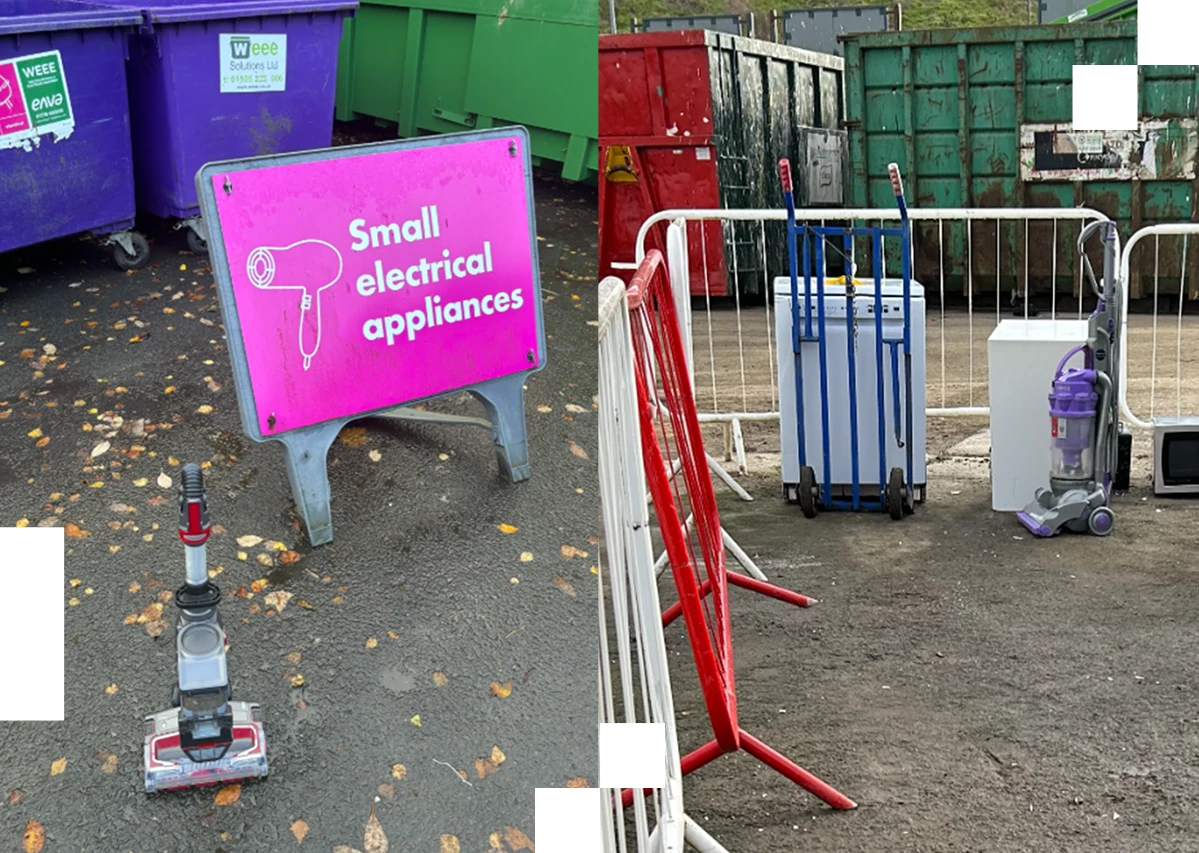
Looking Ahead
While claim validation has been the first major success, ongoing development and our new multi-model AI architecture are opening the door to additional areas where AI can deliver tangible value for both clients and customers.
This becomes particularly powerful when combined with structured sales promotion strategies, where planning, mechanics, and execution need to work together at scale.
Current and emerging applications include:
- Customer service and digital channel automation (exploratory)
- Multi-language support (pilot)
- Product development and engineering (pilot)
- Marketing automation (exploratory),
Each initiative follows the same principle that has guided our AI journey from the start: innovation with purpose, ensuring every new application improves performance, quality, or customer experience.

What We Didn’t Do
While many organisations rushed to automate everything, we took a more deliberate approach.
- We didn’t automate blindly.
- We didn’t remove human oversight from complex or sensitive cases.
- We didn’t prioritise speed at the expense of compliance or accuracy.
- And we didn’t treat AI as a marketing story before proving its operational value.
Conclusion: Purposeful Innovation, Not Hype
At Opia, our AI journey is driven by purpose – not trends or hype.
By embedding AI into the heart of our operations, we’ve made claim validation faster, more accurate, and more scalable, all while maintaining the highest standards of quality, compliance, and human oversight.
As a nimble partner to some of the world’s leading brands, we deliver AI-powered processes that are secure, compliant, and future-ready, helping our clients embrace innovation with confidence.
Tech-led and digital-first, with a human touch. That’s innovation, the Opia way.
Alongside automation and AI innovation, Opia maintains rigorous standards for data protection, security, and compliance. Our AI-driven processes align with GDPR, ISO standards, and enterprise-grade governance frameworks – ensuring innovation never comes at the expense of trust.

Ready to take the next step?
Discover how AI can redefine efficiency, creativity, and scale in your next campaign. Get in touch to explore how AI can transform your next promotion.
FAQs
What does AI do at Opia?
AI is used to validate claims by extracting key data, analysing proof submissions, and returning structured decisions at scale with human oversight for complex cases.
Is claim validation fully automated?
No. Automation exceeds 80% on average (and over 90% in some campaigns), but human review remains in place for sensitive or unclear cases.
How does Opia ensure compliance when using AI?
AI processes are built to align with GDPR, ISO standards, and enterprise governance frameworks, ensuring accuracy, security, and auditability.
Does AI replace Opia’s teams?
No. AI handles repetitive validation tasks, allowing teams to focus on complex claims, campaign design, and customer experience.
Where is Opia exploring AI next?
Current areas include multilingual support, customer service assistance, and deeper campaign insights through reporting and analytics.
Bold Promotional Strategies: Why Now Is the Time for Volume-Led Growth
Times are tough. Consumers are trading down, loyalty is fragile, and price sensitivity is rising across many categories. In response, many OEMs and retailers have leaned heavily on premiumisation strategies, extracting more value from wealthier customers who can afford a superior experience.
But this path has reached its limit. Margins are eroding, competition is intensifying, and market share expansion has stalled. Brands that continue to focus only on extracting value from existing customers risk stagnation.
It’s time to go back to basics: driving sales volumes and winning market share.
The Limits of Current Strategies
Premiumisation has been effective in recent years, but it is now reaching its limits in driving significant upside. Target customer segments for premium propositions are reasonably small, and simply raising prices without adding value leads to customer fatigue, regardless of how strong your brand is.
What we’re seeing in the market is a shift: medium and smaller players are driving much of the remaining premium growth, while the top global brands are starting to see value sales decline. For large brands, the path forward can’t rely on premium alone. Consumer demand is pivoting toward affordability and layered value, and that calls for a different approach.
Meanwhile, competing on price alone sparks a race to the bottom, destroying margin and damaging brand reputation. Growth today requires a reset. Instead of squeezing more from a shrinking pool of loyal customers, brands must focus on acquisition, penetration, and volume-led growth. This is where strategic sales promotions can play a critical role in driving market share.
Time to Be Bold
Incremental tweaks won’t cut it. What brands need now are bold, disruptive, large-scale promotions that stand out in the market and knock out the competition.
This doesn’t mean reckless giveaways or unsustainable discounts. It means smartly designed campaigns that are ambitious enough to capture attention, but structured to protect margin.
Examples of Bold Promotional Strategies
1. Cashback Promotions That Drive Action
Example: SharkNinja “Trade In and Save”
Opia partnered with SharkNinja to drive direct-to-consumer sales through a trade-in cashback promotion. Customers received £50 cashback when purchasing a qualifying Shark vacuum and trading in their old one. For 75% of participants, the offer was a decisive reason to buy, combining commercial impact with a sustainability message that reinforced Shark’s brand values.
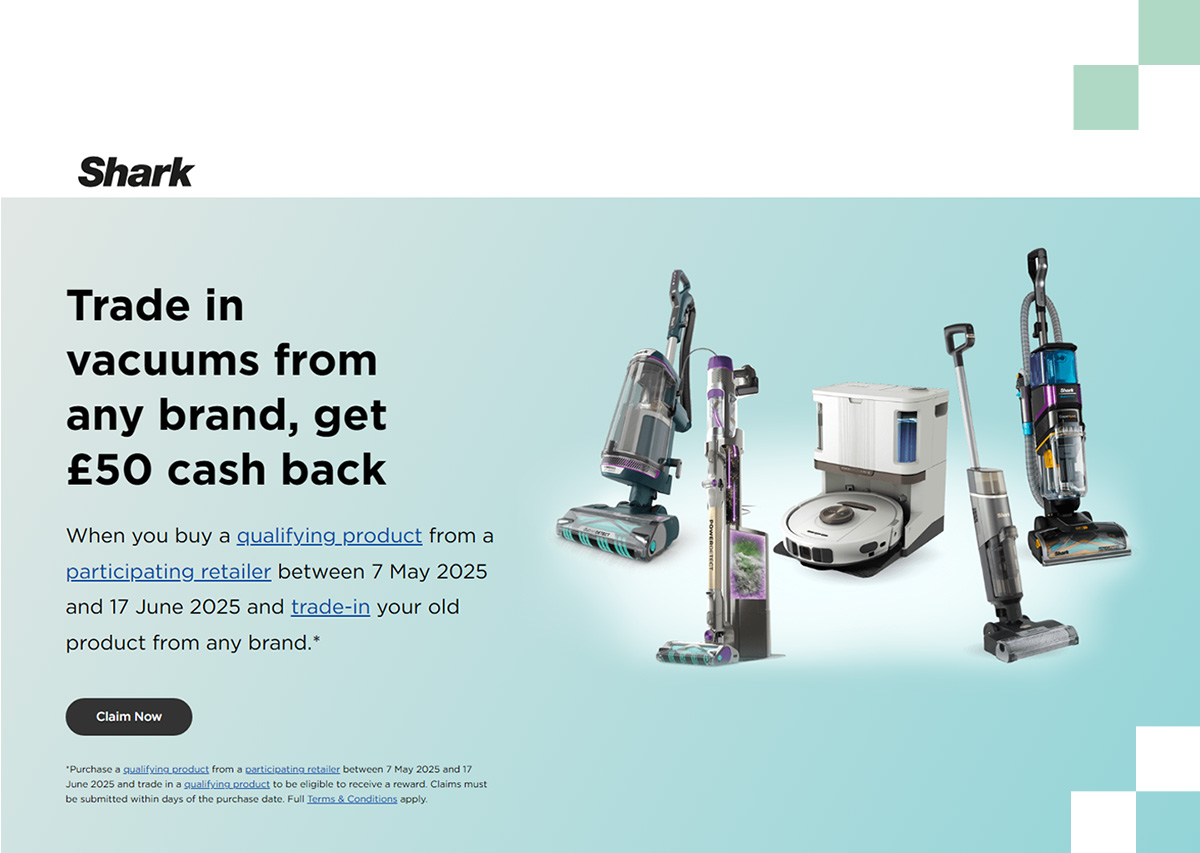
2. Gift-With-Purchase Offers That Add Real Value
Example: Samsung “Term Time Tech”
For Samsung’s back-to-school campaign, Opia managed a gift-with-purchase promotion that rewarded customers buying selected Galaxy smartphones with either a 14” Chromebook Go worth £399 or a Watch7 worth £239. The promotion allowed Samsung to create a flagship, stand-out offer across a wide range of products in its portfolio, capitalising on a key seasonal demand period.
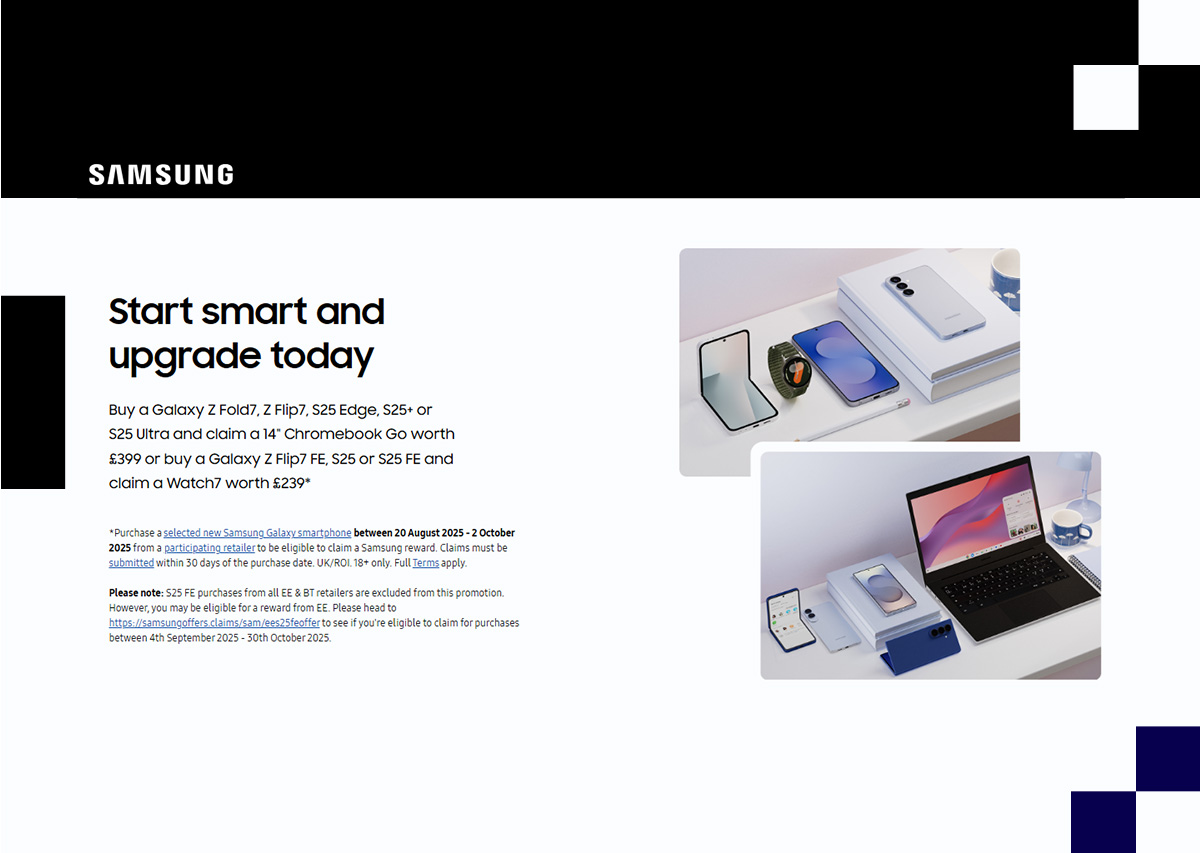
3. Trade-In Programmes That Build Loyalty
Example: XREAL Trade-In for AR Glasses
In the US, Opia worked with XREAL to launch a trade-in promotion for AR glasses, offering rewards of up to $475 for customers who exchanged their old devices. The trade-in promotion campaign generated strong buzz across social media and positioned XREAL as an innovator in wearable technology, while reinforcing Opia’s capability to deliver disruptive, global promotions.

4. Bold Campaigns That Capture Attention
The boldest promotions aren’t defined by a single mechanic; they’re defined by scale, visibility, and the strength of the value proposition. Whether through high-value cashbacks, multi-product trade-ins, or large seasonal bundles, these campaigns are engineered to dominate attention and shift market share.
They go beyond “tactical giveaways” or narrow Instant Wins. Bold promotions are structured to run across multiple channels, create sustained momentum, and deliver measurable commercial impact at scale.

What Bold Looks Like in Practice
A bold promotion today should be:
- Ambitious. Big and bold enough to cut through market noise. “Invisible” promotions are pointless. Promotions should be the talk of the town.
- Affordable. Structured to protect profitability and avoid margin erosion. Use data to define your target audience: deal-savvy customers you can convince to choose your brand.
- Smartly designed. Built on rules, eligibility, and mechanics that stand up to scale but resonate perfectly with the target audience
This is where Opia excels. We’ve delivered disruptive sales promotion campaigns across 40+ countries and 24+ languages, handling millions of claims through a secure, automated platform designed for global scale.
Why Now?
- Consumer fatigue with endless price wars means promotions that feel exciting and valuable will win attention.
- Brands need volume to offset slowing premium growth.
- Competitors that act boldly now, will capture share that’s difficult to claw back later.
The opportunity is clear: the brands that dare to be bold now will define the winners of tomorrow.
Key Takeaways
- Premiumisation has reached its limit. Growth now depends on market share and volume.
- Price wars destroy margins. Bold, smart promotions offer a sustainable alternative.
- Bold promotions win. Cashbacks, trade-ins, gift-with-purchase campaigns, and referral programmes cut through the noise.
- Now is the time. Competitors who act first will secure market share that’s hard to claw back.
- Opia is the partner. With global expertise, disruptive campaigns, and proven scale to deliver.
Partnering With Opia
The era of “playing safe” is over. To survive and thrive, brands must embrace volume-led growth through bold, disruptive promotions that deliver scale, engagement, and differentiation.
At Opia, we help global brands design promotions that are big enough to stand out, smart enough to afford, and disruptive enough to win.
Get in touch with us to explore how we can help your brand go bold now and into the future.
FAQs
What makes a promotion “bold”?
A bold promotion delivers clear value at scale and is designed to capture attention while protecting margins.
Are large promotions profitable?
Yes. When designed with the right mechanics and redemption modelling, promotions can drive volume without damaging the pricing strategy.
What types of promotions are most effective today?
Mechanics such as cashback, trade-in programs, and gift-with-purchase offers create strong value without damaging price positioning.
Can large promotions still protect brand margins?
Yes. When designed properly, promotions deliver value to consumers while controlling costs and maintaining price integrity.
How can brands scale bold promotions globally?
With the right technology, validation processes, and operational support to manage campaigns across markets, languages, and channels.