



Artificial Intelligence is everywhere. But at Opia, true value doesn’t come from following the hype; it comes from embedding AI where it delivers measurable operational impact.
Our approach is simple: use AI to improve the speed, accuracy, and scalability of promotional claim validation while maintaining the human oversight that defines our customer experience.
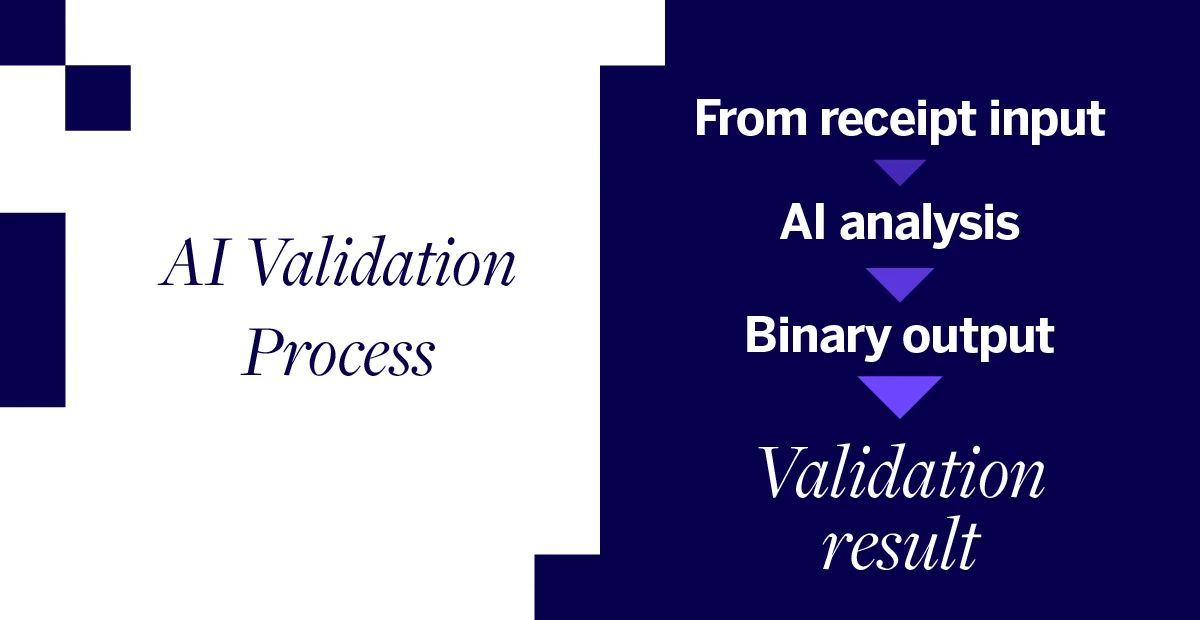
With more than one million claims validated each year, we asked a simple question at the start of our journey: where can AI create the most meaningful impact for our clients and their customers?
Before GenAI: The Starting Point
Claim validation quickly emerged as the most impactful area where AI could improve both operational efficiency and customer experience, particularly as promotional claims automation became central to how modern campaigns operate.
Legacy technologies like Optical Character Recognition (OCR) enhanced with Opia-built machine learning had been in place for years. While OCR worked well with clean, standard receipts, it fell short when faced with more complex documents such as order confirmations, images, or detailed B2B invoices from different retailers and formats.
We saw an opportunity to go further, to build an intelligent, scalable, and more capable process that could manage real-world complexity with speed and accuracy.
At Opia, fraud prevention always comes first. In our workflows, fraud checks are performed before any claim validation takes place, whether processed by AI or by human teams.
Experimentation Phase: From Hack Days to Breakthroughs
Our exploration began in mid-2023 during one of Opia’s regular hack days, where teams are encouraged to test bold new ideas.
We first trialled advanced OCR tools to improve data extraction, but quickly realized that even the best legacy tech had limitations. The turning point came when we decided to move entirely to Generative AI for both data extraction and decision-making in claim validation.
It was a bold move: using AI for decision-making in a critical, customer-facing process that determines claim eligibility and, ultimately, payments.
Our teams experimented with different types of proofs, such as:
- Photos of serial numbers on packaging or devices
- Selfies of customers standing next to newly installed products (e.g., televisions)
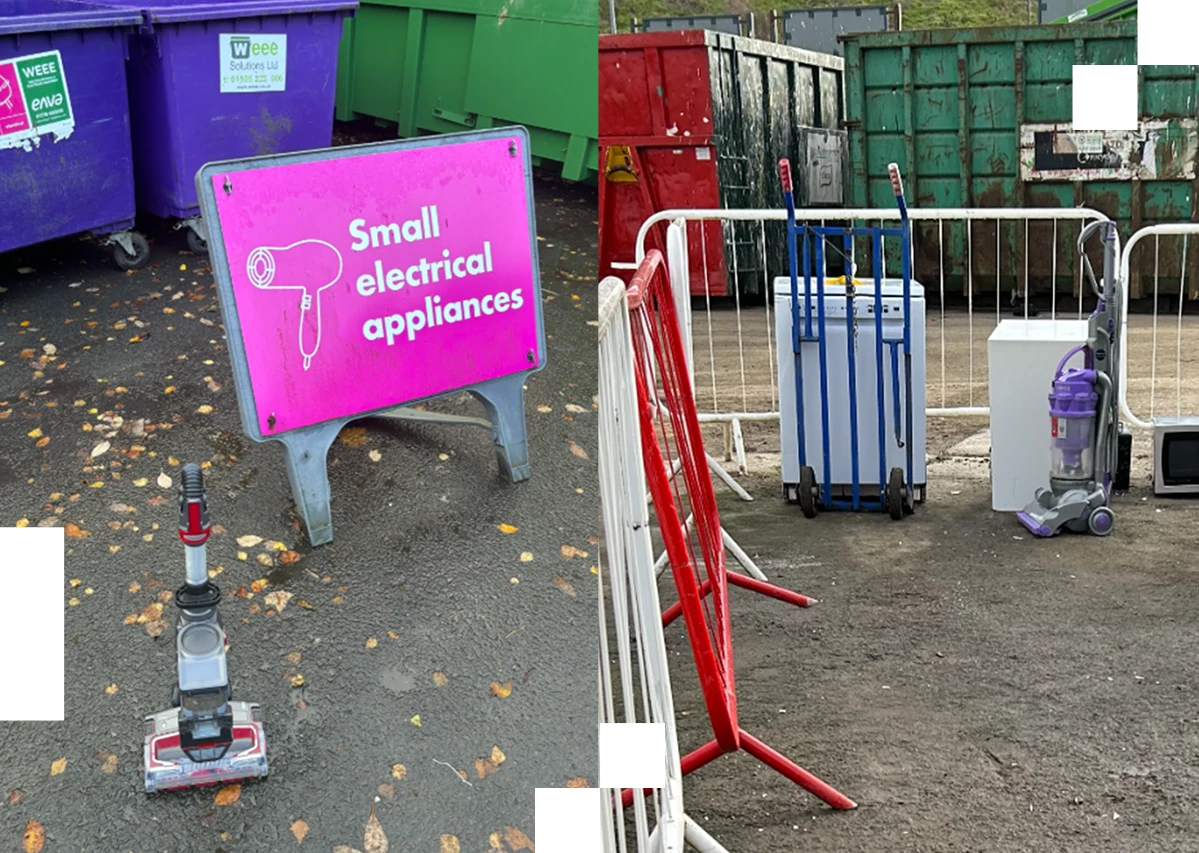
- Images showing old appliances disposed of at recycling centres during trade-in campaigns.
- Complex receipts with multiple products and add-ons (such as free delivery or different sales tax rates)
These scenarios demanded more flexibility and intelligence than traditional tech could offer, and GenAI made it possible.
Building the AI Engine
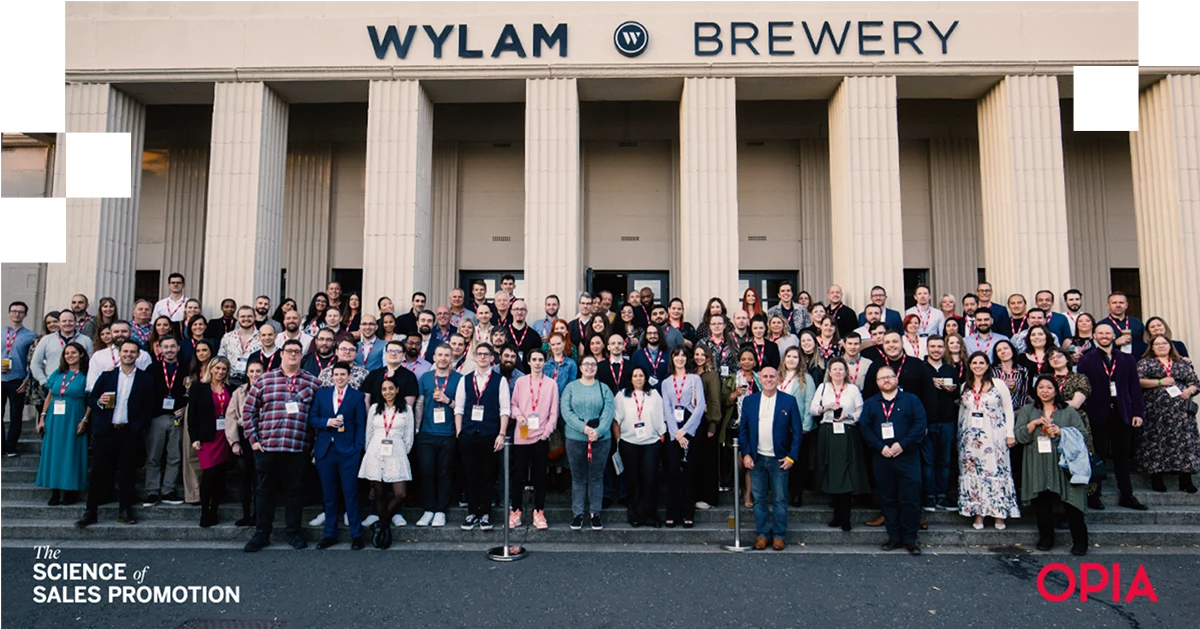
To accelerate development, Opia created a cross-functional “Zero Touch” squad, a dedicated team focused on automating processes end-to-end while maintaining human oversight for the complex cases that machines can’t solve.
Their mission: make claim validation as fast and automated as possible, leaving human intervention only for complex cases that can’t be solved by machines.
Alex Gadyukov, Head of Product and Solutions: “A huge part of the work was refining prompts and deciding where automation should stop. We taught the model how to recognize different receipt types, extract only the data we care about, and respond in a very structured way – but we were just as deliberate about knowing when to hand it off to a human. That balance between speed and judgement was critical to building trust in the system.”
The solution was designed to be model-agnostic, giving Opia the flexibility to integrate and test different large language models (LLMs) as performance evolves. Today, the platform operates with a multi-model architecture connected to the latest LLMs, allowing our teams to continuously benchmark models and select the most effective one for each task.
This adaptability ensures scalability without dependency on any single technology provider.
We set an ambitious goal: achieve 90% automation, while maintaining accuracy, transparency, and compliance across every campaign.
Key Milestones and Learnings
After a year of iteration, we achieved over 90% automation in some campaigns, with an average close to 80% automation across all claim types in early 2025.
To date, more than 1,000,000 claims have been processed through Opia’s in-house AI engine, delivering automation at scale across multiple campaign types and markets, including high-volume US campaigns.
Key Learnings from the Journey
- Binary precision matters: Getting a talkative GenAI model to return a simple “yes” or “no” requires extensive prompt refinement. Our teams also added a crucial “don’t know” last resort option to reduce false positives or negatives.
- People remain essential: Operational teams evolved into prompt engineers, blending their knowledge of promotional design with new technical expertise.
- Balance is key: We optimized for accuracy, speed, and cost without compromising on quality, maintaining rigorous spot checks to uphold our high standards.
- Operational resilience matters: AI models evolve quickly and can even be retired (“deprecated”) without much notice. To protect operations, we built dry-run and dual-run capabilities that allow us to test and switch models safely without disrupting live campaigns.
- Model flexibility matters: As the LLM landscape evolves rapidly, building a model-agnostic system allowed us to test and integrate newer models without disrupting operations.
Alex Gadyukov, Head of Product and Solutions: “What surprised us most was how much human expertise still mattered. Our operational teams became prompt engineers, testing thousands of receipt variations, tweaking instructions, and designing sensible fallbacks. If the AI couldn’t confidently find a valid purchase date or key data, it didn’t guess — it asked for more information or escalated to a person. That combination is what allowed us to scale automation without sacrificing accuracy or compliance.”
What It Means for Clients
For clients, this shift goes beyond operational efficiency.
Customers now enjoy near real-time validation and reassurance, much like receiving an instant order confirmation in e-commerce.
Brands benefit from faster, more consistent processing with lower manual overheads and fewer errors.
And because we’ve reduced the human workload on routine tasks, our teams can focus on designing more creative and complex promotions, from global trade-ins to multi-proof campaigns.
This is especially relevant for mechanics like cashback or trade in promotions, where validation needs to scale across large volumes without adding friction to the customer journey.
One of the most striking examples was a vacuum cleaner trade-in campaign, where customers had to show proof of recycling. Using GenAI, we successfully built prompts capable of validating customer-submitted photos from recycling centres, instantly and accurately.
At Opia, we remain tech-led and digital-first, but always with a human touch, ensuring fast, seamless experiences for customers while freeing our agents to handle the most complex cases.
What We Didn’t Do
While many organisations rushed to automate everything, we took a more deliberate approach.
- We didn’t automate blindly.
- We didn’t remove human oversight from complex or sensitive cases.
- We didn’t prioritize speed at the expense of compliance or accuracy.
- And we didn’t treat AI as a marketing story before proving its operational value.
Looking Ahead
While claim validation has been the first major success, ongoing development and our new multi-model AI architecture are opening the door to additional areas where AI can deliver tangible value for both clients and customers.
Current and emerging applications include:
- Customer service and digital channel automation (exploratory)
- Multi-language support (pilot)
- Product development and engineering (pilot)
- Marketing automation (exploratory),
Each initiative follows the same principle that has guided our AI journey from the start: innovation with purpose, ensuring every new application improves performance, quality, or customer experience.

Conclusion: Purposeful Innovation, Not Hype
At Opia, our AI journey is driven by purpose – not trends or hype.
By embedding AI into the heart of our operations, we’ve made claim validation faster, more accurate, and more scalable, all while maintaining the highest standards of quality, compliance, and human oversight.
As a nimble partner to some of the world’s leading brands, we deliver AI-powered processes that are secure, compliant, and future-ready, helping our clients embrace innovation with confidence.
Tech-led and digital-first, with a human touch. That’s innovation, the Opia way.
Alongside automation and AI innovation, Opia maintains rigorous standards for data protection, security, and compliance. Our AI-driven processes align with GDPR, ISO standards, and broader enterprise-grade data protection and governance frameworks – ensuring innovation never comes at the expense of trust.

Ready to take the next step?
Discover how AI can redefine efficiency, creativity, and scale in your next campaign. Get in touch to explore how AI can transform your next promotion.
FAQs
What does AI do at Opia?
AI is used to validate claims by extracting key data, analyzing proof submissions, and returning structured decisions at scale with human oversight for complex cases.
Is claim validation fully automated?
No. Automation exceeds 80% on average (and over 90% in some campaigns), but human review remains in place for sensitive or unclear cases.
How does Opia ensure compliance when using AI?
AI processes are built to align with GDPR, ISO standards, and enterprise governance frameworks, ensuring accuracy, security, and auditability.
Does AI replace Opia’s teams?
No. AI handles repetitive validation tasks, allowing teams to focus on complex claims, campaign design, and customer experience.
Where is Opia exploring AI next?
Current areas include multilingual support, customer service assistance, and deeper campaign insights through reporting and analytics.