



Rebates are one of the most widely used, and widely misunderstood, sales promotion mechanics. This guide covers exactly what a rebate is, how the claim process actually works, the full range of rebate types from cash to volume to manufacturer rebates, and how rebates stack up against straight discounts. Whether you’re evaluating a rebate program for the first time or refining one already running, use the sections below as a working reference.
Table of Contents
- Key Takeaways
- What is a Rebate?
- Consumer, B2B, and Channel Incentive Rebates
- Purposes of Rebates
- How Rebates Work
- How to Calculate a Rebate
- How Rebates Help Your Business
- Benefits of Using Rebates
- Pros and Cons of Rebates
- Common Rebate Pitfalls (and How to Avoid Them)
- Types of Rebates
- Rebates vs. Discounts
- Key Considerations When Offering a Rebate
- Checklist for Evaluating Rebates
- Conclusion
- FAQs
- Related posts
Key Takeaways
- Rebates are a form of sales promotion that provides a refund to customers after a purchase.
- They can be used to incentivize purchases, drive customer loyalty, and gather valuable data.
- Various types of rebates cater to different business needs and target audiences.
- Implementing a successful rebate program requires careful planning and management.
- OPIA offers comprehensive solutions to help businesses design and execute effective rebate programs.
What is a Rebate?
A rebate, sometimes described as a “retroactive discount,” is a sales promotion technique where customers receive a refund or a portion of their purchase price back after completing a purchase rather than at checkout.
Unlike discounts, which reduce the price at the point of sale, rebates offer a delayed incentive, rewarding customers for their purchase behavior. This delayed incentive can be a powerful motivator, encouraging customers to choose your product or service over a competitor’s.
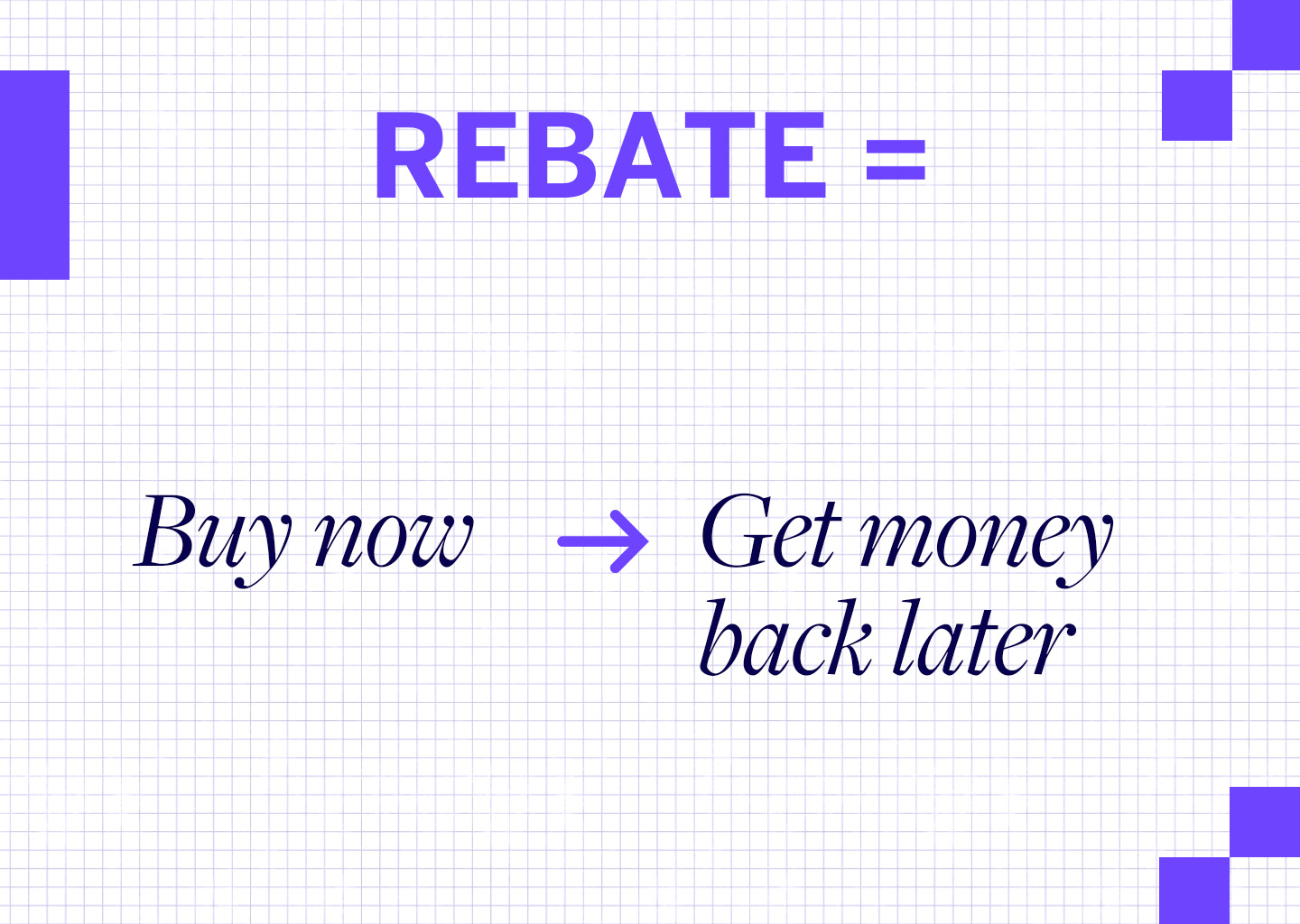
In simple terms: a rebate is money you get back after you’ve already paid full price, it’s a refund that comes later, not a discount applied at checkout.
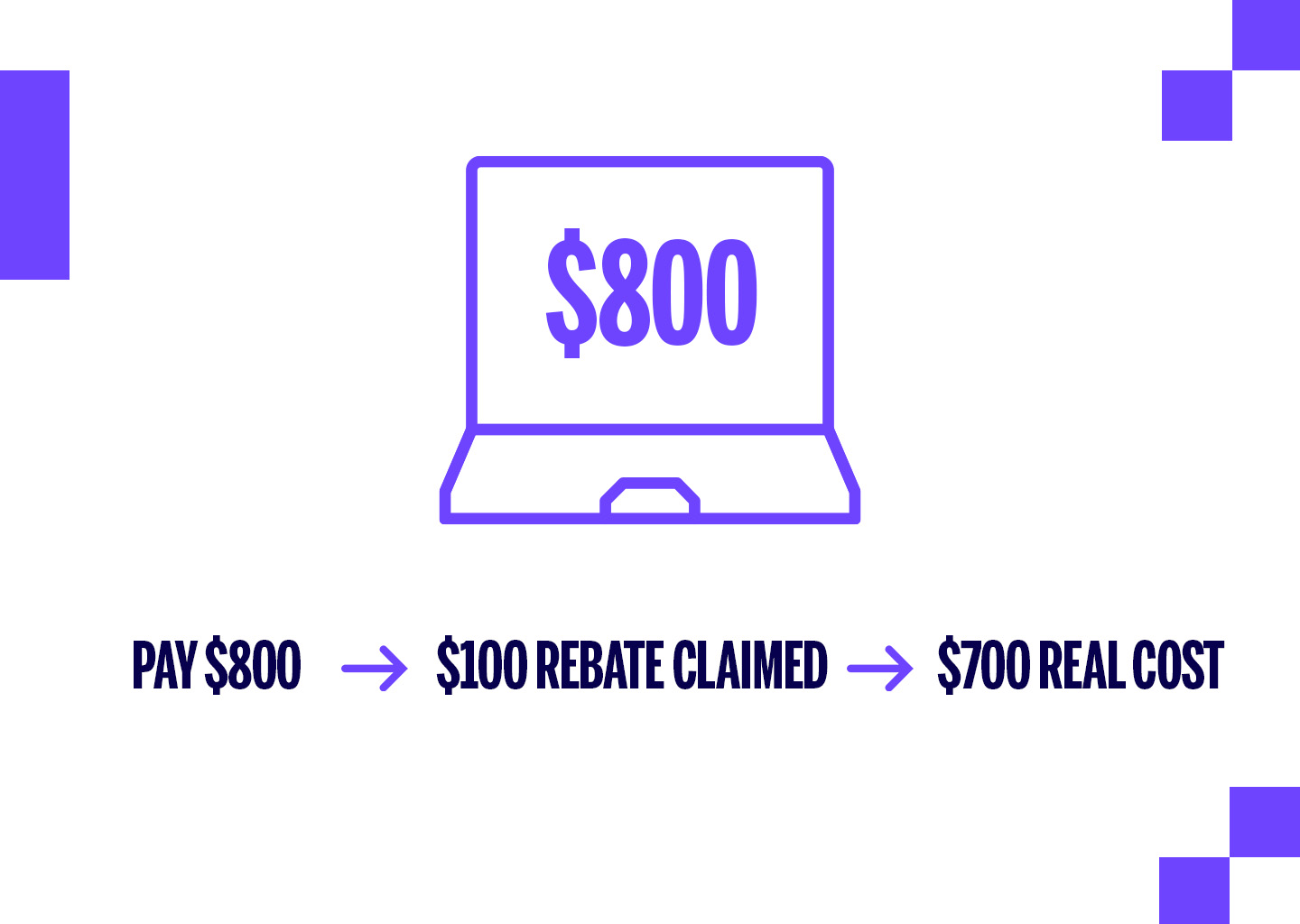
Example: You buy a laptop for $800 with a $100 rebate offer. You pay $800 upfront, then submit a claim to get $100 back, making your real cost $700.
Rebates are commonly used in various industries, including:
- Consumer Electronics: Offering rebates on smartphones, laptops, and other electronics can incentivize upgrades and boost sales.
- Automotive: Manufacturers often use rebates to promote specific car models or clear out inventory.
- Retail: Rebates can encourage customers to purchase bundled products, reach spending thresholds, or try new product lines.
- Appliances and Home Goods: One of the most common rebate categories of all, covering major appliances as well as gardening, lighting, and home improvement purchases.
Simple Examples of Rebates
- Consumer electronics: Buy a TV and claim $100 back after purchase
- Retail threshold: Spend $200 and receive a $20 rebate
- B2B volume rebate: Purchase 500 units in a quarter and earn 3% back
- Delivery rebate: Get shipping costs refunded after checkout
- Loyalty rebate: Receive cashback after multiple qualifying purchases
Consumer, B2B, and Channel Incentive Rebates
Rebates aren’t one relationship, they run in at least three different directions, and the distinction matters for how a program is designed and measured.
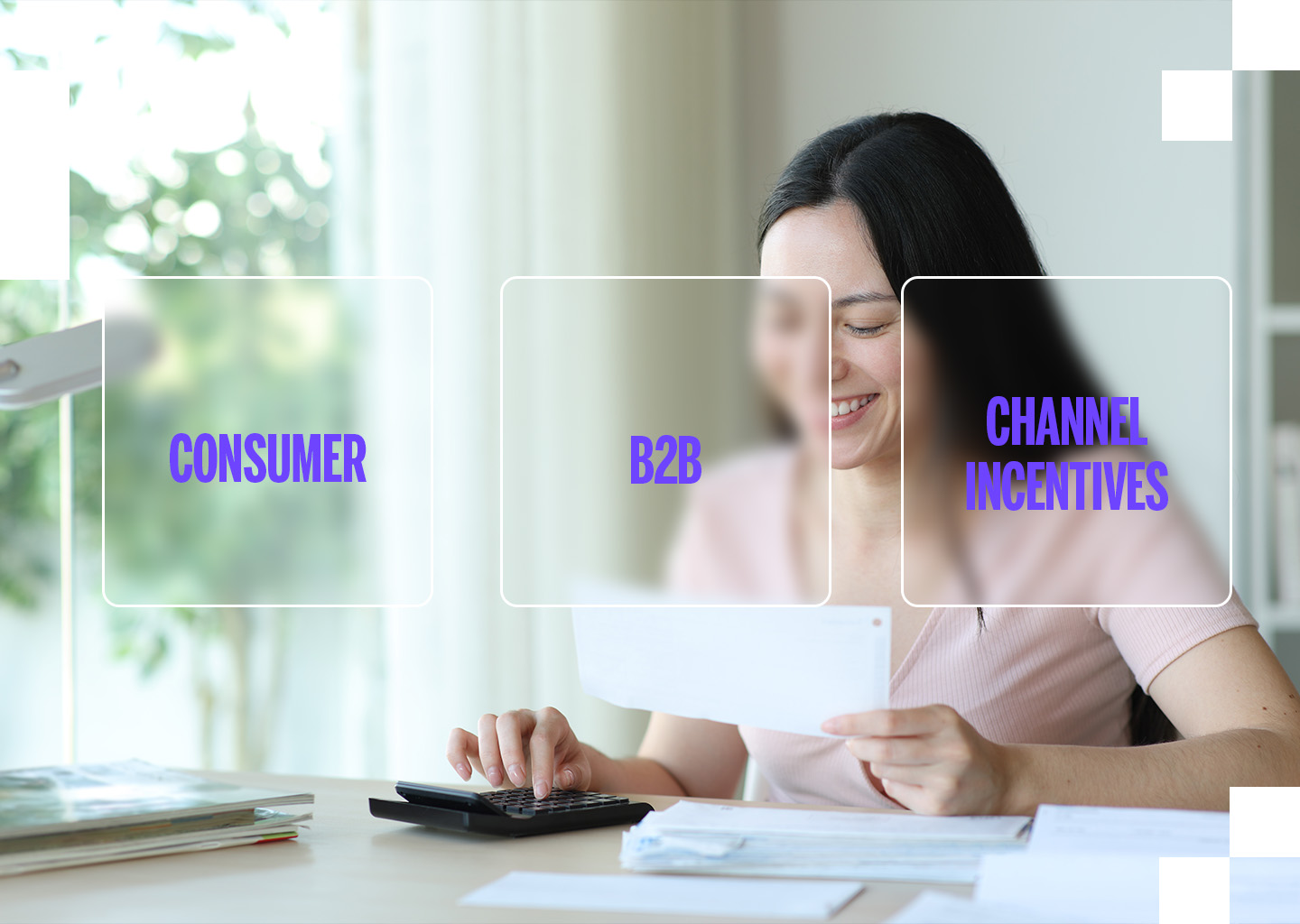
- Consumer rebates: paid directly to the end customer after purchase. This is the type covered throughout most of this guide, a customer buys, submits a claim, and gets money back.
- B2B rebates: paid by one business to another, typically a supplier or manufacturer rewarding a business buyer for hitting a volume or spending threshold. The buyer isn’t a consumer, it’s another company purchasing for resale or its own use.
- Channel incentives: a specific kind of B2B rebate paid to retailers or sales people, not to reward a purchase itself but to motivate them to actively sell or promote a product. This includes co-op funds (shared marketing spend), MDF (market development funds), and spiffs (per-unit incentives paid to individual sales reps). These function more like a trade promotion than a traditional rebate, and are usually structured and measured very differently from consumer-facing programs.
The two also differ in how they’re accounted for: consumer and B2B rebates are typically recorded as a liability once earned and an expense once paid, while channel incentives and supplier-side rebates are more often treated as a reduction in cost of goods sold. Getting this distinction right matters for accurate financial reporting on any rebate program running at scale.
Running supplier, channel, or volume rebates at scale?
See our Sales Promotion Services Overview for how we manage this end-to-end, or get in touch to discuss your program.
Purposes of Rebates
Rebates serve a variety of purposes for businesses, including:
- Increasing Sales: By offering a financial incentive, rebates can motivate customers to make a purchase they might otherwise delay.
- Driving Customer Loyalty: Rebates can reward repeat customers and encourage them to continue choosing your brand.
- Gathering Data: The rebate claim process allows businesses to collect valuable customer information and insights.
- Promoting New Products: Rebates can incentivize customers to try new offerings and drive product adoption.
- Clearing Inventory: Rebates can help move slow-moving or end-of-line products. This can be particularly useful during seasonal promotions.
To learn more about how sales promotions can benefit your business, check out our Sales Promotion guide.
How Rebates Work
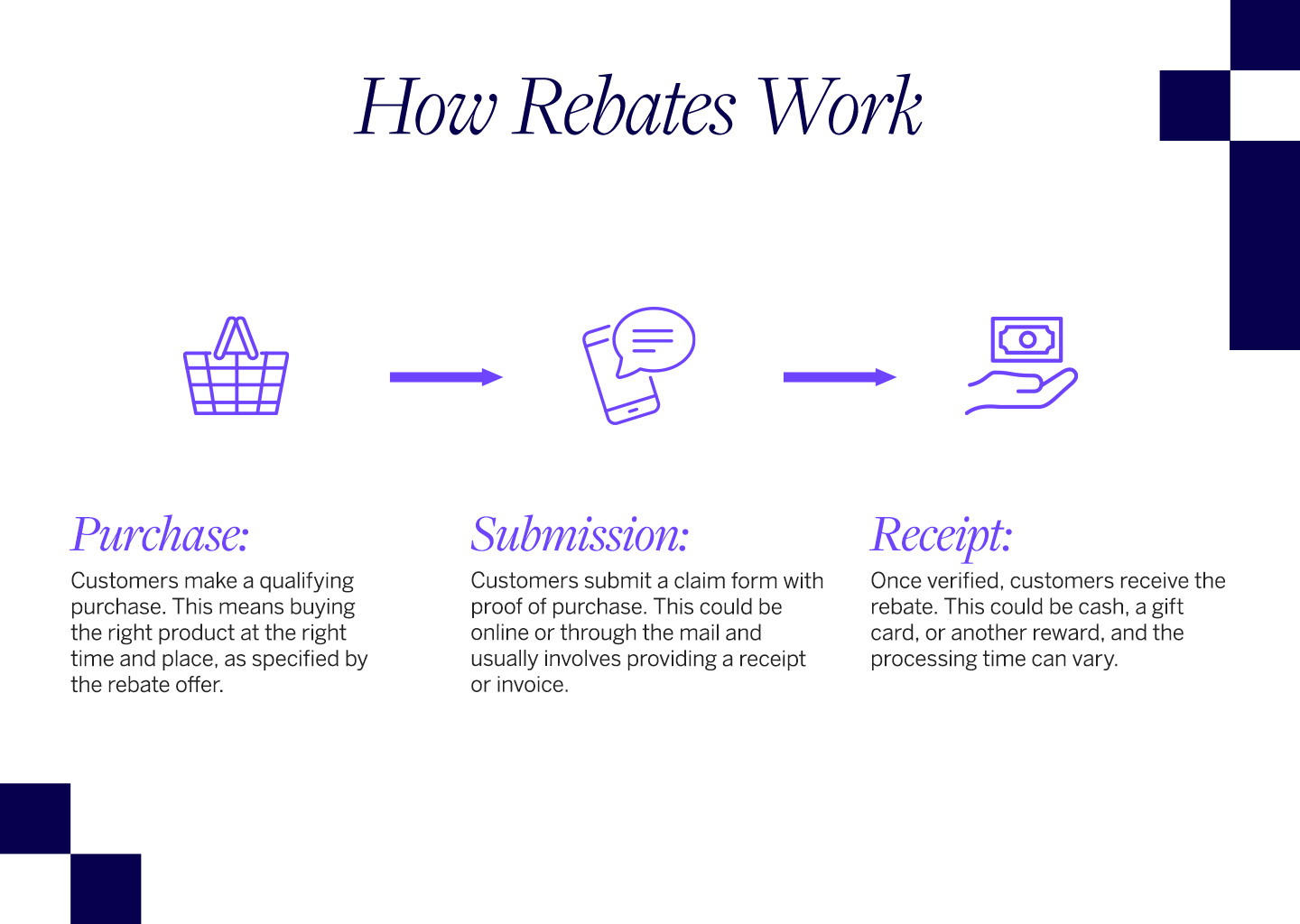
The typical rebate process involves three main steps:
- Purchase: Customers make a qualifying purchase. This means buying the right product at the right time and place, as specified by the rebate offer.
- Submission: Customers submit a claim with proof of purchase, usually online today. Mail-in submission was the traditional method and still exists for some programs, but online claims are now the norm.
- Receipt: Once verified, customers receive the rebate. This could be cash, a gift card, or another reward, and the processing time can vary.
How to Calculate a Rebate
The exact rebate amount depends on how the offer is structured. Two formulas cover most consumer and B2B rebates:
Flat-Rate Rebate
Rebate = Number of Units × Rebate Per Unit
Example: a supplier offers a $2.50 rebate per unit. A buyer purchasing 1,000 units receives a $2,500 rebate.
This kind of flat per-unit rebate is especially common in trade and channel incentive programs, sometimes called a spiff, where a supplier rewards a retailer or sales rep for moving units, rather than in direct-to-consumer rebates.
Percentage Rebate
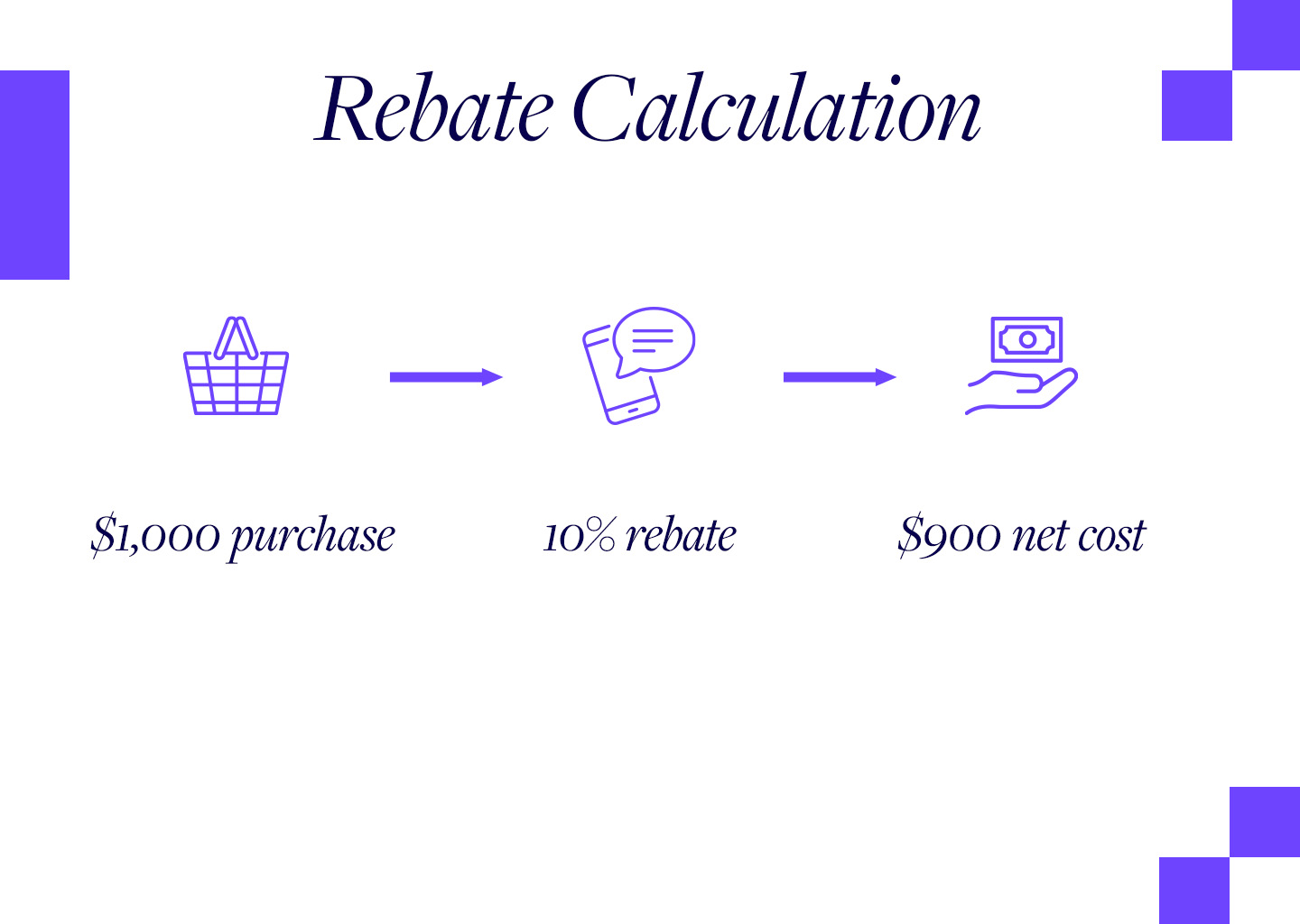
Rebate = Percentage × Purchase Price
Example: a 10% rebate on a $1,000 appliance purchase returns $100 to the customer.
A well-known real-world example of this mechanic is a “tax back” promotion, where the rebate refunds the local sales tax paid on a purchase.
Tiered Volume Rebates
Common in both B2B and consumer settings, often marketed to consumers as “Buy More, Save More” based on basket size or number of items, the rebate rate increases as purchase volume crosses set thresholds:
| Purchase Volume (Units) | Rebate Per Unit |
|---|---|
| 100-499 | $2.00 |
| 500-999 | $4.00 |
| 1,000+ | $6.00 |
A buyer purchasing 750 units at this structure receives 750 × $4 = $3,000 back.
Curious whether a rebate program like this is actually paying off? We’ve written up how to measure sales promotion ROI properly.
Why Redemption Rate Matters
The formulas above calculate a business’s maximum exposure, not its actual cost.
In practice, not every eligible customer submits a valid claim, the gap between eligible and claimed is the redemption rate, sometimes called breakage. This changes the real math: a $50 rebate on a $500 product looks like a $450 effective price if every buyer claims it, but if only half actually do, the business’s true average discount across all buyers is closer to $25 per unit, a $475 effective price, not $450.
Modeling realistic redemption rates, rather than assuming everyone claims, is what separates accurate rebate budgeting from guesswork.
How Rebates Help Your Business
Rebates are not just an alternative to discounts. They are a strategic lever that allows businesses to influence customer behavior, protect pricing, and unlock long-term value.
Because rebates are applied after purchase, they can be designed to reward specific actions, such as buying more, buying again, or buying at the right time, without eroding shelf price.
- Shape Customer Behavior: Unlike discounts that simply reduce the price, rebates can be designed to incentivize specific actions. Want customers to buy in bulk? Offer a volume rebate. Want to introduce a new product line? Offer a rebate for trying it.
- Build Stronger Customer Relationships: Rebates create a sense of reciprocity with your customers. They feel valued and appreciated, which fosters loyalty and encourages repeat business.
- Gain a Competitive Advantage: In a crowded market, a well-structured rebate program can be a powerful differentiator. It allows you to offer value without simply lowering your prices, preserving your brand image and profit margins.
- Gather Valuable Customer Insights: The rebate claim process provides a unique opportunity to collect valuable customer data, informing personalized marketing and product development.
- Optimize Inventory Management: Rebates can be used to strategically manage inventory levels, clearing slow-moving products and reducing carrying costs.
- Enhance Brand Image: By offering rebates, you’re demonstrating a commitment to providing value to your customers, which can enhance brand perception and build trust.
Benefits of Using Rebates
Rebates deliver a combination of commercial, financial, and customer experience benefits when compared to upfront discounts:
- Increase sales and revenue: Rebates provide a compelling incentive to buy, particularly for higher-value or considered purchases.
- Improve cash flow: Because rebates are paid after purchase, businesses retain full upfront revenue while managing payout timing.
- Maintain price integrity: Rebates protect list prices and avoid the long-term erosion associated with frequent discounting.
- Build customer loyalty: Rebates reward engagement and repeat behavior, helping brands strengthen long-term customer relationships.
- Enhance perceived value: Customers feel rewarded without seeing the product devalued at the point of sale.
- Unlock first-party insights: Claim data can be used to inform future promotions, segmentation, and product strategy.
See these benefits in practice
Explore our Sales Promotion guide for real campaign examples, or get in touch to talk through a rebate program for your brand.
Pros and Cons of Rebates
Pros:
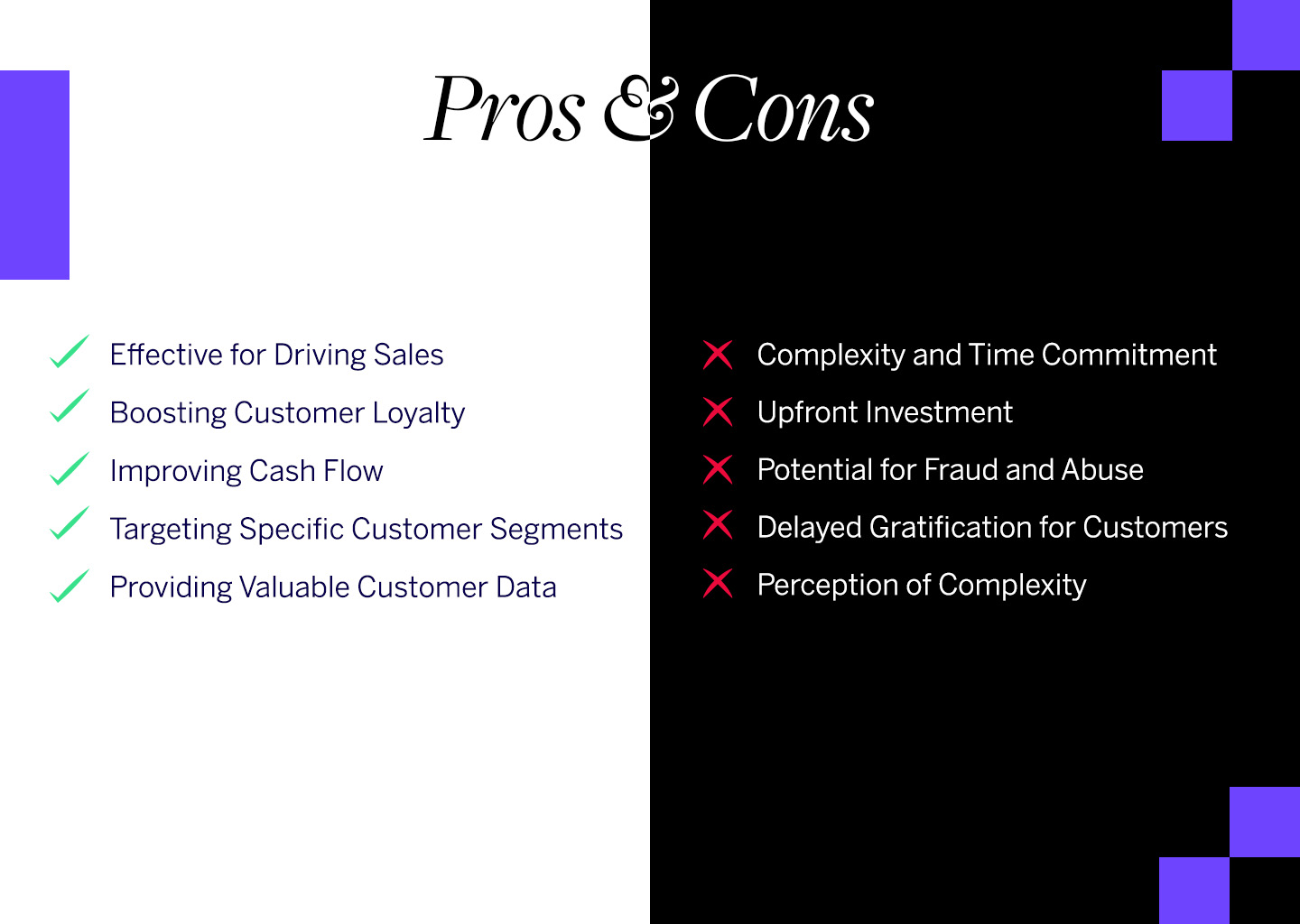
- Effective for Driving Sales: Rebates are a proven method for incentivizing purchases and increasing sales volume.
- Boosting Customer Loyalty: By rewarding customers for their purchases, rebates foster loyalty and encourage repeat business.
- Improving Cash Flow: The delayed payout structure allows businesses to maintain healthy cash flow while still offering attractive incentives.
- Targeting Specific Customer Segments: Rebates can be tailored to target new, loyal, or high-value customers.
- Providing Valuable Customer Data: The claim process can provide valuable data to improve marketing, product development, and customer service.
Cons:
- Complexity and Time Commitment: Setting up and managing a rebate program can be complex and time-consuming.
- Upfront Investment: Marketing and promoting a rebate program requires an upfront investment.
- Potential for Fraud and Abuse: Rebates can be susceptible to fraud, requiring robust verification and security measures.
- Delayed Gratification for Customers: unlike discounts, rebates offer a delayed reward rather than instant savings. Handled well, this delay can actually work in a brand’s favor, customers who complete a claim process often feel a stronger sense of having earned their reward, a psychological boost discounts don’t create. Handled poorly, with a clunky claim process, the same delay just creates friction and drop-off.
- Perception of Complexity: a cumbersome claim process can create a negative customer experience and deter participation. The fix isn’t avoiding rebates altogether, it’s making the claim process itself intuitive, appealing, simple, and quick, the difference between a rebate that converts well and one that doesn’t usually comes down to execution, not the mechanic itself.
These challenges are largely what a managed rebate partner exists to solve. A platform like OPIA’s removes much of the operational complexity, and can structure costs on a pay-per-redemption basis rather than requiring a large upfront marketing spend.
Common Rebate Pitfalls (and How to Avoid Them)
- Overly complex claim processes that discourage participation
- Unclear eligibility rules or deadlines
- Slow validation and poor communication with customers
- Increased exposure to fraud and duplicate claims
- Lack of visibility into performance and redemption rates
Successful rebate programs balance simplicity for customers with strong validation and control behind the scenes. Fraud and validation issues are avoidable.
Types of Rebates
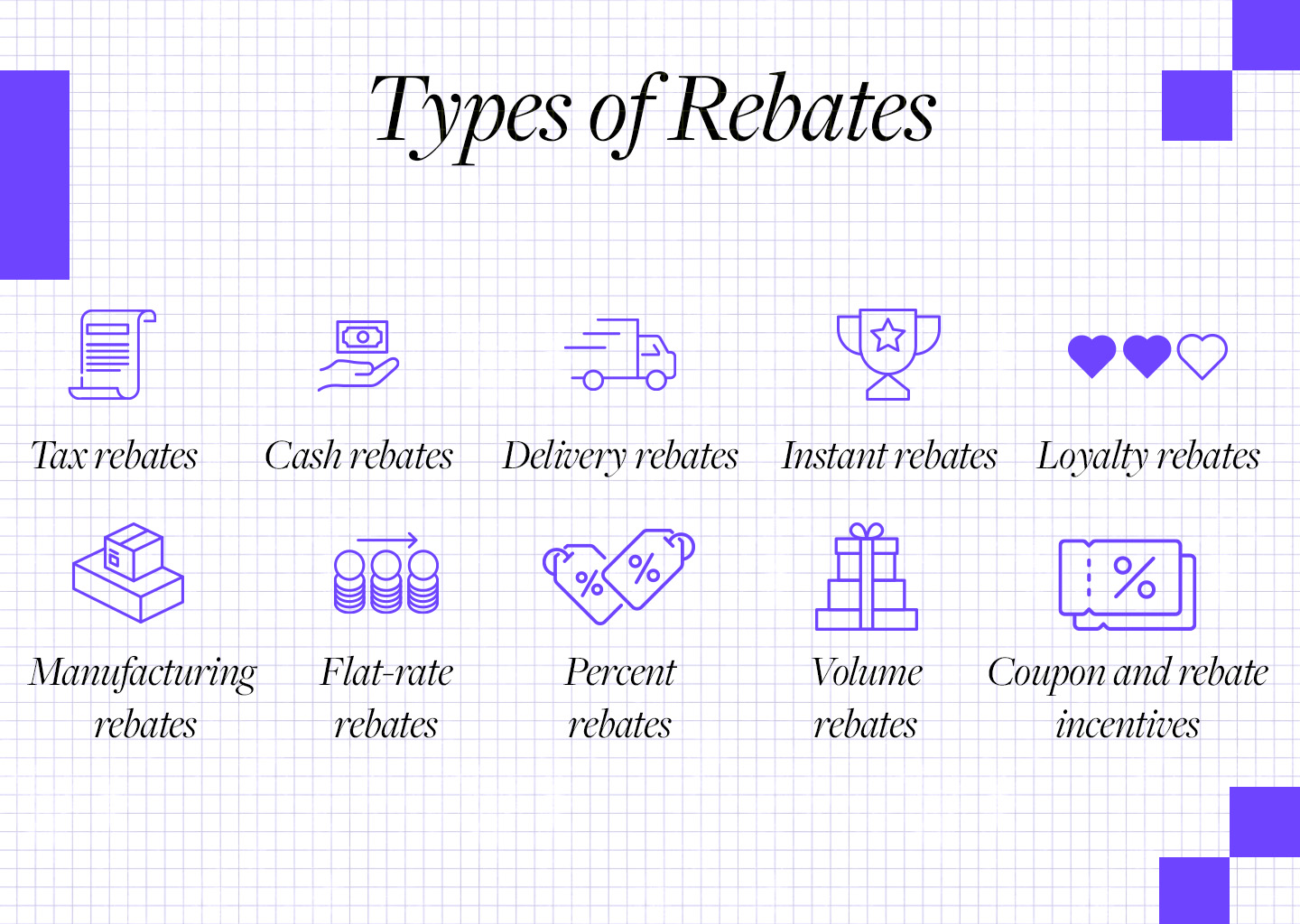
Rebates come in many forms depending on your commercial goals. Below are some of the most common types of rebates used in sales promotions.
Tax Rebates
Tax rebates are government incentives that reduce your tax liability. These are not typically offered by businesses, but it’s useful to understand them in the broader context of rebates. They often encourage specific behaviors like investing in renewable energy or making energy-efficient home improvements.
Cash Rebates
Cash rebates are a popular and versatile type of rebate where customers receive a cash refund after making a qualifying purchase. This is a great way to incentivize purchases and drive sales, especially for higher-priced items.
OPIA can help you design and manage effective cash rebate programs, ensuring a seamless experience for both you and your customers.
Delivery Rebates
Delivery rebates help offset or reduce shipping costs, making products more attractive to customers, especially for online purchases. This can be a powerful incentive for price-sensitive customers or those who frequently shop online.
Instant Rebates
Technically still a rebate, but structured so the customer experiences it like a discount, there’s no separate claim to submit. The retailer applies the reduction at checkout, then gets reimbursed by the manufacturer afterward, which is what distinguishes it from a straight discount: the retailer, not the customer, is the one managing a claim after the fact.
OPIA can help you integrate instant rebates into your promotional campaigns, creating a sense of urgency and maximizing their impact.
Loyalty Rebates
Loyalty rebates are essential for rewarding repeat customers and building long-term relationships. They are a key component of customer loyalty programs and can significantly increase customer lifetime value.
Manufacturer Rebates
Paid by a manufacturer to a retailer or distributor to incentivize them to sell more of a product, often structured as a channel incentive rather than a direct-to-consumer offer. Common in industries like consumer electronics and automotive.
Flat-Rate Rebates
Flat-rate rebates offer a fixed rebate amount, regardless of the purchase price. They are simple to understand and administer, making them suitable for various promotions.
Percent Rebates
Percent rebates are calculated as a percentage of the purchase price. The higher the purchase amount, the larger the rebate. This can encourage higher spending and promote premium products.
Volume Rebates
Volume rebates are tiered rebates based on the quantity of products purchased. They are common in B2B settings and encourage larger orders.
Coupon and Rebate Incentives
Combining coupons and rebates can create a powerful incentive by offering both immediate and delayed rewards. This maximizes customer appeal and drives sales.
For a deeper breakdown, see our full guide to types of rebates. Not sure which rebate type fits your business? Our free Sales Promotion Planning Guide walks through choosing and structuring a mechanic step by step.
Rebates vs. Discounts
While both rebates and discounts are sales promotion techniques, they work in very different ways.
Choosing Between Rebates and Discounts
Use discounts when:
- You need to stimulate immediate demand and drive quick sales.
- You’re less concerned about maintaining a premium price perception.
- You want to offer a simple and easily understood incentive.
Use rebates when:
- You want to encourage repeat purchases and build customer loyalty.
- You need to manage cash flow and delay payouts.
- You want to gather valuable customer data through the claim process.
- You want to maintain price integrity and avoid price erosion.
When Rebates Work Best
- High-value or considered purchases
- Bundles or multi-product mechanics
- Volume or loyalty-driven campaigns
- When price protection is important
- When first-party data capture matters
Key Considerations When Offering a Rebate
Launching a rebate program involves more than just offering a refund. Consider these critical factors to maximize effectiveness and avoid potential pitfalls:
Rebate Management Process
Establishing a clear and efficient process for managing rebate claims is crucial for a successful program. This includes:
- Planning and Design: Define clear objectives for the rebate program, determine eligibility criteria, and design the claim process.
- Claim Submission: Provide user-friendly online forms or mail-in options for customers to submit their claims.
- Verification and Approval: Implement a robust verification process to ensure only valid claims are approved.
- Payment and Fulfillment: Choose a reliable method for delivering rebates to customers, such as direct deposit, gift cards, or checks.
- Tracking and Reporting: Monitor the performance of your rebate program with comprehensive tracking and reporting tools.
Automated claim validation and fulfillment are critical at scale, ensuring speed for customers and control for brands.
Purchase Price
Clearly communicate the qualifying purchase amount and any exclusions to avoid confusion and ensure transparency. This includes specifying whether the rebate applies to the pre-tax or post-tax amount, and whether any other discounts or promotions affect the qualifying purchase price.
Time of Purchase
Set clear deadlines and time frames for rebate eligibility. This includes specifying the start and end dates of the promotion, any time zone considerations, and the exact cut-off time for purchases to qualify.
Promotion and Communication
Effectively promote your rebate program through various channels, such as your website, social media, email marketing, and in-store displays. Communicate the rebate terms and conditions to ensure transparency and avoid customer frustration.
Fraud Prevention
Implement measures to prevent fraud and abuse, such as unique codes, claim limits, and address verification.
Customer Support
Provide excellent customer support to address any questions or issues related to the rebate program. This can include a dedicated customer service team, FAQs, and online resources.
Technology and Automation
Leverage technology and automation to streamline the rebate management process, reduce manual errors, and improve efficiency.
Checklist for Evaluating Rebates
Deciding whether to implement a rebate program depends on various factors. Here’s a checklist to help you assess if rebates align with your business needs and goals:
- Target Audience: Do your customers respond well to delayed incentives? The reward needs to be tailored to audiences who can genuinely be incentivized to do something they wouldn’t do otherwise. If it isn’t, the rebate risks simply subsidizing sales that would have happened anyway, known as cannibalization. Our guide to measuring sales promotion ROI covers how to tell incremental sales from cannibalized ones in practice.
- Budget: Do you have the resources to manage a rebate program effectively?
- Product/Service: Are your offerings suitable for rebates?
- Clarity: Can you clearly communicate the rebate terms and conditions?
- Tracking: Do you have a plan to track and measure the results?
If you can confidently answer “yes” to these questions, rebates might be a valuable addition to your marketing strategy.
Conclusion
Rebates can be a powerful tool for businesses to drive sales, boost customer loyalty, and achieve their marketing objectives. By understanding the different types of rebates, their benefits and drawbacks, and key considerations, businesses can develop and implement effective rebate programs that deliver measurable results.
OPIA offers comprehensive sales promotion solutions to help businesses design, manage, and optimize their rebate programs, maximizing their impact and ROI.
Ready to optimize your coupon and rebate strategies?
Get in touch with our experts to discover how OPIA can help you drive sales and boost customer loyalty.
FAQs
A rebate is a sales promotion where you get money back after you buy something. It’s like a refund, but you get it just for making the purchase, not for returning anything.
In the simplest terms, a rebate is money paid back to you after you’ve already paid full price. You buy first, claim after, and receive the refund later, rather than getting a lower price upfront like a discount.
Buying a camera for $200 with a $20 rebate offer. You pay $200 upfront, then submit a claim to get $20 back, making your final cost $180.
Not quite. A refund is given for a return or an issue with a purchase. A rebate is a reward for making a purchase in the first place, and is a type of sales promotion rather than a resolution to a problem.
Yes, a rebate is a refund you receive after you buy something.
No. A discount lowers the price immediately; a rebate gives you money back later after you submit a claim.
A refund is given for returns or issues with a purchase. A rebate is a reward for making a purchase and is a type of sales promotion.
No. In marketing, rebates are post-purchase incentives used by brands to drive sales. Tax rebates are government refunds and are not covered in this guide.