



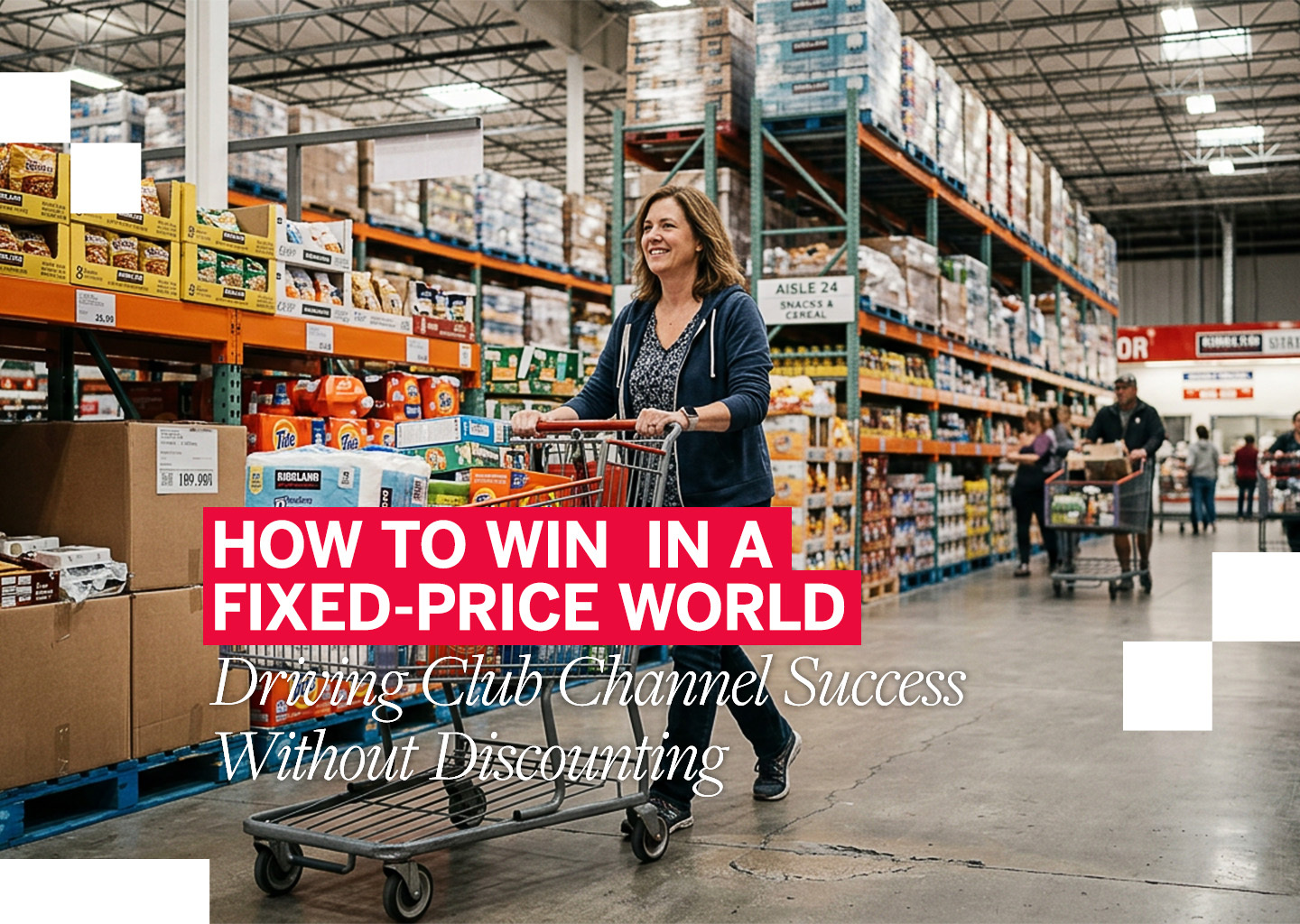
How to Win in a Fixed-Price World: Driving Club Channel Success Without Discounting
Winning in the club channel does not require breaking your price floor. It requires a shift in approach: moving from price cutting to value-added incentives that drive sell-through without touching your established shelf price.
For brands operating in major national warehouse clubs, where sell-through velocity is the only metric that matters, strict pricing policies can feel like a constraint. They are not. Used correctly, they are an opportunity to protect brand equity while delivering meaningful value to club members through post-purchase rewards.
Key Takeaways
- Pricing policies do not prevent effective club channel promotions. Post-purchase rewards deliver member value while keeping the advertised price intact.
- Club buyers and DMMs judge performance by sell-through velocity. The right incentive moves product fast enough to protect your floor space.
- Gas cards, digital gift cards, and cashback rewards are proven mechanics for driving volume without price erosion.
- Fixed-fee promotional models remove financial uncertainty by capping your liability before the campaign launches.
- End-to-end execution—including validation, fraud prevention, and fulfillment—is what makes these promotions scalable and reliable.
The Mechanism: How Value-Driven Promotions Work
The “Value-Driven Promotion” is a strategic solution that benefits the brand, the retailer, and the member simultaneously. Instead of lowering the shelf price, which would violate internal pricing standards and potentially trigger “price matching” chaos with other retail partners, brands offer a post-purchase incentive.
By leveraging third-party platforms to handle automated validation and fulfillment, brands can offer rewards such as gas cards, digital gift cards, or targeted cashback.
Because these incentives are technically a “reward for purchase” rather than a “reduction in price,” the advertised price remains compliant with your brand guidelines. This allows the brand to maintain its premium positioning and satisfy other channel partners while offering the club member a significantly lower effective price.
In the club ecosystem, these promotions create a perception of added value that drives immediate sell-through without eroding the long-term price integrity of the product.
Tactical Examples in the Club Environment
To move high-volume inventory in a club setting, the incentive must be as significant as the pack size. Here is how these manifest in practice:
- The “Fuel Your Summer” Campaign: A consumer electronics brand selling a premium outdoor speaker at a leading warehouse club (where pricing standards are strictly enforced) offers a $50 gas card via redemption. The $499 shelf price stays firm, protecting the brand’s boutique retailers, but the member perceives a 10% value-add that drives immediate shelf velocity.
- High-End Appliance Rebates: A kitchenware vendor at a top-tier membership club offers a $100 digital “Club Credit” (redeemable for groceries or tire services) via a mobile receipt upload. This drives high-ticket sales and rewards the “Stock Up” behavior inherent to the club member.
- The “Double Value” Bundle: For a home office launch, a brand offers a digital reward for a secondary accessory (e.g., “Buy this monitor, get a $30 gift card for peripherals”). This increases the total basket value without touching the primary SKU’s advertised price.
Balancing the Strategy: Pros & Cons
| Pros | Cons & Challenges |
| Margin Protection: Maintains a healthy P&L by avoiding permanent price erosion. | Execution Complexity: Requires a robust, automated validation system to process receipts and prevent duplicates. |
| Brand Integrity: Prevents “price wars” and protects relationships with non-club retail partners. | Fraud Prevention: High-value rewards attract fraudulent claims. Sophisticated security and verification are non-negotiable. See how Opia handles fraud prevention |
| Predictable Sell-Through: Drives the high velocity required to satisfy DMMs and secure premium floor space. | Financial Uncertainty: Miscalculating redemption rates can blow a budget. A fixed-fee model removes this risk entirely by capping liability before launch. |
Conclusion
In the US club channel, performance is defined by sell-through, not just demand. Standard pricing policies are not a barrier to promotional success. They are the reason value-driven promotions exist, and when executed well, they protect your margins, satisfy your buyer, and deliver a genuinely compelling offer to club members.
Success in the warehouse is not about who is cheapest. It is about who offers the most value.
Partner with Opia
Navigating price compliance in the club channel takes a proven execution partner. At Opia, we design value-driven promotional programs built for the scale and scrutiny of the largest US membership retailers. From gas card campaigns to digital cashback, we handle validation, fraud prevention, and fulfillment so your brand can focus on driving results in market.
Get in touch with our team to discuss your next club channel campaign.
FAQs
Can I run a promotion without lowering my advertised price?
Absolutely. By utilizing value-added incentives (like gift cards or cashback) delivered post-purchase, you provide the consumer with a financial benefit while keeping your standard shelf price unchanged.
How do strict brand pricing policies affect club channel volume?
Strict pricing floors can stifle volume if brands rely solely on price drops to move units. However, when paired with value-driven rewards, these policies actually help stabilize the brand’s market value while the reward does the work of driving sell-through.
How do I choose the right reward for a club channel promotion?
Match the reward to the purchase value. Gas cards and digital prepaid cards work well for high-ticket items. Cashback or retailer gift cards suit mid-range products. Opia can help model the right mechanic and value for your specific campaign.
How do warehouse club buyers evaluate promotional performance?
DMMs measure sell-through velocity above everything else. A product that moves fast earns better placement. One that lingers gets pulled. A well-structured, value-added promotion is one of the most reliable ways to hit the targets buyers expect.
What is the difference between a discount and a post-purchase reward?
A discount lowers the advertised price, risking price matching across your other retail partners and lowering your floor. A post-purchase reward delivers equivalent value to the member without touching the shelf price. It results in a similar cost to the consumer, but has a very different, positive impact on your brand and channel relationships.


Rebates vs. Discounts: Unlocking the Power of Sales Promotions
Did you know businesses lose billions annually due to ineffective sales promotions? Choosing the right strategy is crucial for maximizing your ROI and achieving your marketing goals. This guide will delve into two popular promotion methods – rebates and discounts – unraveling their differences and empowering you to make informed decisions for your business.
While both rebates and discounts offer enticing ways to incentivize customers, they have distinct characteristics that make them suitable for different scenarios. By understanding these nuances, you can unlock the true potential of sales promotions and drive significant growth for your business.
Discounts
What are Discounts?
Discounts are a common sales promotion tactic where businesses reduce the price of a product or service to incentivize customers to make a purchase. The appeal of a discount lies in its immediacy: the customer sees the reduced price upfront and enjoys instant savings.
Common Types of Discounts
Discounts can take various forms, each with its own appeal and strategic purpose:
- Percentage-based discounts: Offer a percentage off the original price, such as “20% off your entire purchase.”
- Fixed-amount discounts: Reduce the price by a specific dollar amount, like “$10 off your next order.”
- Early bird discounts: Reward customers for making purchases early, often used for event tickets or pre-orders.
- Bundle discounts: Encourage customers to buy more by offering discounts on bundled products or services.
- Loyalty discounts: Show appreciation to repeat customers by providing exclusive discounts.
- Conditional discounts: Offer discounts based on specific criteria, such as purchase volume, membership status, or time of purchase.
What You Can Do with Discounts
Discounts are a versatile tool that can help you:
- Drive sales and increase revenue
- Clear out inventory and make room for new products
- Attract new customers and expand market share
- Reward loyal customers and build stronger relationships
- Create a sense of urgency and encourage immediate action


Rebates
What are Rebates?
Rebates are an impactful sales promotion that allows customers to receive cashback after their purchase. Unlike discounts, which offer instant savings, rebates provide a rewarding opportunity for customers to claim savings post-purchase. By paying the full price upfront and submitting a simple claim, customers often enjoy greater savings, as brands can offer more value through rebate programs.
What You Can Do with Rebates
Rebates offer unique advantages:
- Incentivize specific customer behaviors: Encourage bulk purchases, product trials, or other desired actions.
- Build stronger customer relationships: Foster a sense of reciprocity and reward customers for their loyalty.
- Create a memorable customer experience: Customers often remember the positive rebate process more vividly than a point-of-sale discount.
- Gather valuable customer data: Collect valuable insights through the rebate claim process.
- Grow a database of promotion-receptive customers: Build a targeted audience that can be engaged with future promotions or marketing initiatives.
- Establish brand loyalty: Reinforce customer commitment through well-executed rebate programs.
- Manage cash flow effectively: Delay payouts and maintain healthy cash flow.
- Maintain price integrity: Offer incentives without directly reducing prices, avoiding price erosion.
Rebates vs. Discounts
While both rebates and discounts can effectively drive sales and boost customer loyalty, they have distinct characteristics that make them suitable for different scenarios. But before we delve into their differences, let’s first highlight their similarities:
- Both offer cost savings to customers.
- Both can be used as promotional tools to stimulate sales.
- Both can contribute to building customer loyalty.
Differences Between Rebates and Discounts: A Detailed Comparison
| Feature | Rebates | Discounts |
| Definition | Refund after purchase | Immediate price reduction |
| Type of Strategy | Often part of a long-term strategy | Commonly used for short-term goals |
| Use of the Term | Can refer to various types of refunds | Typically refers to a price reduction |
| When is it Given? | After purchase, upon claim submission | At the point of sale |
| How to Manage | Can be more complex, requiring tracking systems | Generally easier to manage |
| When to Use | For long-term goals, data collection, cash flow management | For immediate sales, clearing inventory |
| Investment | Cost Effective | Can be expensive |
| Benefits | Builds loyalty, gathers data, maintains price integrity | Drives quick sales, easy to understand |
| Cons | Can be complex to administer, delayed gratification | Can erode price perception, lower margins |
| Customer Effort | Requires effort to submit a claim | No extra effort required |
| Fraud Potential | Higher potential for fraud | Lower potential for fraud |
| Brand Perception | Can maintain price integrity | May lower perceived value if overused |
Rebates vs. Discounts: Which One is Right for Your Business?
Choosing the right strategy depends on your specific needs and goals. Here’s a framework to guide your decision:
- What are your primary goals? Drive quick sales? Build long-term loyalty? Gather customer data?
- What is your budget? Rebates offer delayed payouts, which can be beneficial for cash flow.
- Who is your target audience? Are they motivated by immediate savings or delayed rewards?
- What type of product or service are you offering? High-priced items might benefit from rebates, while lower-priced items might be better suited for discounts.
- What is your brand image? Excessive discounts can sometimes erode price perception.
By carefully considering these factors, you can make an informed decision about whether rebates or discounts are the right fit for your business.
Need help crafting a sales promotion plan? Check out our step-by-step guide for a successful sales promotion.
Key Considerations
Whether you choose rebates or discounts, careful planning and execution are essential. Here are some key considerations:
- Budget planning: Allocate resources effectively for your chosen strategy.
- Fraud prevention: Implement measures to minimize fraud and abuse.
- Customer support: Provide excellent customer service throughout the process.
- Technology solutions: Leverage technology to streamline program management.
Opia offers comprehensive solutions to help businesses design, manage, and optimize their rebate and discount programs. Contact us today to learn more.
Conclusion
Rebates and discounts are both powerful sales promotion tools, each with its own strengths and weaknesses. By understanding their differences and carefully considering your business needs, you can choose the right strategy to maximize your success.
Ready to unlock the power of sales promotions? Get in touch with Opia’s experts to discuss your specific needs and develop a winning strategy.
FAQs
How do consumers perceive product discounts?
Consumers generally appreciate discounts as they offer immediate savings. However, frequent or excessive discounts can sometimes create a perception of lower product value.
How do consumers perceive product rebates?
Rebates can be perceived as valuable, but the delayed reward and claim submission process might deter some customers. It’s crucial to make the rebate process simple and user-friendly to encourage participation.
What are the best practices for promoting discounts?
Clearly communicate the discount value, use compelling visuals, create a sense of urgency, and target your promotions to the right audience.
How effective are rebates?
Rebates can be very effective at driving sales and building loyalty, especially when designed and managed properly. They offer a unique value proposition and can incentivize specific customer behaviors.
Why are rebates better than discounts?
Rebates can be more advantageous for businesses as they offer delayed payouts, help gather customer data, and maintain price integrity. They are also effective at building long-term customer relationships.
Can rebates and discounts be combined?
Absolutely! Combining rebates and discounts can create a powerful incentive by offering both immediate and delayed rewards.
What are some common mistakes to avoid when running rebate and discount programs?
Common pitfalls include complex claim processes, unclear terms and conditions, inadequate fraud prevention, and poor customer support.
How can Opia help me design an effective rebate program?
Opia’s experts analyze your needs and goals to create a customized rebate program that drives sales, builds loyalty, and maximizes ROI.
Does Opia offer solutions for managing both rebates and discounts?
Yes, Opia provides comprehensive solutions for managing all aspects of your sales promotions, including rebates, discounts, and other incentive programs.
How can Opia help me track the effectiveness of my promotions?
Opia provides robust tracking and reporting tools that allow you to monitor key metrics, measure ROI, and optimize your campaigns for maximum impact.
Can Opia help me prevent fraud in my rebate program?
Absolutely! Opia’s solutions incorporate advanced fraud prevention mechanisms, such as unique codes, claim limits, and address verification, to protect your program.